

I was six months pregnant with my oldest—who, bless his heart, has become my walking cautionary tale for every single parenting mistake in the book—when three completely different people cornered me at my baby shower with unsolicited advice on how to raise a "successful" child. My grandma, sitting in the corner sipping her sweet tea, leaned in and told me I needed to start a coffee can of pennies on the kitchen counter immediately to teach him the value of a hard-earned dollar. My cousin Dave, who works in finance and wears sweater vests indoors, insisted I needed to open a custodial Roth IRA the literal second the umbilical cord was cut so the kid could retire at thirty. And then my very sweet, very crunchy doula touched my belly and whispered that a baby is actually born a billionaire already, simply because they've a hundred billion brain cells just waiting to be activated.
I remember sitting there, sweating through my floral maternity dress, wondering how on earth I was supposed to manage a baby, a billionaire-level brain, and a diversified investment portfolio when I couldn't even figure out how to collapse the fancy stroller we'd just been gifted. I'm just gonna be real with you: the pressure to set our kids up for lifelong success before they even have teeth is absolutely exhausting.
But over the last five years of raising three kids out here in rural Texas, running my little Etsy shop from the kitchen island, and trying to keep everyone alive, I've realized that raising a grounded, successful kid doesn't actually require a trust fund or a degree in neuroscience. It just requires a lot of patience, a few smart choices, and being okay with a little bit of mess.
That whole hundred billion brain cell situation
Let's talk about the brain thing first, because when my doctor brought it up at our two-month checkup with my second kid, I almost dropped my diaper bag. She was explaining something about early development and casually mentioned that every single baby comes into this world with roughly 100 billion neurons. One hundred billion. Y'all, my brain currently holds about three passwords, my grocery list, and the lyrics to every 90s country song ever recorded, so thinking about the sheer, untapped processing power inside my newborn's tiny, wobbly head was legitimately terrifying.
Apparently, the first thousand days of life are when all those neurons are frantically trying to wire themselves together, making permanent connections based on what the baby sees, hears, and chews on. The doctor made it sound like every single thing I did or didn't do was physically building the architecture of his brain, which honestly just made me want to go hide in the pantry and eat stale graham crackers. It's a massive amount of pressure, trying to make sure you aren't accidentally short-circuiting a tiny genius with too much screen time, loud plastic toys, or weird synthetic dyes in their snacks.
From what I can understand through the absolute fog of sleep deprivation, setting up a good cognitive environment really just boils down to keeping things relatively calm and not totally overstimulating their little nervous systems with constant flashing lights and synthetic noise.
Of course, I bought my oldest a tablet anyway when he turned two because we had a cross-country flight to visit family, and we all survived just fine.
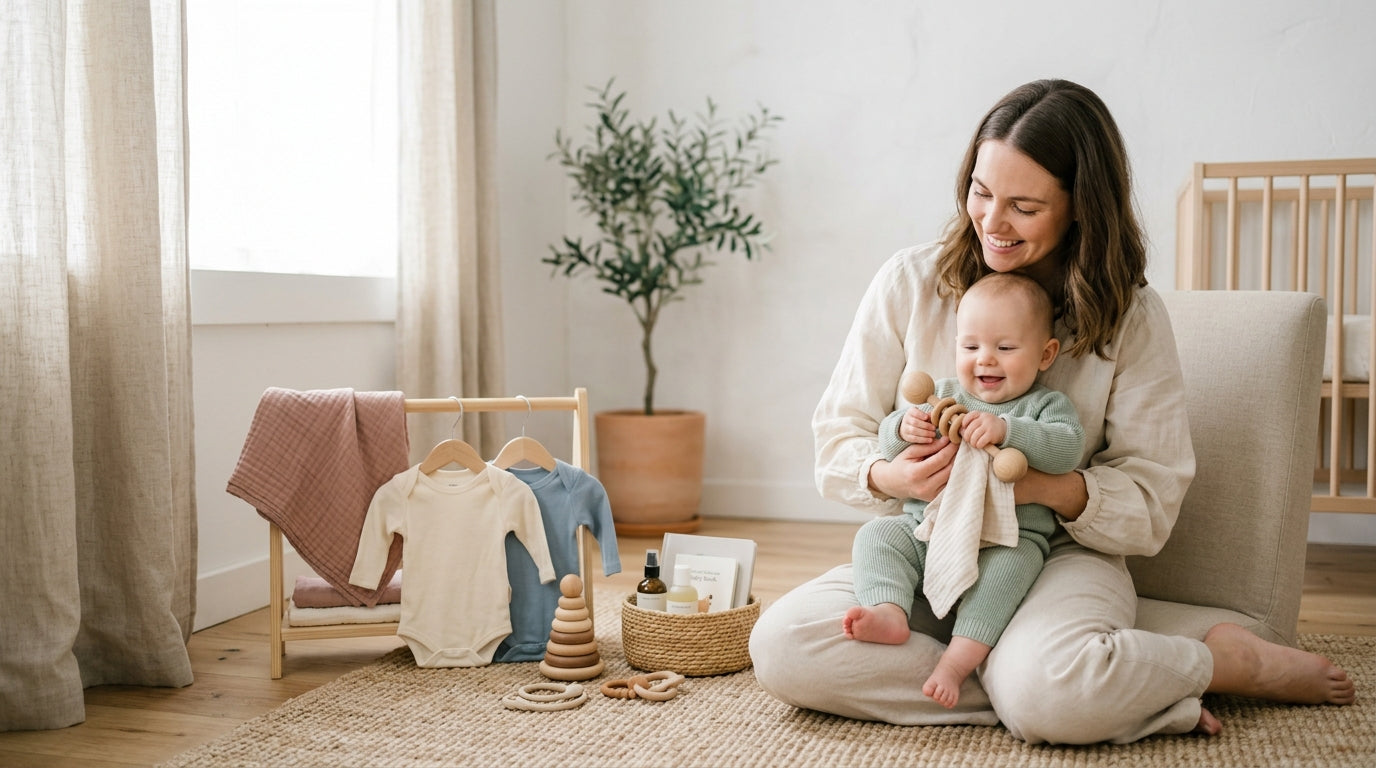
But for those early newborn and infant days, setting up a peaceful environment is actually pretty doable. I've tried every loud, obnoxious plastic contraption on the market, but the one thing I seriously kept and used for all three of my kids is the Kianao Wooden Baby Gym. I'll tell you a story about this thing: with my first, I had this neon plastic jungle gym that played a horrible tinny song every time he kicked it, and it made him cry every single time because it was just too much. By the time my third came along, I switched to this wooden rainbow gym, and the difference was wild. It's got these little wooden animal shapes and textured rings that they can swat at, and because it's not screaming songs at them, they genuinely have to focus and use their own brain to figure it out. It looks beautiful sitting in my living room, sure, but more importantly, it doesn't overstimulate them to the point of a meltdown right before naptime.
Let them fail while it's cheap
Now, onto Cousin Dave and his financial advice. I don't totally get the math he was spouting at the baby shower, but basically, he said that starting a fifty-dollar-a-month fund right now in some alphabet soup of bank accounts is supposed to make them millionaires by the time they hit sixty because of compound interest. That's great and all, but I care a whole lot more about them not acting like entitled jerks in the grocery store right now.

My mom always told me that the best way to teach a kid about money is to let them earn it and then let them completely waste it. I thought she was being harsh until my oldest turned four and we went to the county fair. He had saved five dollars from helping me sort inventory for my Etsy shop. He wanted to blow it on this flimsy, terrible plastic sword that I knew would break in five minutes. Every fiber of my being wanted to step in, take the five dollars, and buy him something sensible, but I remembered my mom's advice and let him buy it.
It broke before we even made it to the funnel cake stand.
He was devastated, bless his heart, but learning that hard lesson about delayed gratification and the value of a dollar when the stakes are only five bucks is so much better than them learning it at twenty-five with a maxed-out credit card. Letting them mismanage a tiny allowance teaches them actual life skills in a low-stakes environment, which is way more valuable than just handing them everything they ask for.
Speaking of not wasting money, I've to mention baby clothes while we're on the subject of budgeting. I've wasted so much money over the years on cheap baby clothes that literally shrank into doll outfits after one trip through my washer. The Organic Cotton Baby Bodysuit from Kianao is honestly just okay as far as high fashion goes—I mean, it's a plain sleeveless onesie, nothing groundbreaking that's gonna win baby outfit of the year—but I'll give it credit where it's due. It doesn't shrink, the little bit of elastane gives it a really nice stretch so I can yank it over a squirming, furious baby's head without starting a wrestling match, and it's cheaper in the long run than constantly replacing synthetic ones that fall apart at the seams.
If you're trying to build a baby registry or just want to browse some things that seriously last through multiple kids without frying their nervous systems or your budget, you might want to poke around Kianao's baby essentials collection when you've a free second.
Earning their keep around the house
You don't have to be raising a literal billionaire to end up with a kid who thinks the world revolves around them. Wealth, whether you've fifty bucks in checking or fifty grand, can breed entitlement if you aren't careful. Out here, we believe in the gift of work. Obviously, my toddler isn't out there baling hay, but idle hands make for whiny children.

Giving them chores, even when they're tiny, makes them feel like part of the team. My two-year-old's "job" is to put her blocks back in the basket before dinner. Does she do a good job? Absolutely not. I usually have to kick three of them under the couch just to clear the rug. But the habit of tying effort to a clean space is what matters.
For this kind of stuff, I love the Gentle Baby Building Block Set. Instead of buying a million battery-powered things that do the playing for them and require zero effort, try sticking to simple stuff they can stack up, inevitably knock down, and then practice putting away while you desperately try to drink your morning coffee before it turns into iced coffee.
Modeling the money stuff
The hardest part about all of this is that kids are basically little sponges that absorb your worst habits. I read on some parenting blog at three in the morning that girls tend to lose their confidence in math and money stuff super early, like right around middle school. That statistic hit me hard. I've two daughters, and I want them to know how to budget for my craft supplies and calculate profit margins just as much as I want them to know how to bake a decent pie.
But I realized I can't just preach hard work and budgeting to them while I hide my impulse online shopping packages before my husband gets home. They emulate what they see. If they see me sitting at the kitchen table, stressing over a spreadsheet but pushing through it, they learn that money is just a tool we manage, not something to be afraid of or entitled to.
honestly, raising a "billionaire baby" isn't really about the money at all. It's about recognizing that they're born rich in potential. Our job isn't to buy them the most expensive life; it's to give them a safe environment to grow those billions of brain cells, the freedom to make cheap mistakes, and the grit to figure out the rest on their own.
Ready to set up a play space that genuinely helps those little brains grow without draining your wallet? Check out the full sustainable collection at Kianao before you dive into the questions below.
FAQ
Do I really need to worry about my baby's 100 billion brain cells?
Look, my doctor scared the life out of me with this number, but don't panic. You don't need to be flashing flashcards at a two-month-old. From what I've learned, it just means their brains are super sensitive to their environment. Focus on calm, safe spaces, lots of eye contact, and simple toys. Your baby's brain will do the heavy lifting all on its own, I promise.
When should I start teaching my toddler about money?
My mom had me start when my oldest could barely talk, and she was right. You can start small as soon as they understand the concept of trading. Around three or four, if they want a special treat at the store, let them hand the cashier a couple of dollars. It makes it tangible for them. In a world where everything is just a tap of a plastic card, they need to see physical money leaving their hands to understand it.
Are wooden toys honestly better for development?
I'm not a scientist, but in my house, yes. The plastic ones with the flashing lights and sirens do all the entertaining for the kid, which turns them into passive zombies. Wooden toys, like that baby gym I mentioned, force them to reach, grasp, and use their imagination. Plus, they don't give me a massive headache by 10 AM, which is a huge win for my mental health.
How do I handle it when my kid wastes their allowance on junk?
You bite your tongue and let them do it! I know it physically hurts to watch them hand over good money for a plastic toy that will break in the car ride home, but that feeling of regret is the best financial teacher in the world. Let them fail when it costs five dollars, so they don't fail when it costs fifty thousand dollars later in life.
Does buying organic cotton clothes really make a difference for the budget?
Honestly, it depends on the item. I don't buy organic everything because I'm on a real-life budget here. But for the basics, like bodysuits that sit directly against their skin all day and get washed eighty times a week, good quality organic cotton doesn't shrink or warp the way the super cheap synthetic stuff does. You buy fewer of them because they really last, which ends up saving you money and a trip to the store.




Share:
How To Keep A Baby Alive: Sleep, Teeth, And The Absolute Chaos
The 3 AM rabbit hole of the Abby and Brittany Hensel baby rumors