

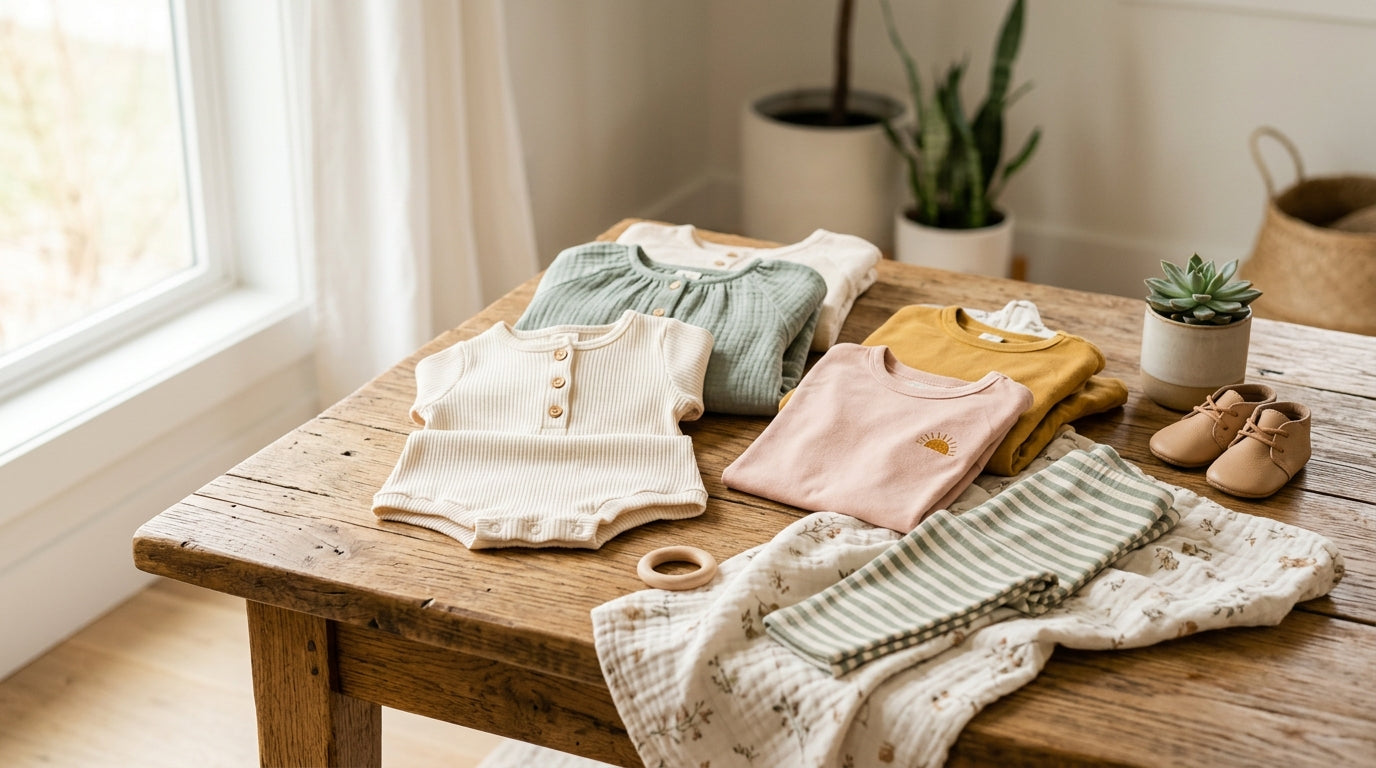
It was 3 AM, and I was sitting on the floor of a nursery crying over a pair of newborn skinny jeans. My oldest son—who I swear was put on this earth purely to be my cautionary parenting tale—was screaming his absolute lungs out because I was trying to shove his chunky, milk-fed thighs into stiff, non-stretch denim for a "cute" family photo the next morning. My mom always used to say "beauty is pain" when she'd French-braid my hair too tight for church, but bless her heart, she didn't have to deal with a furious, sweating infant trapped in miniature adult clothing. I'm literally staring at a laundry basket right now while I write this, matching tiny socks that serve absolutely no purpose other than falling off in the grocery store parking lot, and I'm just gonna be real with you: the way we dress our babies in this country is completely unhinged.
We buy things because they look hilarious on a tiny velvet hanger, completely ignoring the fact that babies are basically floppy, irritable little potatoes with skin as sensitive as a fresh sunburn. I didn't figure out how to actually dress a human child until I was three kids deep and completely exhausted by the laundry cycle.
What the pediatrician told me about polyester
I learned about fabric quality the hard way when my oldest broke out in this angry, raised red rash all over his chest and back right around his two-month mark. I panicked, obviously, convinced he had some rare tropical disease despite the fact that we live in rural Texas and barely leave the house. My pediatrician took one look at his bumpy little tummy, sighed a very tired doctor sigh, and asked what he was sleeping in.
I proudly told her about this adorable, fuzzy fleece zip-up sleeper I'd scored for five bucks at a big-box store. She gently explained that dressing a baby in cheap, synthetic polyester is basically like baking them in a little plastic oven, trapping all their sweat and body heat against their super-thin skin until their sweat glands clog and they break out in eczema. I guess I read somewhere on a crunchy mom blog once that a baby's skin is like five times thinner than ours, or maybe it's three times, but either way, it absorbs everything it touches. So when you put them in cheap fabrics treated with heavy flame retardants and synthetic dyes, their little bodies just freak out trying to control their temperature.
When we finally threw out the plastic clothes and switched to organic cotton, the difference in my son's skin was wild. I actually found out about Kianao when I was desperately Googling late at night for organic materials that wouldn't make him itch, which led me to buy the Organic Cotton Baby Blanket with the purple deer pattern. I know a blanket isn't technically an outfit, but when they're newborns, they spend half their life wrapped in one anyway so it counts in my book. It's GOTS-certified, which supposedly means they don't use any of those nasty pesticides or toxic chemicals when they grow the cotton in the fields. All I know for a fact is that it feels like a heavy, perfectly worn-in vintage t-shirt, and my son dragged that purple deer blanket through the Texas dirt for three straight years without it ever fraying or falling apart. It's hands-down my favorite thing we own.
I did also grab their Plain Bamboo Baby Blanket in terracotta because my husband complained the purple deer one was "too visually loud" for the living room and he wanted something neutral. It's made of a bamboo and cotton blend that's supposed to be this magical thermoregulating fabric that pulls heat away from their bodies in the summer. It's incredibly soft, I'll definitely give it that, but honestly it snags a little easier if you accidentally catch it on a rogue Velcro tab in the diaper bag, so it's just okay in my book and I mostly restrict it to being a stroller shade now.
The physical wrestling match of getting them dressed
Another thing people completely forget when buying tiny clothes is that babies are supposed to move. They need to do tummy time, they need to crawl, they need to pull up on the coffee table. You can't do any of that if you're shoved into stiff corduroy overalls with zero stretch. I tried putting my middle child in heavy canvas overalls once, and she just lay there on the living room rug like a flipped turtle, screaming until I took them off.

Have you ever tried to put a non-stretch garment on a fifteen-month-old who has just learned to walk and refuses to lay down for a diaper change? It's exactly like trying to put pants on a feral cat. You're sweating, they're crying, and somebody is probably going to get kicked in the jaw. This is why the stretch and material of the clothes actually matters for your daily survival. If a shirt doesn't have a wide envelope neckline or a couple of snaps at the collar to widen the head hole, it goes straight into the donation bin. Babies have disproportionately giant heads, and trying to yank a stiff, woven cotton collar over a toddler's ears is a surefire way to start your morning with a meltdown.
And don't even get me started on the safety hazard that's modern baby fashion. I read an article once about how European safety standards ban drawstrings around the neck for kids because of the strangulation risk, which makes total sense. Meanwhile, I bought a boutique hoodie here in the States that had a rope thicker than my thumb threaded around the hood for a 9-month-old. I ended up yanking the whole string out with pliers. My pediatrician honestly told me to always do a "pull test" on baby clothes, meaning if you can yank on a decorative button and it feels even slightly loose, you need to cut it off before your kid swallows it. Honestly, buying infant sweaters covered in functional wooden buttons and tiny glued-on bows just feels like inviting a choking hazard into your house while simultaneously guaranteeing you'll be twenty minutes late to everywhere trying to fasten them.
The capsule wardrobe joke
I saw an Instagram influencer the other day talking about her baby's "capsule wardrobe" and the strict 8-5-3-2 rule—eight shirts, five pants, three layers, two pairs of shoes. I laughed so hard I nearly dropped my coffee mug. Five pairs of pants? My twin toddlers go through five pairs of pants by Tuesday lunch because somebody always sits in yogurt or finds a mud puddle. The idea that you can survive on five pairs of pants is a beautiful fantasy if you don't have a live-in nanny doing your laundry twice a day.
But the underlying European philosophy of buying fewer, better pieces—what a Swiss friend of mine calls her minimalist kids clothing strategy—seriously is solid. Now, I stick to a strict, boring uniform to save my sanity: two-way zipper sleepers for the first six months, and stretchy, organic cotton leggings and tops after that. Period. If you want to see what actual quality basics look like without wading through pages of scratchy mall brands, taking a look at Kianao's baby blankets collection is a great place to start building a stash of fabrics that won't make your kid break out in hives.
My strategy for affording the good stuff
Let's talk about the money part, because outfitting three rapidly growing kids in organic, non-toxic fabrics could easily bankrupt a family if you aren't strategic about it. Buying premium baby clothes at full retail price in the middle of the season is a rookie mistake I only made with my first kid. Now, I stalk those high-end kids clothing sales like it's my part-time job.

In April, when all the stores are pushing swimsuits, I'm hunting down winter coats and heavy organic cotton sweaters marked down by seventy percent, buying them three sizes too big for the following year. I've a whole system of plastic bins in my garage labeled by size and season, which requires a little bit of weekend organization but ends up saving our single-income budget hundreds of dollars a year. You also want to lean heavy into gender-neutral colors like sage greens, mustard yellows, and warm grays so you can pass them down to every sibling regardless of whether they're a boy or a girl. That "pass me down" longevity is where you honestly save the real money, because a cheap, trendy polyester shirt from a fast-fashion store is going to pill, warp, and end up in the trash after five trips through the dryer anyway, forcing you to buy it twice.
Grandma's ironing board and other outdated advice
My grandma used to iron baby socks. I'm absolutely not making this up. She would stand in her kitchen in East Texas, spraying heavy chemical starch onto tiny white cotton socks so they looked "presentable" for church on Sunday. Bless her heart, she had a lot of opinions about how a baby should be dressed, most of which involved stiff collars, uncomfortable tights, and white lace that practically required professional dry cleaning. She was completely horrified when I told her I bought most of my kids' wardrobes out of season on clearance, and even more horrified when she saw my toddlers rolling around in the dirt in plain, stretchy cotton outfits.
She also thinks clothes aren't truly clean unless they smell like a synthetic mountain spring breeze. But pediatric dermatologists will quickly tell you that those highly fragranced detergents and thick fabric softeners are basically the devil for a baby's developing skin barrier. They leave an invisible film of chemicals on the clothes that rubs off on their skin all day long.
If you're tired of battling stiff zippers, treating mystery rashes with expensive creams, and throwing away cheap clothes after three washes just to go buy more, it might be time to rethink your stash. Digging through the organic baby essentials at Kianao is a great way to start investing in pieces that seriously survive the chaos of childhood.
Messy questions I get asked all the time
Do I really need to wash new clothes before my baby wears them?
Yeah, absolutely, you can't skip this step no matter how tired you're. I used to think pre-washing was just a suggestion for paranoid first-time moms until my second kid got a weird, raised red ring around his neck from wearing an unwashed boutique shirt. Even the good organic stuff gathers a ton of warehouse dust and factory residue during shipping. Washing new items in a totally unscented detergent and skipping the fabric softener entirely is the easiest way to keep their skin clear.
What's the actual deal with bamboo versus cotton?
Look, I'm no textile scientist, but from what I gather from dealing with my kids' sweaty night terrors, bamboo is thinner, stretchier, and feels a bit more like silk. It's fantastic for hot Texas summer nights because it supposedly pulls the heat away from their sweaty little bodies. Organic cotton is thicker, cozier, and honestly a bit more durable in my chaotic top-loading washing machine. Both are a million times better than putting your kid in polyester.
How do you get blowout stains out of organic clothes without bleach?
Sunlight and blue Dawn dish soap. I know it sounds like a weird, crunchy internet myth, but if you scrub a nasty blowout stain with a little dish soap, rinse it out, and leave the wet onesie lying flat in the direct afternoon sun, the UV rays literally bleach the organic stain right out of the fabric. It has saved so many expensive outfits from the trash can.
Are two-way zippers really that important for sleepwear?
If you genuinely enjoy exposing your baby's entire naked chest to the freezing cold night air at 2 AM just to change a dirty diaper, then sure, buy the snaps or the old-school one-way zippers. Otherwise, two-way zippers are the single greatest invention in modern parenting history. Buying sleepwear without them is just punishing yourself for no reason.
How many outfits does a baby seriously need?
It's best to completely ignore those aesthetic internet checklists that tell you to buy fifteen newborn outfits, because your baby will outgrow that tiny size in roughly twelve minutes. You really just need about seven to ten good, stretchy zip-up sleepers, a handful of soft bodysuits, and maybe two warm layers if it's winter. The rest of those fancy outfits are just going to become clean laundry that you don't have the time or energy to fold.




Share:
My Humiliating History With Kids and the Bulky Knit Sweater
The Ultimate Guide to Baby Größe: Making Sense of Tiny Clothes