

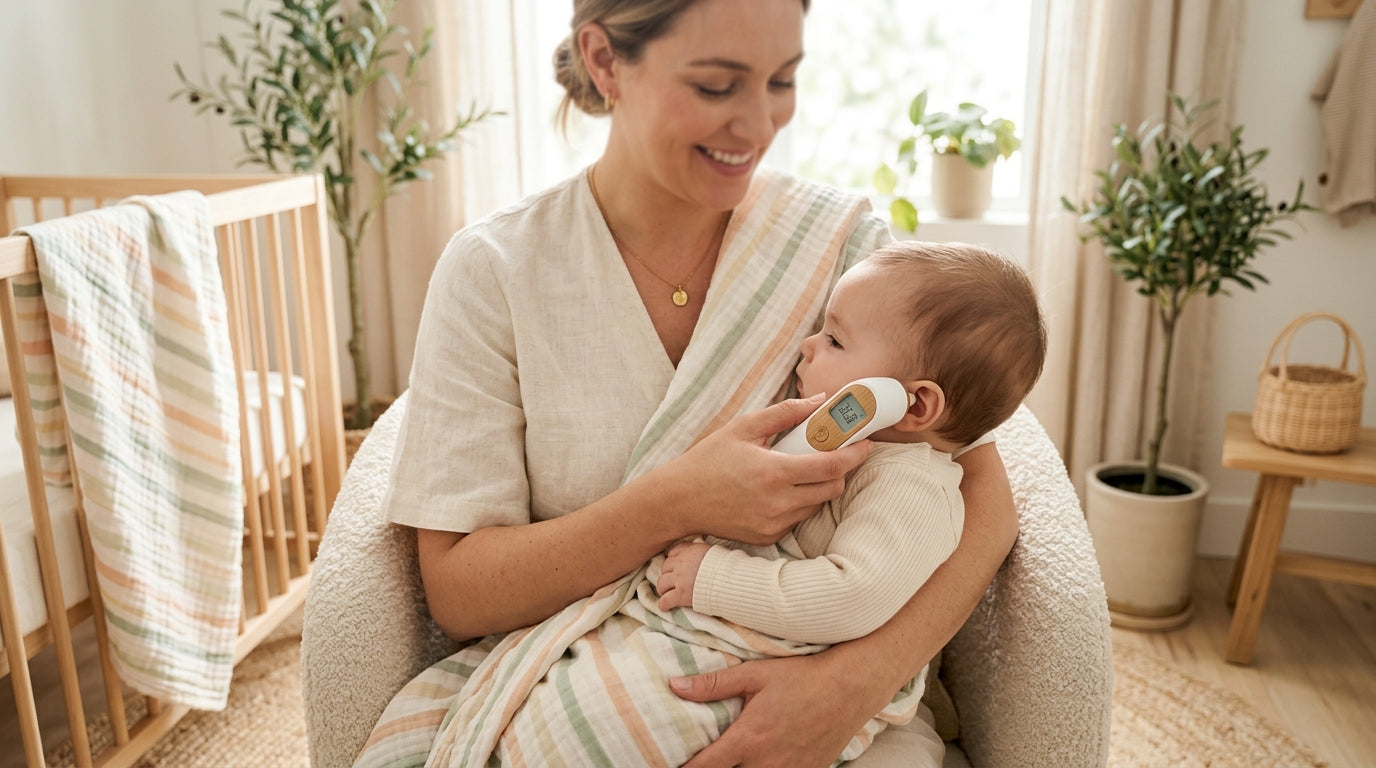
I was sitting on the edge of the nursery glider at 2:14 in the morning, staring at the glowing red screen of a plastic forehead scanner, completely convinced my firstborn was boiling from the inside out. He felt like a tiny, angry furnace against my chest. I had him zipped into a heavy fleece footie pajama, swaddled tightly in a thick blanket, and the scanner read 99.5. To my exhausted, highly-caffeinated, first-time-mom brain, we were in a full-blown crisis. I remember aggressively waking up my husband, panic-packing a diaper bag with five different outfits, and mentally mapping the forty-minute drive down our dark rural Texas farm roads to the nearest emergency room. I used to think the human body had exactly one acceptable baseline, and anything outside of exactly 98.6 degrees meant imminent doom, but by the time baby number three came along, I realized an infant's thermostat is basically as unpredictable as the internet connection out here in the country.
My grandma always told me that if a baby felt warm or had the sniffles, they were fighting a chill and you needed to bundle them up to sweat it out. I love that woman, and she taught me everything I know about baking a pie crust, but my doctor gently informed me that wrapping a warm baby in fleece is a fantastic way to accidentally bake them. My oldest is my ultimate cautionary tale for this. I had him so smothered in layers during his first winter that he woke up screaming, beet red, and drenched in his own sweat, which made him infinitely more miserable than whatever mild bug he was fighting in the first place.
What the doctor actually said about the numbers
So what even is the right baseline temperature for a small human? When I finally asked Dr. Miller to just give me a straight answer, she kind of shrugged and gave me a range, because apparently, their little bodies bounce around depending on the time of day, whether they just woke up from a deep sleep, or if they've been screaming their heads off for twenty minutes because I wouldn't let them eat dog food. From what I awkwardly scribbled down on the back of an Etsy shipping receipt in her office, anywhere between 97-ish and 100.3 degrees Fahrenheit is generally fine. It fluctuates.
The magic, scary number she drilled into my head was 100.4. Once it hits that exact decimal, that's an official fever. But she also told me that unless they're a brand new newborn, the number on the screen actually matters way less than how the kid is acting in your arms.
The absolute nightmare of getting an accurate read
Let's talk about how you're supposed to actually get a reliable reading, because this is the part nobody warns you about at the baby showers. My doctor looked me dead in the eye and told me that for babies under three months old, the only number she trusts comes from a digital rectal thermometer.

I absolutely hate it, you'll hate it, and the baby will scream like you're committing treason. You have to lay them flat on their back on the changing table, lift their little legs up like you're wiping a massive blowout, put petroleum jelly on the tip of the plastic wand, and insert it just a tiny bit while actively praying they don't suddenly thrash sideways or poop all over your hand. It feels entirely unnatural. My hands still shake every single time I do it because I'm terrified I'm going to hurt my tiny baby, and you're just standing there sweating through your shirt, holding a squirmy potato, waiting for a piece of plastic to beep.
But I'm just gonna be real with you, after spending three terrifying days in the children's hospital with my middle child when she caught RSV, I learned to swallow my anxiety and just do it. When they're fresh out of the womb, you simply can't mess around with forehead strips that just guess the heat of their skin based on ambient room temperature.
Ear thermometers are perfectly fine once they're older than six months, though half the time I get a weirdly low reading because I don't angle the probe correctly in their microscopic ear canals.
Stop baking your children in heavy fabrics
The thermostat in our old farmhouse is a complete joke, so if I set it to 70 in the hallway, the baby's room is either a freezing 64 or a sweltering 82. This makes dressing a baby for sleep incredibly stressful. Everyone preaches the "one more layer than you" rule, which is great in theory, but when you're running around cleaning the kitchen while they're lying perfectly still in a crib, it's hard to judge. I've thrown out so many cheap, synthetic onesies over the years because they just trap sweat against my kids' skin and cause massive breakouts of heat rash on their chests.
If you want to know what I genuinely reach for when I'm dressing my youngest, especially when the house is warm or she's feeling a little clammy, it's the Organic Cotton Baby Bodysuit from Kianao. I'm super budget-conscious because running a small online business while raising three kids doesn't exactly leave me with infinite disposable income, so paying more for a single onesie makes me wince. But I bought a couple of these specifically because they're 95 percent organic cotton and they really let her skin breathe. When she gets slightly warm from fussing, this fabric doesn't turn into a damp, sticky plastic bag against her back. I just leave her in this sleeveless bodysuit during the day, and she stays totally comfortable without me having to constantly check the back of her neck.
If she's running a low-grade fever, I definitely don't bundle her up like my grandma suggests. I'll strip her down to just her diaper and do skin-to-skin contact, which my doctor said somehow scientifically controls their body heat and heart rate. It sounds like crunchy woo-woo magic, but it genuinely works to calm her down.
When I do this whole skin-to-skin thing, I usually just drape a light layer over my own back and her, mostly so I don't freeze while sitting in the rocking chair. I've been using this Colorful Leaves Bamboo Baby Blanket for that. I'll be honest, my husband managed to stain the edge of it with his dark roast coffee on day two, which deeply irritated my soul, but the fabric itself is ridiculous. It's made of bamboo and organic cotton, so it's super lightweight and cool to the touch. It doesn't trap a ton of heat between our bodies, which is exactly what you want when you've a fussy, warm infant resting heavily on your chest.
If you're realizing your baby's closet is full of unbreathable polyester, check out Kianao's organic cotton clothing collection before the next heat wave hits.
Teething definitely makes them warm, kind of
Then there's the whole teething situation. I swear on my life that every time one of my kids pops a tooth, they feel like a hot water bottle and their cheeks turn bright red. My doctor kind of hedges on this and says teething doesn't cause a true clinical fever, just a very slight elevation in body heat, but try telling that technicality to a mom holding a screaming eight-month-old at midnight. You just want them to aggressively bite down on something so they stop crying.

I bought the Panda Silicone Baby Teether a few months ago because my youngest was chewing on my actual fingers to the point of leaving bruises. It's totally fine. It's literally just a piece of silicone shaped like a panda, but I like that I can throw it in the top rack of the dishwasher and stick it in the fridge to get it cold. Does it magically fix the misery of a tooth cutting through gums? No, she still whines, but the cold rubber definitely distracts her for a solid twenty minutes so I can fold a basket of laundry in peace.
When my panic is seriously justified
I used to panic over absolutely everything, but now I know what seriously requires a freakout and a frantic car ride to town. According to the doctor, if your baby is under three months old and they hit that 100.4 number, you don't give them Tylenol, you don't wait and see how they do after a nap, you just put them in the car seat and go to the doctor or the ER immediately. That's my hard-and-fast rule, no exceptions.
For the older toddlers and babies, I try to look at the whole messy picture instead of just hyper-fixating on the number on the screen. Here's what makes me really call the nurse triage line in the middle of the day:
- They're super lethargic, limp, and won't even try to look at me or track a noisy toy with their eyes.
- They haven't had a noticeably wet diaper in over eight hours, which means they're getting dangerously dehydrated from sweating out all their fluids.
- They have a fever that just keeps going strong for more than a day or two without breaking when I give them medicine.
- They have a weird, scary rash on their chest or back that doesn't fade or turn white when I press a clear glass against it.
You really just have to learn to trust your own gut. Instead of throwing away all your blankets and buying three humidifiers and spiraling over a decimal point, just strip them down to their diaper, offer some milk, and see if they cool off and perk up in a few minutes.
Motherhood is mostly just guessing in the dark and hoping you don't mess up too badly. If you're currently staring at a thermometer and feeling that familiar heavy knot of anxiety in your chest, take a deep breath, trust your instincts, and definitely grab a few breathable organic cotton layers from Kianao to help keep your little one comfortable tonight.
The Late-Night Questions I Always Ask Myself
Why are my baby's feet literally like ice cubes when their head is sweating?
This used to freak me out so badly, but apparently, a baby's circulatory system is just really bad at its job in the beginning. Their blood goes to their important organs first, leaving their hands and feet freezing cold. My doctor told me to always check the back of their neck or their chest to see if they're honestly cold, because their toes will lie to you.
Can I just use the forehead scanner while they sleep?
You can, and I definitely do when I'm too tired to deal with a screaming child, but know that it's probably wrong. If my kid is buried face-down in a mattress, their forehead is going to read super hot. It's fine for a quick mental check, but if they feel really sick, you've to wake them up and do the armpit or rectal read.
How do I know if they're overheating in their sleep sack?
If you touch the back of their neck and it feels damp or sticky, they've too many clothes on. I usually just unzip the sleep sack or take off their socks if I notice them getting flushed. They sleep way better when they're slightly cool anyway.
Should I give them a cold bath to bring the heat down?
No, please don't do this! I tried putting a cool washcloth on my oldest son once and he shivered so violently his temperature honestly went up because his body was working so hard to fight the cold. A lukewarm, room-temperature sponge bath is the absolute most you should do if they're incredibly miserable.
Is a 97-degree reading dangerously low?
If it's a tiny newborn, my doctor said low temps can honestly be a weird sign of infection, so I always call for that. But for my chunky older babies, sometimes they just get a little cool during the night. I usually just do some skin-to-skin under a blanket and they warm right back up to normal.




Share:
What Happens When You Look Up Nothing's Gonna Hurt You Baby Lyrics
Finding The Normal Baby Temperature Armpit Range Without Losing It