

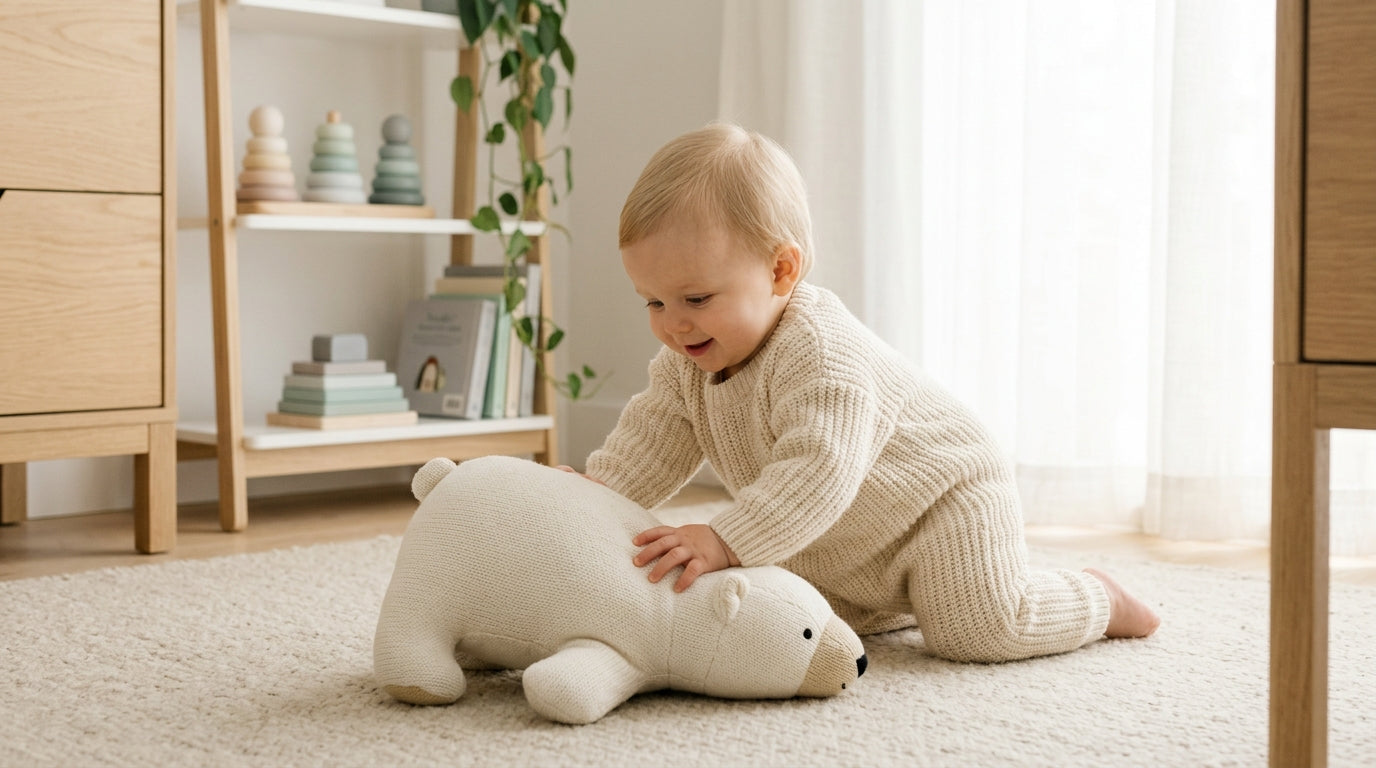
At 3:14 AM last Tuesday, I found myself sitting on the nursery floor in the dark, bathed in the blue light of my phone, holding a sleeping 11-month-old who currently weighs as much as a medium-sized microwave. My browser history from that night is a chaotic transcript of a sleep-deprived brain trying to debug human biology. I had started out typing 'baby p' into the search bar, desperately hoping autocomplete would guide me to some magical baby pajamas with zippers that don't jam in the dark. Then he started squirming, I dropped my phone, and ten minutes later I tried again, typing 'baby po' in a blurry attempt to find baby podcasts that might act as a sophisticated white noise alternative. Because the internet is a weird place when you're exhausted, the algorithm somehow dumped me onto a wildlife conservation page about a baby polar bear.

I ended up reading the entire page while my son used my left bicep as a pillow. Up until that exact moment in my parenting journey, I honestly believed that I was experiencing a uniquely deep level of exhaustion. I track all of our sleep data on a spreadsheet because I'm a software engineer and tracking metrics gives me the illusion of control, and my graphs were looking grim. I thought my wife and I were running the most intensive biological start-up in history. But then I read the actual hardware specifications for raising an arctic predator, and it forced a complete perspective shift on our current living situation here in rainy Portland.
I thought my sleep data was bad until I saw the arctic specs
Before my son hit his 11-month firmware update—which currently involves him trying to walk but mostly just face-planting into the sofa with alarming velocity—I thought our early newborn days were the ultimate test of human endurance. I remember logging the cluster feeding sessions, calculating the exact milliliter output, and complaining to my wife that the human infant design seemed highly inefficient.
Then I read about what mother bears do up in the ice. Apparently, when they go into their den to give birth, they stop eating and drinking entirely for up to eight months. Eight months of fasting while nursing. My wife, who recently gave me a death glare because I ate the last oat milk yogurt she had specifically earmarked for her mid-morning snack, physically shuddered when I read this fact out loud to her the next morning. These mothers just rely entirely on their own system reserves to keep the cubs alive in the absolute darkest, coldest environment on the planet. I suddenly felt intensely foolish for complaining about having to walk down the hall to the kitchen at 4 AM to prep a bottle.
And the growth metrics are absolutely unhinged. They essentially deploy into production the size of a pineapple, weighing maybe one or two pounds, completely blind and basically hairless. But because the mother's milk is apparently 31 percent fat—which sounds less like a biological fluid and more like industrial insulation—the cubs scale up rapidly, growing up to 20 times their original body weight in just 12 weeks. If human babies followed that growth curve, our pediatrician told us during an exhausted checkup, we'd be hauling around toddlers the size of golden retrievers before we even figured out how to collapse the stroller properly.
The great thermostat war of our hallway
Understanding how these animals survive the cold has made me acutely self-aware of the frankly embarrassing amount of time I spend obsessing over the ambient temperature of our nursery. I'm locked in an endless, passive-aggressive battle with the smart thermostat in our hallway. My pediatrician casually mentioned once that the ideal room temperature for a sleeping infant is somewhere between 68 and 72 degrees, and I guess my brain decided this was a hardline medical mandate rather than a casual guideline.

I check the baby monitor's temperature reading approximately forty times a night. If it dips to 67, I panic that he's freezing. If it hits 73, I'm convinced he's overheating and going to spontaneously combust. Meanwhile, polar bear mothers literally just dig a hole in the snow. That's the nursery. Apparently, body heat and snow insulation keep the den up to 45 degrees warmer than the minus-40 degree arctic air outside, which is still objectively freezing, yet the cubs sleep soundly. This fact haunts me every time I tiptoe into my son's room to adjust the ceiling fan speed by one arbitrary notch because I'm afraid a slight draft will ruin his sleep cycle. If you find yourself frantically toggling the heat at 2 AM while wrapped in a bamboo sheet just accept that your kid's internal hardware is probably fine and go back to bed.
Things we bought that may or may not help
Because I'm a millennial parent with a slight anxiety problem and a prime membership, I try to solve most of my parenting confusion by acquiring gear. Sometimes it works, and sometimes I just end up with more things to trip over in the dark.
The absolute best thing we've deployed into his sleep ecosystem lately is the Bear in Forest Bamboo Baby Blanket. I initially bought it just because the woodland bear print looked cool and I was trying to lean into the whole nature aesthetic my wife wanted for the nursery. But this thing is actually incredible from a functional standpoint. Bamboo fabric is apparently naturally temperature-regulating, which appeals to my thermostat obsession, and it feels ridiculously soft. The real test was last week when he managed to smear an unidentified sticky substance all over it during a stroller walk in Laurelhurst Park. We've washed it maybe a dozen times since, and it somehow gets softer every time, unlike the cheap synthetic blankets we were gifted that now feel like mildly abrasive sandpaper. He actually grabs for it when he's tired, which is the highest user engagement metric I can possibly track right now.
On the flip side, we also got the Bear Teething Rattle Wooden Ring Sensory Toy. Look, it's a very nice object. It's safe, untreated wood, and the little crochet bear is aesthetically pleasing. But my 11-month-old is currently in a phase where he mostly just wants to chew on my laptop charger or the TV remote. He will occasionally hold the wooden bear, gnaw on it for exactly three seconds, drop it on the floor, and stare at me until I pick it up. It's fine, it looks great on the shelf, but it hasn't magically solved the teething crankiness that currently plagues our afternoons.
If you're dealing with the endless temperature paranoia like I'm, another solid layer in our sleep stack is the Organic Cotton Baby Blanket with Polar Bear Print. We use the smaller size for the car seat when the Portland mornings are bitterly damp. It breathes well, so I don't get that spike of panic that he's getting sweaty when the car heater finally kicks in during traffic.
If you're also navigating the chaotic trial-and-error phase of infant hardware, you can browse more of Kianao's organic baby essentials here to see if something fits your current deployment needs.
Why I'm spiraling about sea ice right now
Here's the part of the late-night internet rabbit hole that actually stuck with me, long after the baby went back to sleep. The reality for these arctic cubs is incredibly grim right now. I learned that currently, only about 50 percent of them survive their first year. Half. As a guy who gets a mild stress headache if his kid coughs twice at breakfast, reading that statistic felt like a punch to the gut.

Their survival is entirely dependent on sea ice. The mothers need the ice platforms to hunt seals so they can build up enough fat to survive that insane eight-month fasting and nursing period. Without the ice, they can't hunt. Without the fat, the milk supply fails. It's a brutal, linear chain of dependencies, and the ice is vanishing because of the changing climate. Sitting in my warm house, holding a healthy baby, I suddenly felt this overwhelming wave of existential guilt about the planet my kid is going to inherit. It's very easy to ignore climate data when you're just writing code all day, but having a baby suddenly forces you to care about what the world is going to look like thirty years from now.
I'm not perfect. I still drive a gas car sometimes, and we generate more trash than I'd like to admit. But reading about those tiny, vulnerable cubs shivering in a melting den made me deeply appreciate brands that are genuinely trying to reduce the carbon footprint of all the stuff we're buying for our kids. Choosing natural fibers and sustainable production isn't going to single-handedly refreeze the Arctic, but it feels like the absolute least I can do to slow down the system crash we're causing.
The 11-month milestone is just organized chaos
At 11 months, my son is a localized hurricane of needs, emotions, and terrifyingly fast crawling speeds. He has no concept of conservation or thermal dynamics. He just knows that he's hungry, or tired, or inexplicably furious that I won't let him eat the cat's food. Parenting him right now feels less like nurturing a human and more like trying to safely contain a small, very loud wild animal.
But when he finally crashes for the night, heavily draped in his bamboo blanket, breathing in that deep, rhythmic way that signals his operating system is fully in sleep mode, I get it. I understand the arctic mothers. I understand the biological imperative to just shut down all your own needs to make sure this tiny, demanding creature survives the night. I'd fast for eight months in a snow cave for this kid if I had to. I'd complain about it the entire time, and I'd definitely want to check the ambient temperature of the snow cave first, but I'd do it.
Before you dive back into the trenches of parenting your own little wild animal, you might want to check out Kianao's sustainable blanket collection to keep them warm without setting off your own temperature anxiety.
Things I Google at 3 AM about this
Is it honestly okay if my baby's room is a little cold?
My pediatrician claims it's perfectly fine, and apparently, babies sleep better when it's slightly chilly rather than stuffy and warm. I still obsessively check the monitor, but I've stopped waking my wife up to ask if she thinks 68 degrees is technically freezing. If their core feels warm to the touch, they're generally surviving just fine without a snow den.
How do I wash bamboo blankets when they get covered in mystery toddler fluids?
I just throw them in on a cold, gentle cycle and cross my fingers. The label says not to tumble dry, so I drape them over the shower rod, which annoys everyone, but they dry surprisingly fast and honestly come out softer. Don't use bleach unless you want to destroy the fibers and your own morale.
Should I be worried if my 11-month-old isn't drinking as much milk anymore?
Our doctor reminded us that around this age, they start transitioning their bandwidth toward solid foods, so the liquid intake naturally drops. It terrified me at first because I was used to logging every exact ounce like a math equation, but as long as they're eating solids and producing wet diapers, the system is working as intended.
How do you explain climate change to a kid without terrifying them?
I've absolutely no idea how to do this yet since my kid currently tries to eat handfuls of dirt. But I've read that you just start by teaching them to love nature and animals first, using coloring books or stories about bears and forests, before you dump the heavy existential dread of global warming on their little brains.
Is it normal to feel this tired at eleven months?
I'm running on maybe 40 percent battery capacity on a good day. Every time I think we've optimized his sleep schedule, he issues a new firmware update (like cutting a tooth or learning to stand) and the whole system crashes again. Yes, it's normal, and yes, coffee is the only acceptable workaround.




Share:
Why Dumb Tech Is Actually Better for Your Baby's Sleep
My pediatrician's brutal rules for surviving summer water play