

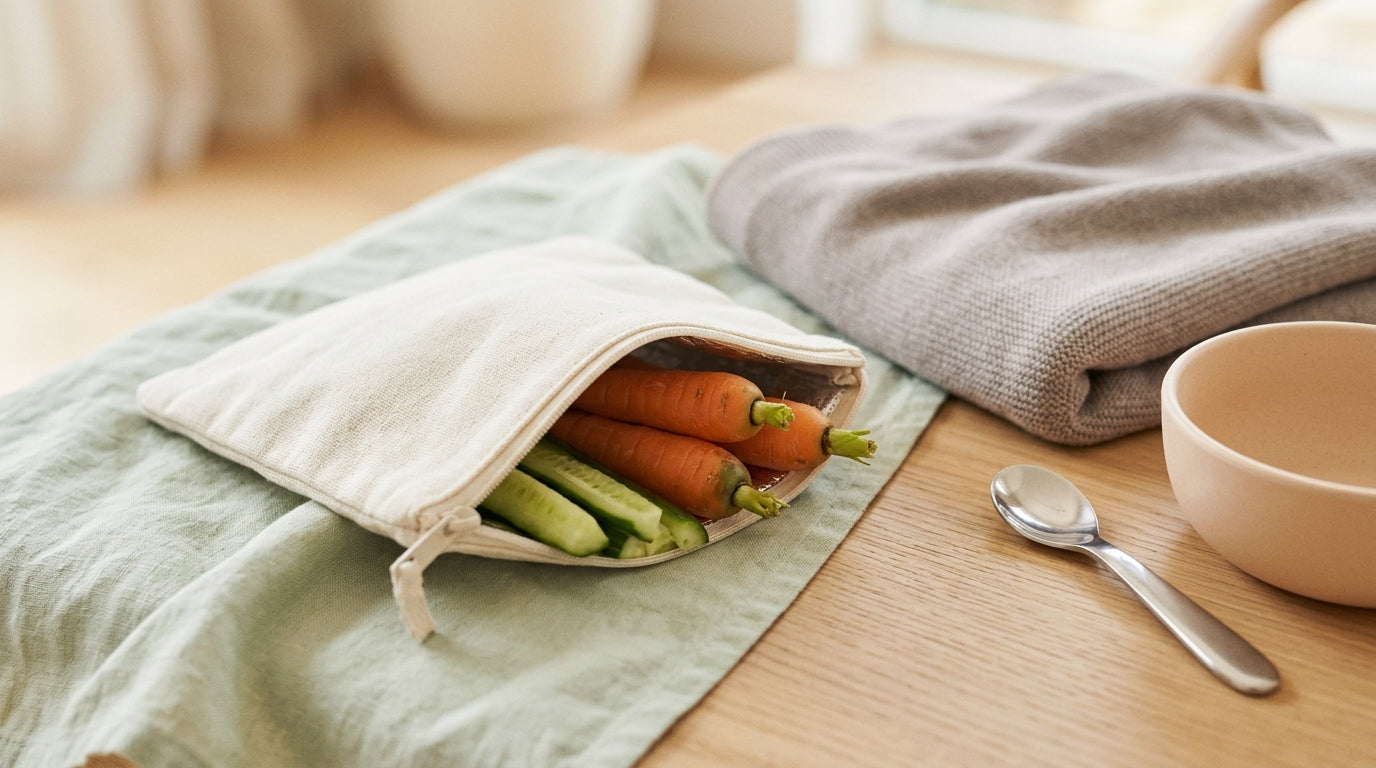
We were three days into a Thanksgiving visit to my wife's parents in Massachusetts, and I had just spent twenty minutes wrestling the rental baby car seat into my father-in-law's astronomically large SUV, when my mother-in-law burst through the front door clutching a plastic bag of orange batons like they were radioactive waste.
It was 2024, and the Great Carrot Panic had officially reached the family group chat.
If you were anywhere near a North American grocery store that November, you already know the grim details, but hearing about it while jetlagged and currently watching your two-year-old twin daughters happily gnawing on the exact brand in question is a uniquely terrifying out-of-body experience. Apparently, Grimmway Farms—which I recently learned grows essentially every organic carrot on the North American continent—had shipped out a massive batch of root vegetables tainted with E. coli. We had just spent three days feeding our girls Target's Good & Gather and Whole Foods 365 baby carrots because it was the only vegetable Maya would accept in this strange new time zone, while her sister Lily (who normally requires her snacks to be Michelin-plated) had decided these tiny orange choking hazards were suddenly her favorite food.
My mother-in-law, bless her, had printed out the FDA warning. It's a surreal thing to read a government document at two in the morning while your internal British clock is screaming that it's time for breakfast, desperately trying to cross-reference the "best-if-used-by" dates of September 11 through November 12 against a plastic bag you've already thrown in the kitchen bin.
The 3am fridge bleaching and the phantom stomach ache
When baby carrots are recalled, the official guidance implies you should just calmly dispose of them and clean the area, which completely ignores the psychological warfare of wondering if your toddler's mild grumpiness is a deadly pathogen or just the fact that they haven't slept properly in four days. You essentially have to bin everything that even looked at the tainted veg, scrub your fridge drawers until your eyes water from the fumes, and then stare at your toddler's nappies for a week praying you don't see anything terrifying.
American refrigerators are not like British refrigerators. They're the size of a small London flat. Dismantling the crisper drawer to sanitize it involved levers and humidity sliders I didn't understand, all while trying to keep the twins out of the kitchen. To distract them, I dumped Kianao's Gentle Baby Building Block Set onto the living room rug. Honestly, they're fine as toys go—they're soft rubber and apparently non-toxic, which was my main concern that night—but in our house, they mostly serve as aerodynamic projectiles that Maya launches at the dog. Still, they bought me exactly twelve minutes of peace while I aggressively wiped down a shelf that had briefly hosted a rogue baby carrot.
The paranoia is what really gets you, though. I found myself hovering over Lily's travel cot, listening to her breathe, wondering if I should wake her up to ask if her tummy hurt (page 47 of every parenting book suggests you remain calm in a crisis, which I find deeply unhelpful when the internet is telling me about kidney failure).
What the exhausted Boston doctor actually told us
By day three of the carrot watch, Maya developed a slight fever and was clutching her stomach, which sent us flying to a local urgent care clinic that looked more like a luxury spa than the NHS waiting rooms I'm used to. I essentially demanded they test her for everything, babbling about the Shiga toxin-producing E. coli O121:H19 strain I had memorized from my doom-scrolling.

The doctor, who looked exactly as tired as I felt, gently explained that while children under five are incredibly susceptible to severe complications from foodborne bugs—specifically something terrifying called Hemolytic Uremic Syndrome that can apparently trash their little kidneys—Maya's things to watch for were far more likely linked to teething and a transatlantic flight. He told us that if it were the bad E. coli, we'd be seeing severe, doubling-over stomach cramps and the kind of bloody nappies that leave zero room for doubt, usually popping up about three to four days after they ate the contaminated food. He didn't guarantee anything, of course, because doctors never do, but he managed to talk me off the ledge by explaining that hydration is the main battle if they do catch a bug.
How we survived the teething disguised as E. coli
It turned out the doctor was right about the teething. Maya wasn't brewing a medieval intestinal plague; she was just pushing a molar through. This is the cruelest joke of parenting toddlers—every major medical emergency presents exactly the same as a slightly sore mouth or a missed nap.

Because I'm a deeply prepared (read: neurotic) father, I had packed our favorite Panda Teether from Kianao. I'm rarely evangelical about baby gear, but this thing genuinely saved our Thanksgiving. It's made of food-grade silicone, which meant I could throw it in my mother-in-law's freezer for ten minutes and hand it to Maya when she started wailing during the turkey dinner. It's shaped like a little panda with a bamboo stalk, and the varying textures seem to hit exactly the spot in the back of her mouth that was causing all the drama. More importantly, it distracted her from the fact that we were absolutely refusing to serve her any raw vegetables for the foreseeable future.
If you're currently auditing your own child's chew toys or wondering how to make your home slightly less toxic, you might want to browse through Kianao's organic collections to see what else they've managed to design for anxious parents like us.
The steaming compromise and the nappy watch
The main takeaway from our holiday panic was a complete overhaul of how we handle raw produce. I used to think a quick rinse under the cold tap was sufficient to banish whatever agricultural sins a vegetable had committed, but a massive recall of baby carrots fundamentally alters your worldview.
I read somewhere in the depths of a CDC thread that cooking vegetables is basically the only foolproof way to act as a "kill step" for these pathogens. So now, much to Lily's absolute disgust, any root vegetable that enters our house gets steamed until it surrenders its structural integrity. If they want a crunchy snack, they can have a rice cake. I'm not risking international medical drama for the sake of beta-carotene.
During the five-day incubation watch window, we also had to become intimately acquainted with the girls' digestive output. If you're going to spend your week anxiously checking for bloody diarrhea, you need clothes that don't complicate the process. We had the girls living in Kianao's Organic Cotton Baby Bodysuits because the reinforced snap closures are sturdy enough to survive my frantic, multiple-times-a-day nappy inspections, but easy enough to rip open when panic strikes. Plus, the organic cotton breathed well in the overly-heated American house, meaning I didn't have to worry about heat rash masquerading as an E. coli symptom.
We eventually flew back to London, our fridge back home thankfully devoid of any imported North American carrots, but the paranoia absolutely came back on the plane with us. You do your best, you try to feed them healthy, organic snacks, and then nature decides to throw a microscopic wrench in the works just to remind you who's actually in charge.
Before you dive into the frantic Googling of things to watch for, take a breath, check your crisper drawers, and maybe upgrade your baby essentials to things that actually make your life easier. Check out Kianao's full range of sustainable baby products here.
The messy, honest FAQs about food recalls
Do I really have to bleach the fridge drawer if I just kept the bag in there?
Look, I spent an hour doing it at 3am because my anxiety demanded a sacrifice, but the official guidance says yes, you do. Cross-contamination is apparently a massive issue with this stuff. If the plastic bag touched the plastic drawer, you're supposed to wash the whole thing in hot, soapy water. I used an antibacterial spray that probably took a year off my life, but hot water and soap is what the urgent care guy recommended.
How long after they ate the carrots should I be panicking?
The Boston doctor told us the incubation period is usually 3 to 4 days, though he casually mentioned it could be anywhere from 24 hours to 10 days, which is exactly the kind of vague medical timeline that ruins a person's week. If your kid makes it a week without severe stomach cramps or terrifying nappies, you're probably in the clear.
Is it safe to just boil the recalled carrots and eat them anyway?
Technically, boiling kills the bacteria, but why on earth would you risk it? The FDA explicitly says to throw them away, and frankly, looking at a vegetable you know is harboring a pathogen and deciding to play chef with it's a level of bravery I just don't possess as a parent. Bin them.
What if my kid has a fever but no stomach issues?
From my highly stressed understanding, E. coli O121:H19 usually presents with aggressive stomach cramps and diarrhea first, and the fever might honestly be low-grade or nonexistent. When Maya had a fever without the horrific nappies, it turned out to just be a molar pushing through. But again, I'm just a sleep-deprived writer—if your kid feels boiling hot and you're worried, take them to a doctor and make it their problem.
Should I stop giving my baby raw vegetables entirely?
I definitely did for about a month after we got home. It's a personal choice, but their little immune systems are still figuring things out. Steaming or roasting carrots makes them softer and eliminates the choking hazard anyway, plus the heat kills off the terrifying things that might have survived the washing plant. It's an easy compromise that lets me sleep slightly better at night.




Share:
That time my twins found a baby cardinal in the garden dirt
Midnight fridge audits and the great baby carrots recall panic