

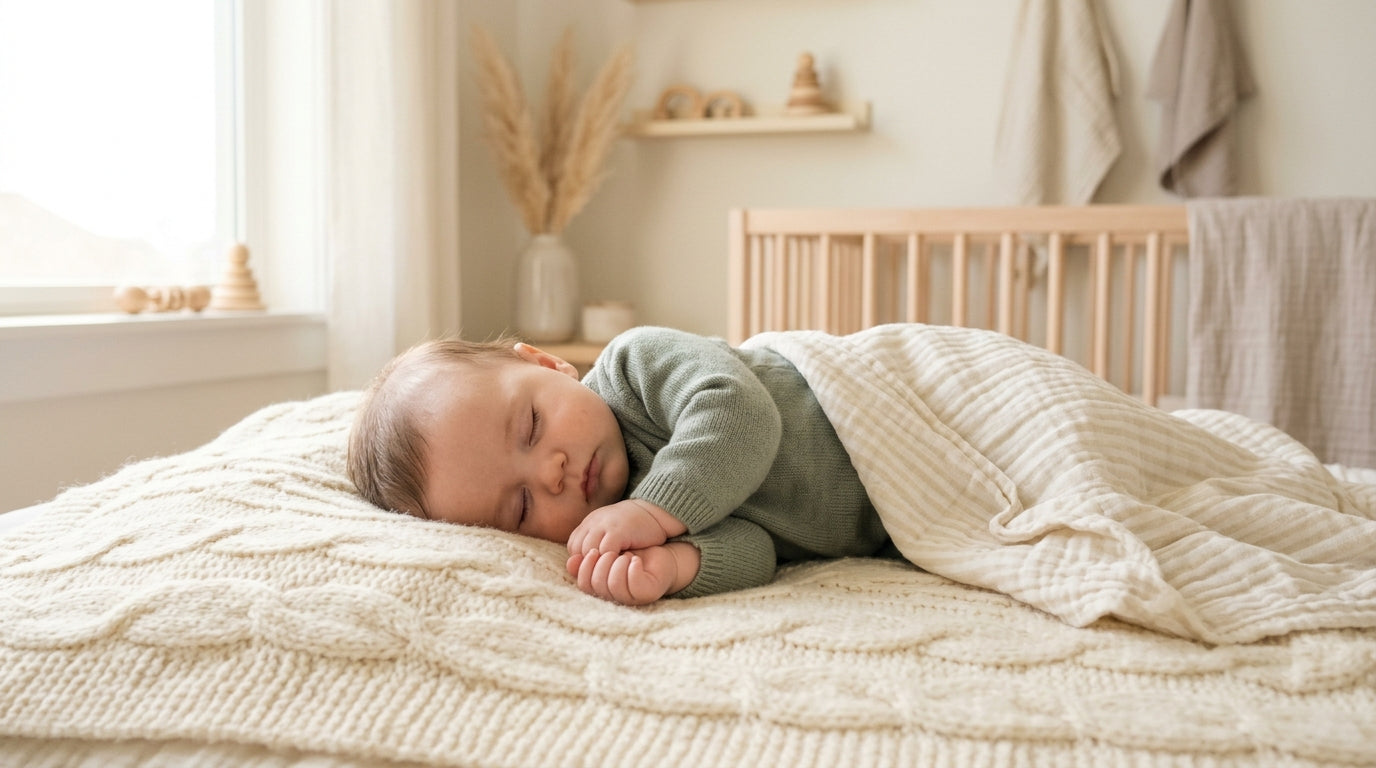
It's precisely 3:14 am, and I'm standing in a dimly lit nursery holding what feels like a highly agitated, damp jacket potato. Maya, the twin who's currently screaming directly into my left ear canal, is wearing a polyester fleece sleep sack that my mother-in-law insisted was "so snuggly." She is sweating profusely, I'm sweating in sympathy, and the entire situation is a miserable, clammy mess. This was the exact moment I realised everything I thought I knew about dressing a baby was a complete, unapologetic fiction.
Before having kids, my entire understanding of wool was based on a jumper my nan knitted for me in 1994, which felt less like clothing and more like a wearable medieval torture device. The idea of putting something like that next to a newborn's fragile skin seemed absurd. So we did what most panicked first-time parents do: we buried our girls under layers of cotton and synthetic fleece, completely oblivious to the fact that babies are basically tiny, wildly inefficient radiators that have absolutely no idea how to keep stable their own temperature.
You probably think wool is for men with massive beards standing on freezing Scottish mountains, but the reality of using superfine natural fibres on babies is vastly different, slightly more expensive, and involves a level of laundry paranoia I didn't know I was capable of.
The frankly bizarre conversation with our health visitor
Our NHS health visitor is a woman who looks like she has survived three wars and has zero patience for my millennial anxiety. She popped round when the twins were a few weeks old, took one look at my complicated swaddling setup, and muttered something about overheating being a massive risk factor for sudden infant death. I nearly dropped my lukewarm tea.
She tried to explain that putting a baby in plastic-based fabrics is a terrible idea because they can't sweat properly to cool down. Apparently, high-quality baby wool is a sort of biological thermostat—trapping heat when the room is freezing but magically venting it when the baby runs hot. I read somewhere later (or maybe a deeply tired nurse told me, the first six months are a blur) that premature babies wrapped in this stuff actually gain an extra ten grams a day. I assume this has something to do with them not wasting precious calories shivering or sweating, though my grasp of thermodynamics is mostly limited to knowing exactly how long a cup of coffee stays warm on the counter.
The trick, she told me, is all in the microns. If you buy regular wool, your kid will break out in a rash and scream. If you buy the "superfine" stuff (which is somewhere under 19.5 microns, whatever a micron actually is), the fibres physically bend when they hit the skin instead of poking it. It absorbs something ridiculous like a third of its weight in moisture without feeling wet, which stops them waking up feeling like a damp sponge.
When things go wrong with the skin
Let's be completely honest for a second, because the internet likes to pretend natural fibres are a cure-all magic trick. If your kid has severe, angry eczema, sometimes even the most expensive, cloud-like wool is going to cause a flare-up.
Lily went through a phase where her skin was so reactive I was afraid to look at her too intensely. Our paediatrician vaguely suggested falling back to plain, breathable layers when her skin gets red and angry, just to give it a break. That's exactly why we keep a rotating stack of Sleeveless Organic Cotton Baby Bodysuits stuffed in the top drawer. They don't have the temperature witchcraft of wool, but they stretch easily over a thrashing toddler's head without getting stuck on their ears, and frankly, at 6 am, that's the only feature I actually care about. If you're tired of battling rashes, sometimes you just need to strip it back to basics.
By the way, don't even ask me about TOG ratings. They're a completely made-up metric sent to torture sleep-deprived parents and I refuse to engage with them on any level.
My disastrous relationship with the washing machine
If you take nothing else away from my sleep-deprived rambling, please let it be this: regular laundry detergent will literally eat your expensive wool baby clothes.

I learned this the hard way. I took a forty-quid base layer that was covered in an impressive amount of pureed carrot, threw it in the wash with a standard biological pod, and pulled out something that looked like it had been violently attacked by moths. Regular detergents contain enzymes designed to break down protein stains, and since natural animal hair is made of protein, the detergent simply digests the clothes. It was a dark day in our household.
To avoid turning your child's wardrobe into rags, you've to buy a weirdly specific liquid, wash everything on a setting colder than the North Sea, and awkwardly drape the damp garments over clothes horses while praying they dry before the next nap time. You can't just throw them in the tumble dryer unless you want to create a garment perfectly sized for a moderately overweight hamster.
The only saving grace is that you rarely seriously have to wash the stuff. It's naturally antimicrobial, which is a fancy way of saying it doesn't hold onto smells. Unless someone has a catastrophic nappy leak (which, to be fair, happens at least twice a week in our house), you can usually just hang it out the window to air out and pretend it never happened.
Why I'm terrified of my own child's teeth
Eventually, your peaceful, sleeping baby will grow teeth, and they'll decide that the absolute best thing to chew on is the collar of their ridiculously expensive sleepwear.
Lily approaches life like a tiny, aggressive goat. I caught her gnawing on the neckline of her base layer with such ferocity I was fairly certain digesting raw protein fibres was going to end in a panicked trip to A&E. I frantically had to dig through the bottom of the buggy to find a distraction before she chewed a hole straight through the fabric.
I ended up shoving a Squirrel Teether into her hands, which she now aggressively chews while glaring at me from across the room. It saves my bank account from ruin, and because it's silicone, it doesn't get covered in weird wool fuzz that I then have to pick out of her mouth.
Speaking of accessories that mildly annoy me, I spent twenty minutes last Tuesday trying to untangle a pacifier string from a delicate knit cardigan without tearing a massive hole in the fabric. The Wood & Silicone Pacifier Clips we use are entirely fine and structurally sound, but the little wooden beads seem to magnetically attract loose threads if you aren't paying close attention, creating a knot that requires the patience of a saint to undo.
If you're currently drowning in baby gear research, maybe take a breath and browse some soft organic baby clothes that don't require an advanced degree in textile management to figure out.
Selling a minor organ to afford it
We need to talk about the cost, because outfitting twins in high-end natural fibres requires a budget normally reserved for purchasing a small used car.

When Maya went through a deeply frustrating phase of absolutely refusing to wear her sleep sack (she would stiffen as straight as a plank the second I brought it near her), I refused to buy another size up. Instead, I panic-bought the Colorful Universe Bamboo Baby Blanket as a desperate backup.
Honestly? I ended up loving it more than the eighty-pound sleep sacks. It controls their temperature almost as well because of the bamboo, it has this pattern of little planets that completely hypnotises Maya when she's fighting a nap, and most importantly, I don't have a minor cardiac event when it gets dragged through a puddle of indeterminate sticky liquid on the kitchen floor. Sometimes you just have to bodge a solution together that works for your specific kid, rather than adhering rigidly to whatever the internet tells you is best.
If you're determined to go all-in on the premium fabrics, my only advice is to stalk the secondhand apps. These garments hold their value absurdly well. Yes, you might occasionally buy something off eBay that smells faintly of someone else's loft, but a quick wash (with the correct detergent, obviously) usually sorts it out.
Summer sweating and the great temperature mystery
The final hurdle in my education was learning that you don't genuinely pack these clothes away when the sun comes out.
I spent our first summer dressing the twins in nothing but thin cotton, only to find them waking up from naps with damp, clammy backs from where they'd been lying on their mattresses. Cotton holds onto sweat like a sponge. When I complained about this to a mum group at the local park—while desperately trying to stop Maya from eating a fistful of sand—someone pointed out that I should just use the lightweight winter base layers.
It sounds entirely counterintuitive to put wool on a baby in July, but it actively pulls the sweat away from their skin and evaporates it into the air. They wake up dry. It feels like breaking a fundamental law of nature, but it works, and when you're running on three hours of broken sleep and half a packet of stale biscuits, you stop questioning the science and just accept the quiet.
Parenting is mostly just throwing expensive fabrics at a crying tiny person and hoping for the best, so if you're still looking for things that seriously help your kid sleep, have a rummage through the baby blankets collection before you lose your mind entirely.
Frequently Asked Questions That I Wish Someone Had Answered Clearly
Can I just use normal detergent if I run out of the special stuff?
Absolutely not, unless you actively want to destroy the clothes. I thought I could get away with using a tiny drop of regular liquid soap once when we were out of town. The enzymes immediately started eating the protein fibres, leaving the fabric feeling rough and looking like it had been dragged behind a car. Just wash it in water if you're desperate, or let it air out. It handles smells better than you think.
Will my baby definitely sleep better if I spend a fortune on these clothes?
Look, I'd love to tell you there's a magic fabric that guarantees a solid twelve hours, but babies are chaotic little gremlins. What it does do is remove "waking up because I'm freezing" and "waking up because I'm sweaty" from the massive list of reasons they might be screaming at 2 am. It eliminates temperature as a variable, which is a massive win when you're troubleshooting sleep.
How do I know if they're really overheating?
Ignore their hands and feet. Twin hands are always freezing, even in the middle of a heatwave, which used to send me into a panic. The health visitor told me to feel the back of their neck or their chest. If it feels hot and sticky, they've too many layers on. If it's warm and dry, you're fine, even if their fingers feel like little icicles.
Is the secondhand market honestly worth the hassle?
Yeah, but you've to act like a hawk. The good stuff sells within about five minutes of being listed. Always ask the seller if they washed it with proper detergent, because if they accidentally shrank it or washed the natural oils out of it, it loses all that fancy temperature-regulating magic and you're just buying a tiny, overpriced rag.




Share:
My Honest Review on Why We Finally Switched to Baumwoll Leggins
The Baby Sweater Survival Guide: How Not to Overcook Your Child