

Whatever you do, please don't pick up your kid and shake them like a defective Wi-Fi router when they suddenly go completely limp, which is exactly the panicked instinct I had to fight back at 2:14 AM last Tuesday. My daughter was mid-feed when she just paused. Not a normal pause. A terrifying, silent, staring-into-the-middle-distance pause where her color drained out and her tiny arms went floppy. I was standing in the living room with my thumbs hovering over my phone, frantically trying to google what to do, but my hands were shaking so badly I just typed limp e baby into the search bar instead of something useful. It's not like an electronic Tamagotchi where you can just check the battery logs. You're just left staring at this tiny human whose operating system appears to have completely frozen.
Eventually, she gasped. She blinked. Her color came back, and she looked at me like I was the one acting weird. The whole thing lasted maybe twenty seconds, but in dad-time, it felt like an entire fiscal quarter. We rushed to the pediatrician the next morning, convinced our kid's hardware was failing, only to be introduced to an acronym I hadn't encountered in my extensive late-night Reddit research: BRUE.
The system reboot nobody warns you about
Apparently, the medical community used to call these episodes ALTEs (Apparent Life-Threatening Events), which is an aggressively terrifying name that I guess caused too many parents to completely short-circuit. Now, my pediatrician told us, they call it a BRUE: Brief Resolved Unexplained Event. It's basically a catch-all term for when a baby under one year old temporarily unplugs from the matrix.
Dr. Aris sat me down and explained that her sudden loss of muscle tone—which he referred to as hypotonia—and the color change were just her immature reflexes misfiring, like a software bug in her respiratory drive. She wasn't choking. She wasn't having a seizure. Her body just hit pause. Wrapping my head around the fact that babies can just temporarily forget to breathe and be completely fine afterward requires a level of cognitive dissonance I wasn't prepared for. He said it often happens because of minor reflux or a harmless gag reflex that triggers an overly dramatic vagal response. It's infuriatingly vague. I asked for blood panels, a chest X-ray, maybe a tiny MRI, but he just shook his head and said we just had to observe her.
My obsessive risk-stratification spreadsheet
Because I process trauma by compiling data, I immediately started logging every single breath she took for the next forty-eight hours. I learned there's actually an algorithm pediatricians use to figure out if your kid is going to crash again. Dr. Aris ran us through the "Lower-Risk" parameters. First, they check if the kid is over 60 days old, which she's. Then they check if she was born full-term, which she was, barely. The event has to last less than a minute, and it has to be the first time it's happened without needing literal CPR from a professional to get them breathing again.
If your kid checks all those boolean boxes, they don't admit you to the hospital. They just send you home with a pat on the back and a pamphlet, which feels wildly inadequate when you've just watched your child temporarily turn the color of skim milk. If you fall outside those parameters, they might keep you for observation, but honestly, the prognosis is still supposedly excellent.
Why strapping sensors to your kid is a terrible idea
My immediate reaction to returning home was to try and buy every single medical-grade cardiorespiratory monitor on the internet. I wanted to strap a pulse oximeter to her foot, a breathing band around her chest, and maybe set up an infrared thermal camera over the crib. I wanted a dashboard.

My wife, Sarah, firmly vetoed this, and apparently, the American Academy of Pediatrics agrees with her. Dr. Aris specifically warned us that off-the-shelf breathing monitors for lower-risk BRUE babies are basically just anxiety generation machines. They don't prevent anything, but they do throw false alarms at 3 AM when the sensor slips, sending you into a blind panic that shaves years off your life. I spent three days raging about this lack of actionable data before I finally accepted that we couldn't monitor our way out of the anxiety.
Controlling the physical environment instead
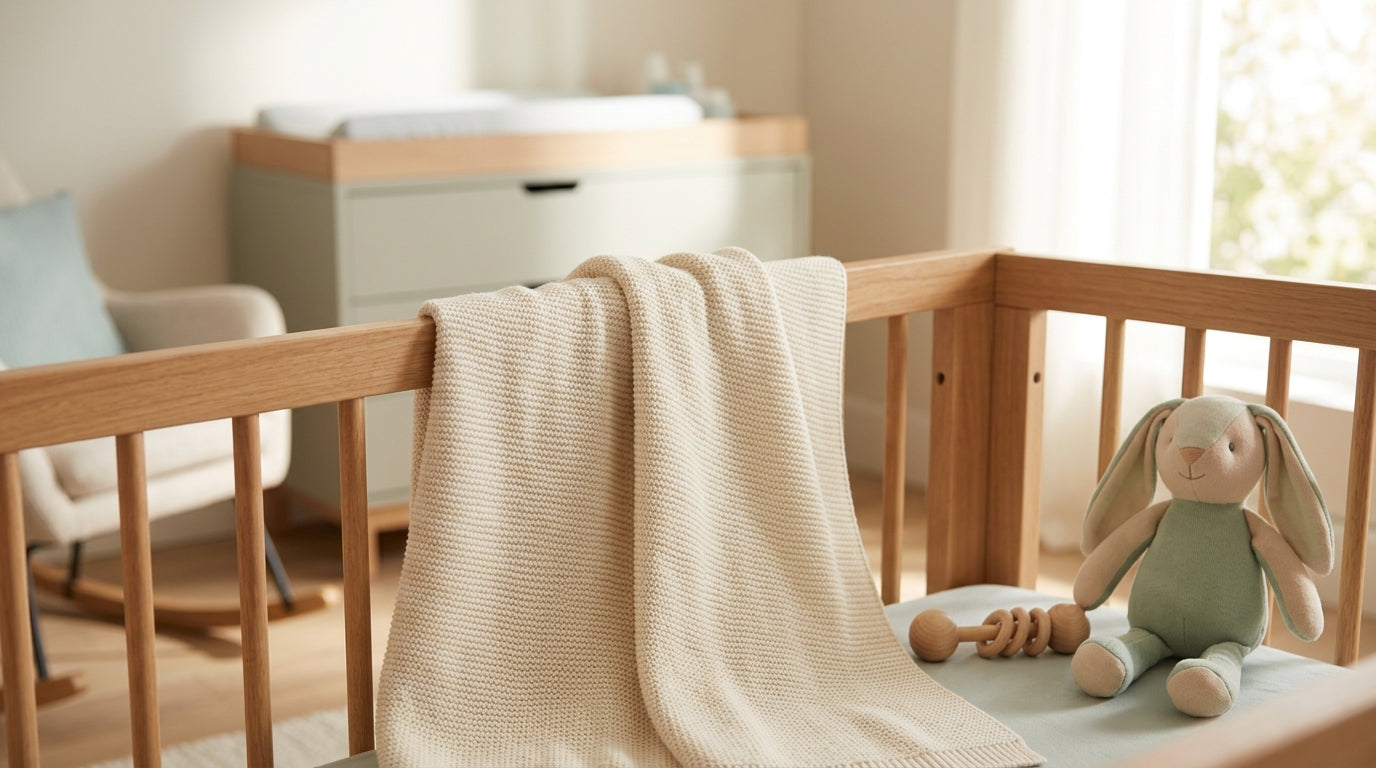
Since I couldn't wrap her in sensors, I channeled all my neurotic energy into auditing her sleep environment. We stripped the crib down to bare minimums. No loose blankets, no weird stuffed animals, just a flat, firm surface. Sarah pointed out that I had previously been dressing her in way too many layers because our old Portland house is drafty, so we completely overhauled her wardrobe to focus on breathable materials.
Our go-to fix became the Organic Cotton Baby Bodysuit. It's sleeveless, which means it layers perfectly under her sleep sack without turning her into a tiny sweating radiator. I genuinely like this thing because it has 5% elastane, meaning the neck actually stretches enough that I don't feel like I'm going to rip her ears off when I'm pulling it over her head during a midnight blowout. The organic cotton is supposed to be better for her skin, but I mostly care that it holds up after I accidentally wash it on the heavy-duty cycle with my jeans. It's a solid, reliable piece of hardware for her daily use.
Check out our full collection of organic baby clothes if you're also trying to optimize your baby's sleep layers.
Distractions during the observation window
The week after the glitch, neither of us wanted to look away from her during the day. But you can't just stare at a baby's chest for twelve hours straight without losing your mind. We needed somewhere safe to put her where we could still maintain a direct line of sight while attempting to drink lukewarm coffee.

We started putting her under the Rainbow Play Gym Set right in the middle of the living room rug. I'm actually a big fan of this thing. It's completely analog. There are no blinking LEDs, no horrific electronic farm animal noises, just a sturdy wooden A-frame with some tactile animal toys dangling from it. I'd sit on the floor next to her, watching her try to punch the little wooden elephant, silently counting her respirations while she practiced her gross motor skills. It kept her happily occupied and kept my anxiety at a manageable hum instead of a roar.
Of course, because the universe has a twisted sense of humor, she started aggressively teething the exact same week we were recovering from the BRUE scare. Suddenly she was fussing non-stop, gnawing on her own hands, and drooling like a leaky faucet. We ended up trying this Bubble Tea Teether my sister sent us. It's a silicone thing shaped like a boba cup. It's fine. It does the job. She chews on the little textured "pearls" and it seems to distract her from the gum pain. I do appreciate that it's just one solid piece of silicone, so when the dog inevitably knocks it off the sofa, I can just throw it in the dishwasher. Honestly though, she'd probably be just as happy chewing on my laptop charging cable if I let her, but at least this is food-grade and won't electrocute her.
The SIDS rabbit hole I wish I hadn't gone down
I need to address the darkest part of the BRUE experience, which is the immediate, suffocating fear that your baby is now at a higher risk for Sudden Infant Death Syndrome. I spent hours reading incredibly depressing medical abstracts trying to find the correlation coefficient.
Dr. Aris had to physically take my phone away during our follow-up visit. He explained that extensive, long-term pediatric studies show absolutely no increased risk of SIDS for babies who have experienced a lower-risk BRUE. The two things are completely independent variables. A BRUE is a hardware misfire that resolves; SIDS is a tragic, separate phenomenon. Hearing a medical professional explicitly state that she wasn't somehow broken or fragile was the firmware update my brain desperately needed.
It's been a few weeks now. The glitch hasn't happened again. We still check the video monitor a little too often, and I still occasionally hold my breath when she pauses too long between sighs in her sleep. But we're surviving. We're learning to trust her operating system again.
Ready to ditch the anxiety-inducing blankets and upgrade your baby's sleep setup? Browse our breathable sleep sacks and basics here.
My highly unofficial BRUE FAQs
Can I just buy an oxygen monitor anyway for my own sanity?
My pediatrician practically begged me not to, and honestly, he was right. Unless a doctor explicitly prescribes a medical-grade monitor for a high-risk situation, the consumer ones just measure movement or use flawed sensors that will scream at you at 4 AM because your kid kicked their leg out. You'll end up sleep-deprived and more anxious than before.
How long does a BRUE genuinely last?
Apparently, anything under a minute is considered the "lower-risk" standard, but let me tell you, thirty seconds of your baby not breathing feels like an eternity. If it lasts longer than a minute or they don't bounce back to their normal, annoying, crying selves almost immediately, you don't wait—you call 911.
Should I take a CPR class now?
Yeah, but not just because of the BRUE. Taking infant CPR after a scare is like writing unit tests after your code already crashed in production, but you should do it anyway. It won't stop a BRUE from happening, but it'll give you the muscle memory to handle choking when they start eating solid food later.
Will they do blood tests at the hospital?
If your kid fits the lower-risk criteria, probably not. I demanded a full toxicology screen and blood work because I wanted data, but the doctor explained that sticking needles in a perfectly healthy baby who just had a minor reflex glitch causes unnecessary pain and risks false positives that lead to more invasive testing. Sometimes, doing nothing is the actual medical advice.
Does this mean my baby has sleep apnea?
My doctor told us that a single BRUE event doesn't mean your kid has chronic sleep apnea or asthma or any other respiratory condition. It's usually a one-and-done glitch in their very new, very immature nervous system. If they're snoring constantly or gasping for air every night, that's a different conversation for the pediatrician.




Share:
The Truth About Chili's Baby Back Ribs For Your Weaning Toddler
Why I Quit Natural Bug Spray for Babies (And What Actually Works)