

We were at Maggie Daley Park, right in the middle of a brutal Chicago November, and my son was bleeding from his mouth.
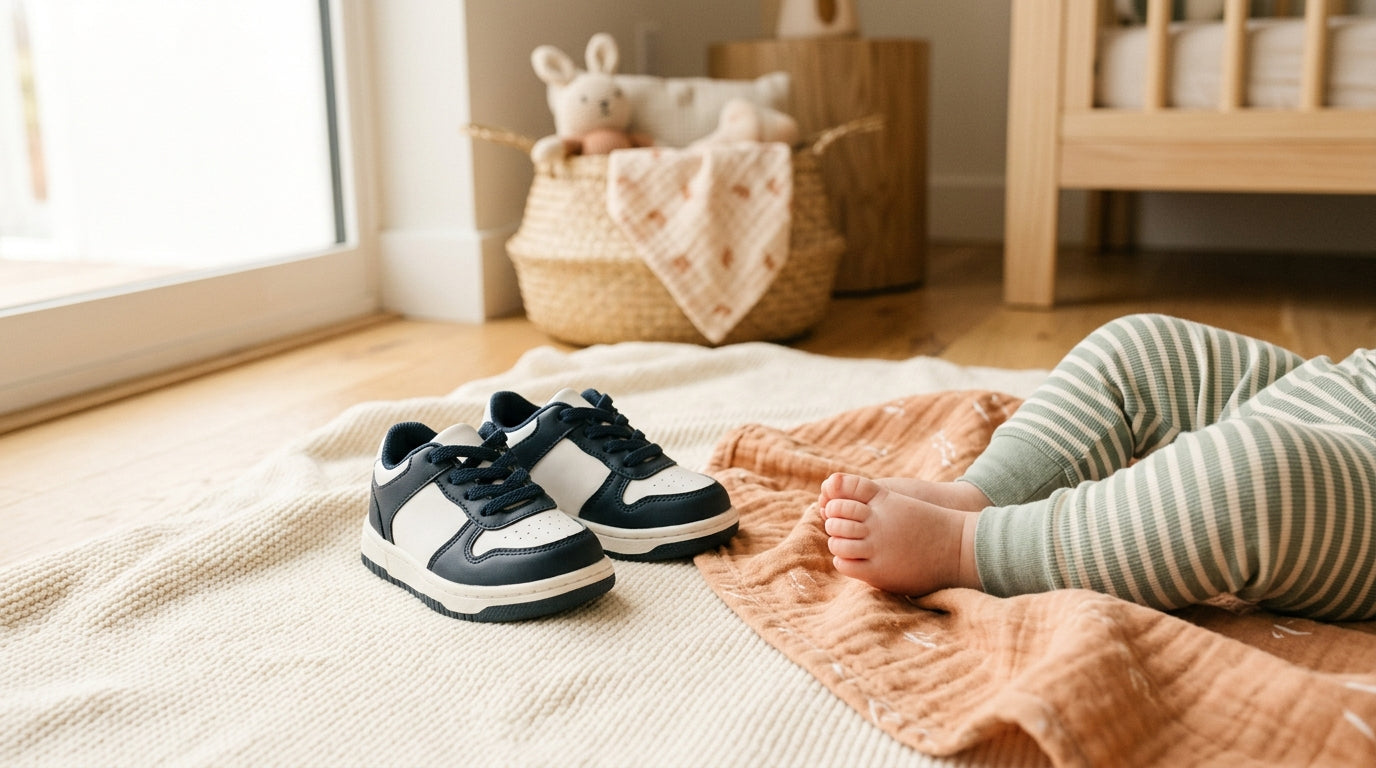
I'd dressed him in these incredibly expensive, highly structured miniature basketball shoes. They looked exactly like my husband's retro sneakers. I thought they were cute. I assumed they'd give him ankle support, whatever that means for a fourteen-month-old.
Instead, they basically immobilized him from the shin down. He tried to take a step, caught the thick rubber edge on a playground mat, couldn't bend his foot to compensate, and went down like a felled tree right onto his face.
I spent the next twenty minutes holding a bloody muslin cloth to his lip while he sobbed into my jacket. The whole train ride home, I kept staring at those stupid tiny sneakers. I realized I'd fallen for the oldest marketing trick in the baby industry. I bought him shoes designed for a thirty-year-old man's biomechanics.
Working pediatric triage in a Chicago winter is an endless parade of snowsuit-related injuries and twisted ankles from inappropriate footwear. I've seen a thousand of these kids come in crying because their foot stayed planted in a heavy winter boot while their upper body twisted to chase a squirrel. Yet here I was, doing the exact same thing to my own kid because the shoes looked good in a photo.
Why barefoot is actually the whole point
Listen, my pediatrician mumbled something about how kids shouldn't even wear shoes until they're literally walking on glass or hot asphalt. I think she said barefoot walking builds the neural pathways between their soles and their brain, but honestly I was just trying to keep my kid from eating a ripped magazine in the waiting room.
The point she was making, though, is that barefoot is the biological default setting. Physical therapists have this thing they call the community rule. They basically say your kid only needs structured shoes when they're walking independently in outdoor community spaces where they might step on a rusty nail. Indoors, they should be barefoot or in soft grip socks.
The great arch support scam
Parents come into the clinic all the time obsessing over their toddler's flat feet. They spend hours hunting for shoes with built-in orthopedic arches, terrified their kid is going to develop some tragic gait deformity if they don't intervene immediately. They think they need to mold the foot like clay.
The reality is that babies are supposed to have flat feet. They have this massive fat pad right where the arch should be. It's essentially a built-in shock absorber for all the falling they do. When you shove a rigid arch support under a fat pad, you're just compressing tissue and preventing the actual muscles of the foot from doing the work they need to do to eventually form a real arch.
My medical brain finds it baffling that we try to fix a biological feature that isn't broken. Your kid's flat, chubby foot is perfectly designed. Stop trying to correct it with a sixty-dollar leather shoe that feels like a medical cast.
Laces are a hazard
Laces on a baby shoe are just a tripping hazard waiting to happen and anyone who buys them obviously enjoys tying knots while a toddler kicks them in the jaw.
Too much grip is a thing
Then there's the traction problem. Shoe brands love to slap these rugged, deep-grooved hiking soles on a size four shoe. Babies shuffle. They don't pick their feet up cleanly like they're marching in a parade.

If they wear deep treads on a living room rug, the rubber catches the fibers, their forward momentum keeps going, and they eat carpet. It's simple physics. Traction is good until it's too good. A thin, flat rubber sole is all they need.
What my medical brain looks for in foot gear
When you finally do have to put shoes on them because the park is covered in mystery debris, there are specific things to look for. I use a mental checklist when I'm looking at baby gear.
- The fold test. I stand in the middle of a store and literally fold the shoe in half. The heel should easily touch the toe. If I've to use forearm strength to bend it, it's entirely too stiff for a baby.
- Zero drop. The heel shouldn't be higher than the toe. They need to stand flat. A raised heel throws off their entire center of gravity, and they're already top-heavy little drunkards.
- Wide toe box. A baby's foot is shaped like a slice of pizza. When they stand, their toes splay out to grip the floor and keep them upright. If the shoe comes to a sleek, narrow point, you're just squishing their primary balancing tools.
The room-to-grow trap that gets us all
Then there's the sizing issue. I get it. Shoes cost money, and kids grow out of them in six weeks. It's incredibly tempting to buy a size up so they've room to grow.
I've seen so many toddlers in the clinic with massive blisters on their heels because their parents bought shoes a full size too big. The foot just slides back and forth inside the shoe. It creates friction, it ruins their stability, and they end up dragging their feet just to keep the shoes from falling off.

It alters their entire gait. You wouldn't wear shoes a size too big and try to learn how to walk on a tightrope, but that's essentially what we ask them to do.
I read somewhere that like two-thirds of kids are walking around in the wrong shoe size, which sounds wild until you actually try to measure a squirming toddler's foot. You need exactly one thumb's width of space between their longest toe and the end of the shoe. That's it. Check it every couple of months while they're standing up, because the foot spreads out when they put weight on it.
Secondhand shoes are a gamble
Usually, I'm all for used baby gear. But shoes are tricky. A baby who already walked in those shoes wore down the sole in a specific pattern based on their unique, weird toddler gait.

When you put your kid in them, you're basically forcing them to walk in someone else's rut. If the soles are pristine, fine. If the heel is visibly worn on one side, just toss them. My pediatrician mumbled something about hallux valgus, which I guess means turning the big toe inward, but who really knows the long-term impact of squishing baby feet into worn-out leather prisons.
A word on what actually goes on their feet
After the bloody lip incident, I threw the expensive high-tops in the back of the closet and started looking for things that really bent.
I eventually ordered the Baby Sneakers from Kianao. I'll be totally honest, I mostly bought them because they looked like little boat shoes and didn't cost a fortune. But they genuinely pass the fold test.
The sole is just a thin, non-slip layer that protects his foot from stray woodchips but still lets him feel the uneven ground. They have a wide enough toe box that his pizza-feet aren't cramped, and they slip on without a fight. They get scuffed up pretty fast because he drags his toes when he crawls, but I don't care. They do exactly what they're supposed to do, which is get out of his way.
Getting him dressed to go outside is still a wrestling match. I try to stick to clothes that don't add to the restriction. The Sleeveless Organic Cotton Baby Bodysuit is fine for layering under his sweaters. It's stretchy enough that I don't feel like I'm dislocating his shoulder when I pull it over his head. It's a bodysuit. It does the job and doesn't give him a rash.
If you're hunting for clothes that don't fit like cardboard, browse the organic cotton collection and save yourself some dressing-table tantrums.
Sometimes I just hand him the Panda Teether while I'm trying to strap his shoes on. It distracts him for exactly forty seconds. It's silicone and he likes the ears. It's whatever, but it works in a pinch.
Rethinking the whole footwear thing
We overcomplicate this stuff. We project our own fashion aesthetics onto bodies that are still trying to figure out basic gravity. Your baby doesn't need ankle support. They don't need arch support. They don't need a mini version of whatever the current sneakerhead trend happens to be.
They just need their feet to act like feet. Let them run around barefoot inside. Let them grip the carpet, slip on the hardwood, and learn how to catch themselves. And when you do have to take them into the wild, just put them in something soft. Give their toes some room to breathe, yaar.
Wrestle your kid into a standing position to check their actual foot size before you just guess and trap them in something that pinches their little toes, and maybe take a look at our soft sole options while you're at it.
Questions I hear in the clinic
Are grip socks enough for a new walker?
If you're inside, absolutely. Grip socks or bare feet are literally all they need on carpet or hardwood. The only time you need an actual shoe is when you're taking them outside to a park where there might be sharp sticks, hot pavement, or garbage. Inside, let their toes figure out the floor on their own.
When do I genuinely need to buy that first pair?
Don't bother buying walking shoes when they're just pulling themselves up on the coffee table. Wait until they're actively taking independent steps outside the house. Before that, shoes are just a really expensive accessory that makes it harder for them to learn how to balance.
What if my baby has really wide, chubby feet?
Most babies have wide, chubby feet. That's the default shape. If a shoe is hard to get on because it's too narrow, don't force it. Look for brands that have wide toe boxes and open really far down the tongue so you aren't fighting to shove a square peg into a round hole.
Is it normal that they walk weird in new shoes?
A little bit of a learning curve is normal because the shoe adds weight and changes the sensory feedback they get from the ground. But if they're constantly tripping, refusing to bend their knees, or doing the Frankenstein walk after a few days, the shoes are probably too stiff or too heavy. Ditch them and find something softer.
Can I wash soft sole baby sneakers in the washing machine?
I wouldn't. The soft rubber and glues usually warp if you put them through a hot wash cycle. Just wipe the mud off with a damp cloth and accept that they're going to look lived-in. They outgrow them so fast anyway that keeping them pristine is a losing battle.




Share:
The midnight triage of baby sleep and staying remotely sane
The Real Deal on Feeding Your Baby Spinach Without the Tears