

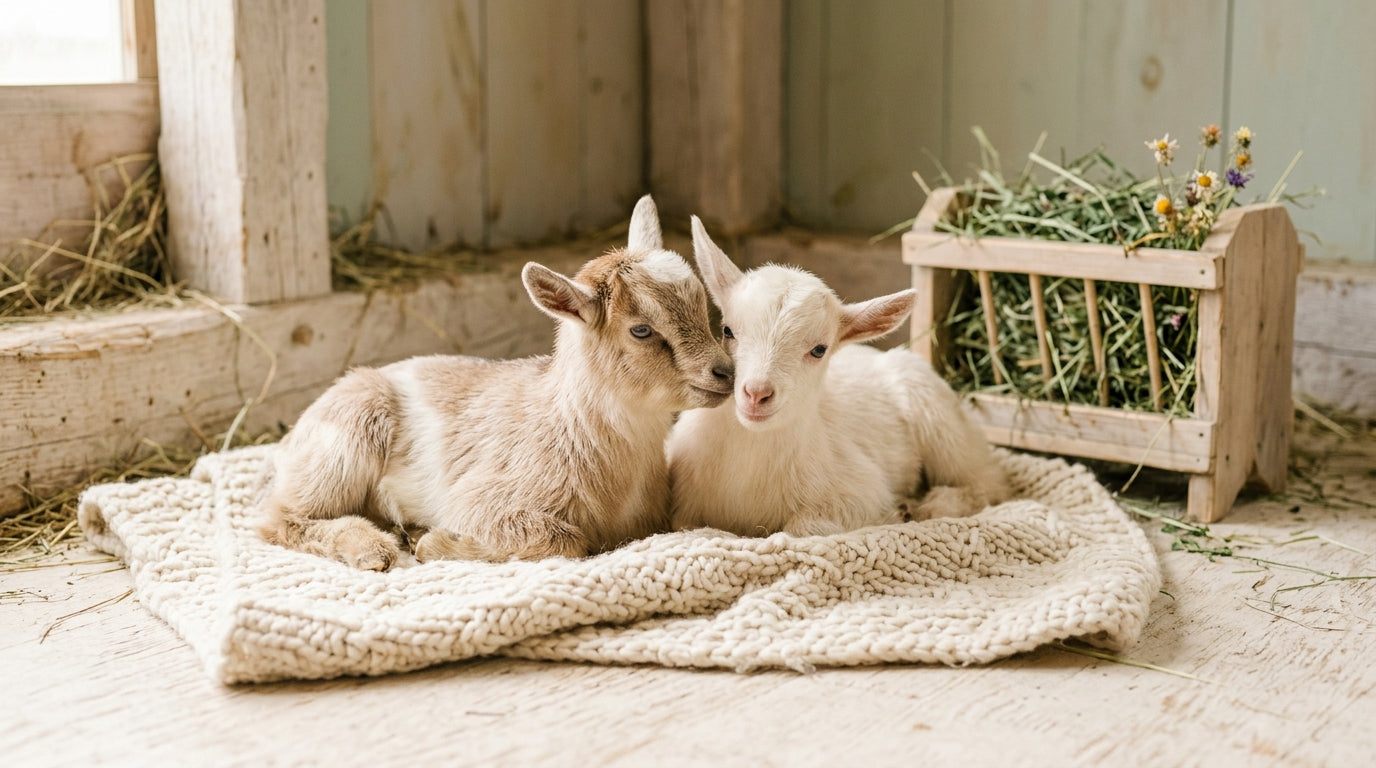
I'm currently hiding in the downstairs loo while my two-year-old twin daughters attempt to dismantle a perfectly good Amazon box in the hallway, and I'm furiously scrolling through listings for baby goats for sale in cobleskill on my phone.
You might reasonably ask why a sleep-deprived journalist living in a London flat is looking at agricultural livestock sales in Upstate New York. It started last Tuesday at a city farm near the Surrey Docks. Twin A (the biter) made intense eye contact with a miniature goat. The goat looked back, let out a noise that sounded exactly like a middle-aged man clearing his throat, and I suffered a massive, temporary lapse in sanity. I suddenly had this vivid, romantic vision of uprooting our entire urban existence, moving to Schoharie County, and raising a small herd of livestock. I had read an article at 2am about SUNY Cobleskill’s brilliant agricultural program, and in my severely compromised mental state, I decided this was our destiny.
Before this bizarre fixation took hold, my understanding of farm animals was entirely theoretical. I honestly believed a baby goat was essentially just a dog with hooves that would conveniently mow your lawn while looking adorable in photographs.
The reality, as I've discovered through a week of manic internet research while hiding from my children, is so much worse.
The lonely livestock problem
My first brilliant plan was to just buy one. I even had a name picked out—I affectionately referred to him in my head as baby g, picturing him trotting behind the pram on our way to get coffee. But you can't, under any circumstances, buy just one.
According to every furious breeder forum I stumbled into, these animals are violently co-dependent. If you isolate them, they don't just get a bit sad; they completely lose their minds. A local bloke who runs the petting zoo near us told me that a solitary goat will literally scream itself hoarse, stop eating, and essentially die of a broken heart, which is a level of dramatic behavior I usually only see when I cut my daughters' toast into triangles instead of squares.
So, instead of just grabbing a single pet to stick in the garden and hoping for the best, you're legally and morally obligated to buy a pair, which immediately doubles your feed costs, veterinary bills, and the volume of feces you've to manage before you've even had your morning tea.
While I was tumbling down this particular rabbit hole of agricultural misery, I had parked the twins under their Wooden Baby Gym in the living room. I've to say, I genuinely love this thing. Most baby gear feels like it was designed to break the moment a toddler looks at it aggressively, but the A-frame on this gym is weirdly indestructible. It survived Twin B using the hanging wooden elephant as a makeshift trapeze while Twin A tried to chew on the legs. It bought me exactly fourteen minutes of relative peace to read up on goat diarrhea, which in parenting time is basically a fortnight.
Diseases that sound like terrible indie bands
Let’s talk about the medical side of bringing livestock around toddlers, because it's terrifying.

I casually brought this up with our NHS GP, Dr. Evans, during a routine appointment for a mystery rash the girls had developed. I asked him if there was anything I should worry about regarding zoonotic diseases and miniature farm animals. He looked at me with the tired eyes of a man who has seen too much and basically told me to scrub the girls' hands until they bleed if they ever get within a five-mile radius of a petting zoo.
Apparently, these adorable little creatures are walking petri dishes. From what I can gather through my highly imperfect medical understanding, you've to test them constantly for things like CAE (Caprine Arthritis Encephalitis) and CL (Caseous Lymphadenitis). I'm fairly sure CAE is some sort of joint disease that makes their knees swell up like grapefruits, but honestly, given my sleep deprivation, it could just as easily be a typo I made at 3am.
- They carry E. coli, which they'll happily pass onto your toddler who constantly has her hands in her mouth.
- They can harbor Salmonella, turning your charming pastoral dream into a gastrointestinal nightmare.
- They get something called coccidiosis if you wean them from their mothers too early, which results in the kind of explosive mess I can't even bear to type out.
My pediatrician's advice essentially boiled down to treating farm animals like toxic waste dumps wrapped in fur. If your kid touches one, you scrub them down immediately. There's no casual "oh, just wipe your hands on your trousers" when dealing with livestock.
The nightmare of bottle feeding
If you think waking up every three hours to feed a human infant is bad, try doing it for a farm animal. Some places sell baby goats that are only a few weeks old, which means you become their mother. You have to buy these specific, bizarre things called Pritchard teats and mix up powdered milk replacer at exact temperatures.
I spent six months doing the 2am bottle feeds for my daughters, wandering around the kitchen like a zombie, mixing formula while trying not to wake the entire street. The idea of doing that again, but this time having to go outside into the freezing rain to feed a screaming animal that smells like damp wool, fills me with a big, existential dread.
A breeder's manual I read suggested staying calm when they refuse the bottle, which I found deeply unhelpful at 3am when I was just trying to comprehend the logistics. They'll headbutt the bottle and aspirate the milk into their lungs if you hold them wrong. They will basically try to self-destruct at every available opportunity.
Fainting goats just fall over when you clap, which frankly sounds like my toddlers after a sugar crash so we'll skip those entirely.
The great escape artist
Then there's the housing situation. I had this ridiculous notion that you could just put up a little wooden picket fence and call it a day.

In reality, goats view fences not as boundaries, but as fun puzzles to solve. I read about people spending thousands on heavy-duty, no-climb woven wire fencing, only to find their beloved pets standing on the roof of their car the next morning. You have to build them draft-free, completely dry shelters because despite being covered in hair, if a single drop of rain touches them, they act like they're melting.
I had this wildly optimistic fantasy of wrapping a little bottle-fed kid in our Bamboo Baby Blanket with the colorful leaves while we bonded on the porch. The reality is that a goat would probably chew through the bamboo fibers in about thirty seconds and then defecate on my shoes. It's a perfectly fine blanket for human babies, to be fair. It's quite soft, and the leaf pattern is nice enough, though honestly I live in constant fear of shrinking the bloody thing because I can never remember which temperature setting to use on the washing machine. It mostly just sits draped over the back of the nursery chair looking aesthetically pleasing while I throw the twins in cheap cotton sleepsuits that I don't mind ruining.
I suppose if you were really committed to the aesthetic, you could get the Organic Cotton Baby Blanket with Polar Bear Print to use in the stroller, but bringing nice organic cotton anywhere near a farm animal is a fool's errand.
If you've also decided that perhaps raising agricultural stock isn't for you, but you still want nice things for your actual human children, you can browse our collection of baby blankets that won't be eaten by livestock.
The reality check
Before you get sucked into the romance of looking at baby goats for sale in the pastoral paradise of Cobleskill or anywhere else, you really have to look at what you're signing up for.
You aren't just buying a cute pet for your Instagram feed. You're signing up for endless veterinary bills, specialized high-copper minerals because sheep feed will literally kill them, and the joy of having to disbud them. That's a fun little process where they burn the horn cells off the baby's skull when they're a week old so they don't grow up and accidentally impale your toddler. Try explaining that procedure to a weeping child.
- What I thought I'd do: Buy one goat, put it in the garden, take cute photos.
- What you actually have to do: Buy two goats, build a fortress, stockpile specialized minerals, learn to give vaccines, and pray they don't eat your neighbor's prized rose bushes.
So, the dream of moving to Upstate New York to become a rugged, goat-farming dad is officially dead. I'll stick to London, where the only things destroying my home are my two-year-olds, and the only feces I've to deal with comes neatly packaged in a nappy.
Ready to stick to indoor, non-farm-animal-related parenting? Check out our sustainable wooden toys that definitely won't scream at you if you leave them alone in a room.
Messy questions about livestock I googled at 2am
Can you keep just one goat?
Absolutely not. They're intensely social and will loudly, persistently ruin your life until you buy them a friend. Getting just one is basically a guarantee of having a miserable, screaming animal that the neighbors will eventually call the council about.
Do they really eat everything?
They won't eat tin cans like in the cartoons, but they'll absolutely strip the bark off your favorite trees, eat toxic plants because they lack common sense, and nibble on your jacket zippers. They're browsers, not grazers, which means they prefer eating your expensive landscaping over the grass they're standing on.
What's the deal with disbudding?
It’s a grim procedure where a vet (or a very brave farmer) burns the horn buds off a baby goat's head when they're just days old. It sounds utterly barbaric, but the alternative is having an adult animal with massive horns headbutting your toddler by accident. It's one of those terrible farming realities that makes you reconsider the whole endeavor.
Are miniature breeds actually better for kids?
Nigerian Dwarfs are smaller and generally friendlier, which means when they inevitably escape their pen and jump on you, they weigh 50 pounds instead of 150 pounds. So in that sense, yes, they're slightly less lethal to small children. But they're still farm animals with hooves and unpredictable moods.
Should I buy a bottle baby?
Only if you miss the sheer exhaustion of the newborn human phase and want to recreate it with an animal. Buying a weaned kid at 8-12 weeks old is vastly easier, safer, and means you don't have to deal with mixing specialized milk replacer while crying in your kitchen at midnight.




Share:
Building A Baby Girl Gift Basket That Parents Will Actually Use
That Terrifying Sound: When Babies Start Grinding Their Teeth