

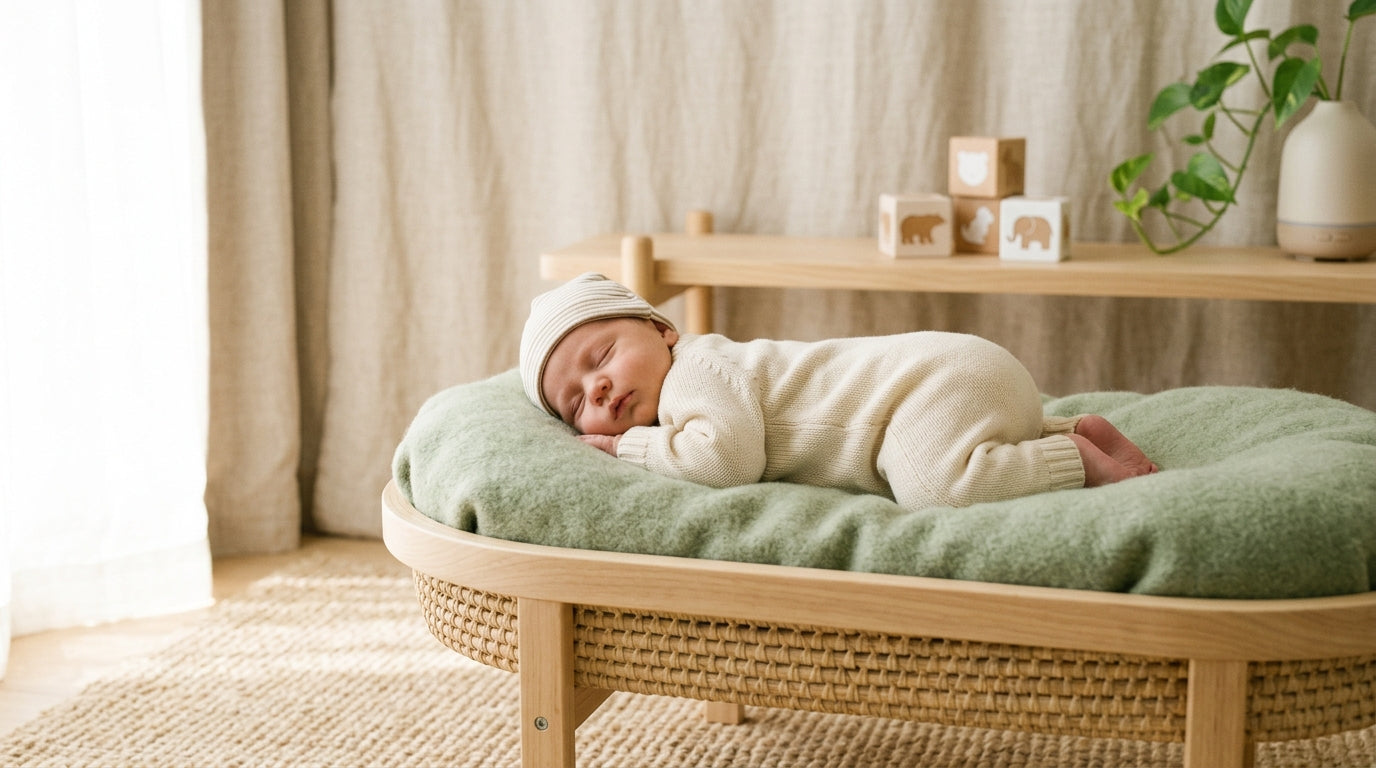
It was 4:12 a.m. on a particularly bleak Tuesday when I found myself sliding down a demographic rabbit hole. Maya, who's technically twin A but behaves aggressively like a middle child, had decided that sleep was a social construct she no longer ascribed to. She was draped across my left shoulder, lightly drooling into my collarbone, while my right hand mindlessly scrolled through the internet in that specific, desperate way you do when you're trying to stay awake so you don't drop your own offspring. If you've ever found yourself wide awake in the dead of night, furiously typing how many babies are born in the us each year into your glowing phone screen while your brain slowly liquifies, you'll understand the exact state of mind I was in.
My search history from those early months looks like a ransom note written by an incredibly anxious person with terrible thumbs. Sandwiched between queries like what color should newborn poop actually be and frantic typo-ridden searches for how many babi in world or babie sleep regression why, was this sudden, overwhelming need to understand the sheer volume of human production. I felt so utterly alone in the dark of my London flat, listening to the hum of the refrigerator, that I needed to know who else was awake. The internet, in its infinite wisdom, provided the number.
The three million club
There are approximately 3.6 million newborns joining the American population annually, which my sleep-deprived brain roughly calculated to about 10,000 new arrivals every single day. Ten thousand. If you took all the babies born on a random Tuesday in America and put them in one place, you'd have a medium-sized football stadium filled entirely with screaming, milk-drunk infants, which incidentally sounds like my exact definition of hell.
The fertility rate apparently hit a record low recently, dropping to something like 1.62, which a statistician would likely frame as a demographic crisis but I mostly view as proof that millennials are simply too tired to procreate at historical volumes. We're having fewer children but absolutely obsessing over the ones we do have, spending our limited free time researching non-toxic mattress cores and reading parenting books that suggest you just breathe through a toddler tantrum (page 47 suggests you remain calm, which I found deeply unhelpful at 3am when Maya threw her milk cup at my face).
Sitting there in the dark, processing that 10,000 people a day were having their lives upended exactly like mine, actually brought me a weird sense of peace. Somewhere in Ohio, a bloke was probably also wearing his daughter's sick on his favourite t-shirt. Solidarity.
Tuesday at two in the afternoon
The statistics say the most popular time for a baby to be born is on a Tuesday, usually between noon and three in the afternoon. This completely shattered my cinematic illusion of the frantic midnight dash to the hospital in the pouring rain. Our girls arrived on a Thursday morning, but looking back at the chaotic sterile environment of the hospital room, I completely understand the Tuesday afternoon phenomenon.
It comes down to scheduled arrivals. I read somewhere that nearly thirty-two percent of American babies are born via Cesarean section, a number that sounds massive until you actually find yourself in a maternity ward watching the monitors flash and listening to doctors speak in hushed, urgent tones. The medical staff vaguely gestured at my wife's chart and muttered something about positioning before calmly explaining we were going to theatre. You nod along, entirely reliant on these strangers in scrubs, while your internal monologue is just a prolonged scream of terror.
The aftermath of a surgical birth is a brutal reality check. The absolute audacity of nature, or perhaps the medical establishment, to expect a woman who has just undergone major abdominal surgery to immediately begin caring for one or more screaming potatoes is genuinely baffling. I spent those first few days mostly trying to lift things, move things, and desperately hand my wife water, feeling entirely useless while the nurses marched in every four hours to poke and prod.
The financial shock of American hospitals
While doomscrolling through these statistics, I stumbled across the financial reality of giving birth in the United States, and I nearly dropped my phone on Maya's head. Fourteen thousand dollars for a standard delivery. Seventeen thousand dollars for a C-section. And that's with insurance, which is a concept my British brain struggles to process fully.

Seventeen thousand dollars to have a baby is not a medical bill. That's a deposit on a small house, or a reasonably well-equipped used Honda Civic. I sat there in the dark, clutching my free NHS baby, feeling a big mixture of guilt and horror. Our hospital stay in London cost us absolutely zero pounds, though we did have to endure a postpartum meal of heavily buttered toast that tasted vaguely of cardboard and disappointment. But I'll happily eat cardboard toast for a week if it means I don't get a bill that requires a payment plan spanning a decade.
I can't fathom the level of stress this adds to the already terrifying prospect of keeping a newborn alive. You're not only tracking wet nappies and measuring formula in milliliters, but you're presumably also waiting for the postman to deliver an invoice for the privilege of holding your own child. It forces a certain level of financial anxiety that completely rewired my understanding of why modern parents are waiting so much longer to start families.
The national average for twin births is a whole other statistical nightmare I refuse to look at.
Summer arrivals and breathable layers
By some bizarre quirk of human behaviour, August is the most popular birth month. If you count backwards nine months, you land squarely in November and December, suggesting that the combination of dropping temperatures, holiday parties, and perhaps one too many glasses of mulled wine is entirely responsible for the summer maternity ward bottleneck.
Having a newborn in late summer is a specific kind of logistical nightmare. You're terrified they're going to freeze to death, so your instinct is to wrap them in fourteen layers of fleece, but then the thermometer hits thirty degrees and you panic that you're slowly roasting them in their own pram. We spent our first August utterly paralyzed by temperature anxiety, constantly touching the back of the girls' necks to see if they were sweaty, freezing, or just sticky with milk.
This is where my obsession with fabric began. When you've two babies constantly cycling through clothing due to spectacular, physics-defying poosplosions, you quickly learn what survives a hot wash and what turns to stiff plastic.
We were gifted the Organic Cotton Baby Blanket Calming Gray Whale Pattern, and it became the undisputed MVP of our summer survival strategy. It's made of this GOTS-certified organic cotton that somehow manages to be both substantial enough to feel like a proper blanket and breathable enough that I didn't worry about the girls overheating in the stifling London humidity. There was an incident in late August involving Maya, a questionable batch of formula, and a velocity of vomit I didn't know a human body could produce. The whale blanket took a direct hit. I threw it in the wash expecting the grey whales to fade into oblivion, but it genuinely came out softer. We use the larger 120x120cm one now as a playmat when we're at the park, and it still looks brilliant.
On the flip side, during a panic-induced heatwave shopping spree, I bought a handful of the Organic Cotton Baby Bodysuit Sleeveless Infant Onesies. The organic cotton itself is genuinely brilliant—super soft against their skin, entirely breathable, no weird chemical smells. But they've these tiny snaps at the bottom. The snaps are perfectly fine at two in the afternoon, but at four in the morning, when you're operating on a microscopic amount of sleep and dealing with a writhing, screaming child, trying to align three microscopic metal circles in the dark feels like trying to defuse a bomb with chopsticks. I eventually just started snapping the middle one and letting the sides hang loose. They lived in them for two months anyway.
The older wiser and infinitely more tired parents
The demographic data from my late-night reading session informed me that the average age of a first-time mother is now 27.5 years old. The teen birth rate has absolutely plummeted since the nineties, which seems like a rare universal victory we should probably talk about more. But 27 still seems staggeringly young to me. We didn't have the girls until our late thirties, a demographic bracket that the medical community delightfully refers to as geriatric, a term I'm still personally offended by.

Being an older parent means your knees make a noise like a snapping celery stick when you bend down to retrieve a dropped dummy from under the sofa. You have generally achieved a bit more financial stability, but your physical battery life is significantly shorter. You compensate by trying to buy things that solve problems, leaning heavily into the "quality over quantity" mindset because you just don't have the energy to manage a house full of cheap plastic rubbish that breaks after three days.
Explore our organic baby clothes and natural nursery essentials here.
Tiny clothes for tiny humans
One of the more sobering statistics I stumbled across was that over ten percent of babies are born prematurely. Twins are notorious for making an early exit, and ours were no exception. When they handed us these tiny, fragile creatures, nothing we had packed in our hospital bag honestly fit them. Newborn sizes looked like clown suits.
Finding things that don't swallow a preemie whole or irritate their incredibly sensitive, paper-thin skin becomes a frantic mission in those first few weeks. You're suddenly hyper-aware of everything touching them. My mother-in-law bought us the Rainbow Bridge Bamboo Baby Blanket, and it was a revelation. Bamboo fabric has this almost liquid softness to it that feels cooling to the touch. Because it's naturally hypoallergenic, it was the only thing we felt comfortable swaddling them in when Chloe developed a patch of mysterious newborn eczema that the doctor vaguely attributed to the washing powder. It has this dark brown base with little rainbow patterns that didn't show the inevitable milk stains, which was a massive bonus.
Sitting there reflecting on the sheer volume of humans entering the world daily, the stats stop feeling like numbers and start feeling like a massive, invisible club of exhausted people. 10,000 babies a day means 20,000 parents a day are stepping onto the exact same chaotic treadmill, googling the exact same weird questions in the dark, and hoping they don't break the fragile little person they've been handed. You fumble through the hospital visits, you wince at the bills, you wrap them in the softest cotton you can find, and you just keep moving forward.
Before you fall down your own 4 a.m. rabbit hole about demographic shifts, you might as well grab something that will seriously help you survive the next sleep regression. Shop our collection of sustainable, soft baby blankets here.
Frequently Asked Questions from the Midnight Shift
Are hospital birth statistics the same in the UK and the US?
Not even slightly. While the US sees around 3.6 million babies a year, the UK sits closer to 600,000. But the real difference is the bill. I read the US median cost for a standard delivery is around fourteen grand. In the UK, the NHS covers the medical cost entirely, leaving you to just pay for parking, which honestly still feels like extortion when you've been there for three days, but I shouldn't complain.
What should you honestly pack for a C-section recovery?
My wife's bag was ninety percent useless things we read about on a blog. The only things that genuinely mattered were massive, high-waisted cotton knickers that sit well above the incision line, incredibly loose loungewear, and a ridiculously long charging cable for the phone because you can't bend over to reach the wall plug. Also, snacks, because hospital dinner happens at 5 p.m. and you'll be starving by midnight.
Do I really need to buy organic cotton for a newborn?
I used to think organic cotton was just a marketing scam for people who shop at expensive farmers markets, until we really had preemie twins with skin that reacted to absolutely everything. Conventional cotton is heavily treated with chemicals that just don't wash out completely. When you've a tiny human whose immune system is practically zero, wrapping them in untreated, breathable fabric suddenly makes a lot of sense.
Why are there so many babies born in August?
Maths and winter weather. Count back nine months from August and you hit November and December. People are indoors, it's cold, holiday parties are happening, and nine months later the maternity wards are absolutely packed. It just means you spend your first few weeks of parenthood obsessing over whether your baby is too hot instead of too cold.
How many blankets do you realistically need?
We started with two and quickly realized that's a fool's game. Babies are exceptionally talented at ruining fabric in unpredictable ways. You want at least four: one in the cot, one in the wash, one in the pram, and one hidden away for emergencies when the first three have been compromised by bodily fluids in a span of six hours.




Share:
The exact number of tiny teeth to expect (and how to survive them)
How Long to Cook Baby Back Ribs in Oven for Your Family