

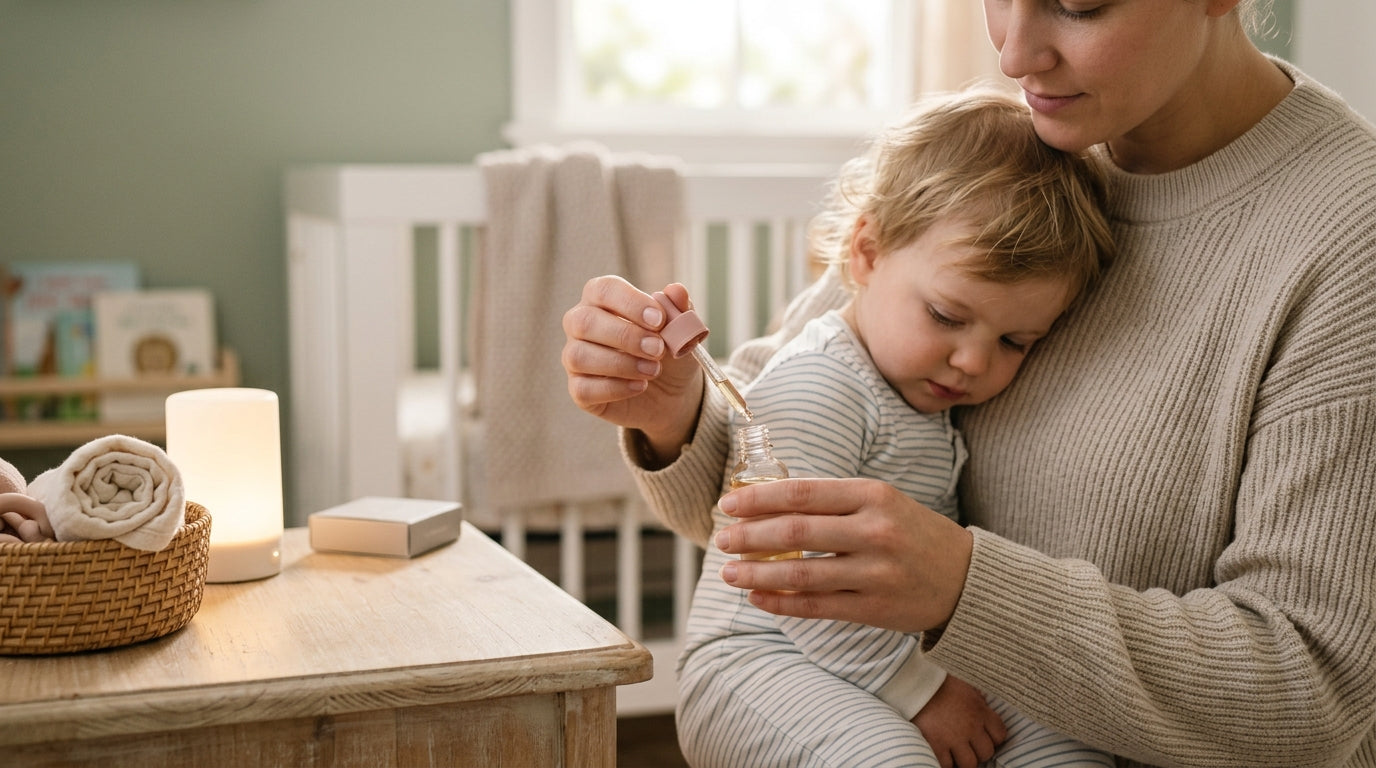
I was standing barefoot on the cold bathroom tile at 2:14 in the morning, holding my oldest son plastered to my chest like a sweaty, screaming barnacle. He was ten months old, burning up with his first real fever, and I was doing that frantic one-handed rummage through the back of the medicine cabinet while he wailed directly into my collarbone.
I pushed aside the crusted tubes of diaper cream, the empty boxes of saline drops, and my own expired allergy meds until my hand bumped into a small, dusty glass bottle. It was full of tiny, orange chewable pills, left in my house months prior by my mother-in-law "just in case." The label clearly stated it was meant for babies. I'm just gonna be real with you, y'all—I almost opened that bottle right then and there to figure out the dosage so I could get my kid's temperature down and get us both back to sleep.
But something in my sleep-deprived gut told me to put the bottle on the sink and call the 24-hour pediatric nurse line first. It took ten minutes on hold listening to terrible elevator music while bouncing a boiling infant, but when the nurse finally picked up, her thick Texas drawl snapped me out of my haze. When I asked her how many of the little orange pills I should crush up, she practically jumped through the phone and slapped the bottle out of my hand.
What the doctor actually said about that orange pill
The next morning, sitting under the harsh fluorescent lights of our local clinic, my doctor gave me the full, horrifying rundown. He started talking about something called Reye's syndrome, which sounded like a made-up plot device from a medical soap opera but is apparently a terrifying real-life reaction. From what my tired brain could absorb, if you give this specific medication to a kid who happens to have a random viral thing going on—like the flu or even just a weird cold—their liver and brain can just suddenly start swelling up.
He told me it's incredibly rare but often fatal, which was enough to make my stomach drop right into my sneakers. The absolute worst part is that you don't even know your kid has a virus until the fever spikes, meaning you could be handing them a catastrophe disguised as fever relief. Dr. Miller looked me dead in the eye and said no one under the age of twenty-one should ever be taking it for a fever. Ever.
Why the packaging is a complete and total lie
I need to pause here and just scream into the void for a second about the absolute audacity of the pharmaceutical industry. Why in the name of all things holy do they still call it that if it's literally toxic to infants? It hasn't been recommended for kids since the late eighties when doctors finally connected the dots and realized we were accidentally poisoning an entire generation.
But the marketing departments kept the cute little name because it sounds so much gentler than "low-dose adult blood thinner." They just slap an 81mg label on the box and let well-meaning grandparents everywhere keep thinking it's the absolute gold standard for a fussy, hot infant. Bless my mother-in-law's heart, she raised four kids and survived the chaotic parenting era of the 1980s, but she practically forced that bottle on me thinking she was throwing me a lifeline.
It makes me furious because when you're a first-time mom running on two hours of sleep, shaking with anxiety because your baby is a literal furnace, you aren't hopping on the internet to fact-check FDA guidelines. You're reading the word "baby" on the box and thinking, "Great, this is specifically manufactured for my tiny human." It's a cheap, dangerous trap.
My grandma used to swear by rubbing straight whiskey on a baby's gums to bring down a fever, which honestly might be less of a liability than the outdated medicine at this point.
My messy system to track the right medicine
So what do you actually do when your kid is hot to the touch and screaming the house down? The best thing you can do is just chuck that dusty orange bottle in the trash while keeping an updated weight chart taped to the inside of the cabinet so you can figure out the right acetaminophen amount without doing complex math at three in the morning.

My doctor hammered into my head that infant liquid medication amounts are always, always based on exactly how much they weigh, not how many months old they're. My middle child was an absolute tank of an infant who wore 18-month clothes at six months old, so her medicine amounts were totally different from my oldest, who was basically a string bean his entire first year. Here's how I actually survive sick nights without messing it up:
- The masking tape method: I literally slap a piece of tape on the medicine bottle and write their current weight and the exact mL amount in sharpie. Because at 3 AM, my brain can't remember if my child weighs 16 pounds or 22 pounds.
- The syringe stash: I hoard those little plastic dosing syringes like they're made of solid gold. I wash them, dry them, and keep them in a mason jar out of reach because relying on those weird plastic cups they give adults is a recipe for a massive overdose.
- The digital time log: I text my husband the exact time I gave a dose, even if he's asleep next to me. "Tylenol 2:15 AM." If I don't leave a digital footprint, I'll 100% forget by sunrise and we risk double-dosing the poor kid.
When they're burning up, I also strip them down immediately. I'm weirdly picky about what touches their skin when they feel like garbage, mostly because synthetic fabrics trap heat and make my kids break out in horrible, prickly heat rashes. I always dress them in the Organic Cotton Baby Bodysuit from Kianao. At twenty-something bucks, it's not the cheapest piece of clothing in the drawer, but it's 95% organic cotton, totally breathable, and sleeveless. When my oldest was radiating heat that night, peeling him out of his thick fleece pajamas and putting him in one of these light suits was the only thing that stopped him from turning into a puddle of sweat. Plus, it washes beautifully, which is non-negotiable because sick babies leak fluids from literally everywhere.
If you're trying to overhaul your own cabinet and routine before the next big flu season hits, take a peek at our health and wellness collection to find safe, practical solutions for those tough days.
When a tooth decides to ruin your week
The trickiest part of early motherhood is that sometimes, what you think is a terrifying illness is honestly just an epic, horrible tooth cutting through the gums. My doctor told me that a low-grade temperature can sometimes accompany teething, though he was quick to warn me that a really high number on the thermometer means something else is brewing. When those little razor blades are pushing through, babies act completely possessed.
This is where I've to tell you about the one thing that really saved my sanity with my youngest: the Panda Teether. I bought this little guy during a desperate 3 AM internet spiral when my daughter was trying to gnaw the paint off her crib rail. It's made of food-grade silicone, and you can toss it in the fridge to get it nice and cold (just don't put it in the freezer, my pediatric dentist chewed me out once and said frozen toys can damage their gums). My youngest carried this panda around for three solid months. It has these little bamboo textured edges that she would just aggressively chew on like a feral little beaver. It's genuinely my favorite piece of baby gear we own, mostly because I can throw it straight into the top rack of the dishwasher when it inevitably gets covered in golden retriever hair.
Now, I also bought the Bubble Tea Teether around the same time because, I mean, look at it. It's a tiny bubble tea. It's incredibly aesthetic. But I'm gonna be completely honest with you, it's just okay in practice. The shape is a little clunky for a really small baby's hands, and she kept dropping it on the floor. It worked fine if I sat there and held it up to her mouth, but if I wanted to use both my hands to fold a load of laundry or drink my own lukewarm coffee, it just wasn't happening. Stick to the panda if you just want something that works.
The couch potato recovery days
When the fever finally breaks and the worst is over, you enter the dreaded recovery phase. They're whiny, they're clingy, they refuse to nap, but they also have zero energy to really play. You need low-effort distractions.

When my kids are mostly better but still need to lay flat on their backs because sitting up is too much work, I slide them under the Rainbow Play Gym Set. It's made of plain, smooth wood and doesn't have any flashing strobe lights or loud, obnoxious electronic music to overstimulate a sick, cranky infant. They just swat weakly at the little hanging wooden elephant until they drift off to sleep. It’s pretty, it’s quiet, and it doesn’t give me a migraine.
Once they can sit up but still look pale and pathetic, I usually lay out our Gentle Baby Building Block Set on the living room rug. They're made of this super soft rubber material, so when my youngest inevitably loses her temper and throws a block directly at her brother's forehead, nobody ends up with a concussion. They have cute little numbers and animals on them, but let's be real, my kids mostly just like stacking them in a tower and Godzilla-kicking them across the room.
The crazy irony of my third pregnancy
The truly wild, full-circle moment of all this is that the only time I ever genuinely needed a daily dosage of that dreaded little orange pill was when my babies were still safely tucked inside my uterus. Fast forward two years from that awful 2 AM panic with my oldest, and I was heavily pregnant with my third child. My OB-GYN sat me down and told me I needed to start taking low-dose aspirin every single morning.
My blood pressure likes to skyrocket every time I so much as look at a medical bill, which put me at high risk for preeclampsia. My doctor explained the science to me, or at least tried her best to dumb it down. From what I gather, preeclampsia messes with how your blood vessels function. Taking a tiny amount of that specific medication is a mild blood thinner to keep the blood flowing nicely to the placenta and reduce weird soreness. It felt incredibly backwards to be standing at the pharmacy counter paying for the exact same medication I'd banished to the outside trash can years prior. I seriously hid the bottle on the top shelf behind my husband's extra deodorant so he wouldn't see it and accidentally try to give it to a toddler with a stubbed toe.
Keeping these tiny, fearless humans alive is terrifying enough without outdated medical advice sneaking into our bathroom cabinets. The next time you're standing in the pharmacy aisle staring at all the brightly colored boxes promising miracle relief, just remember that marketing departments don't really care about your child's liver. Stick to the modern basics, talk to a doctor who genuinely knows your kid's medical history, and politely throw out the antique remedies your relatives try to pass down.
Ready to upgrade your sick-day survival kit? Grab some breathable organic cotton basics and our top-rated teething lifesavers before the next midnight meltdown happens.
Messy FAQs About Fever Meds
Why does the box still say it's for babies if it's dangerous?
Honestly, I think it's just ancient marketing that nobody ever bothered to make illegal. It’s technically just a low-dose adult blood thinner now, but the old name stuck around to confuse the heck out of tired parents. My doctor told me it's totally misleading, and I fully agree. It's a trap.
Can I use the adult measuring cup for infant medicine if I lose the syringe?
Please don't do this. I tried to eyeball a dose in an adult cough syrup cup once at 4 AM and my husband had to talk me off a ledge because I immediately panicked about giving too much. You really need those specific little infant plastic syringes to get the exact milliliter amount right based on their current weight.
How do I know if the fever is from teething or a real sickness?
From what I’ve seen with my three little monsters, a teething fever usually hovers pretty low, like around 99 or 100 degrees, and comes with a literal river of drool and them aggressively gnawing on the furniture. If they're pushing 102 and look like they just got hit by a dump truck, my doctor usually says it’s a virus and to bring them in.
Should I wake my sleeping baby to give them fever medicine?
Dr. Miller told me to let sleeping babies sleep, which is the only piece of parenting advice I always follow without question. Unless they're actively whining in their sleep or the doctor specifically gave you a rigid schedule to keep a dangerous fever down, sleep is probably doing way more for their little bodies than the medicine would anyway.
What do I do with old bottles of medicine my older relatives give me?
Smile, say thank you so much for thinking of us, and bury that bottle deep in the outside trash can the minute their car leaves your driveway. You don't need that kind of liability sitting in your house waiting to confuse you at two in the morning.




Share:
Why Your Baby Needs Arugula (And How to Serve It Without Tears)
The truth about baby aspirin for dogs: a total system failure