

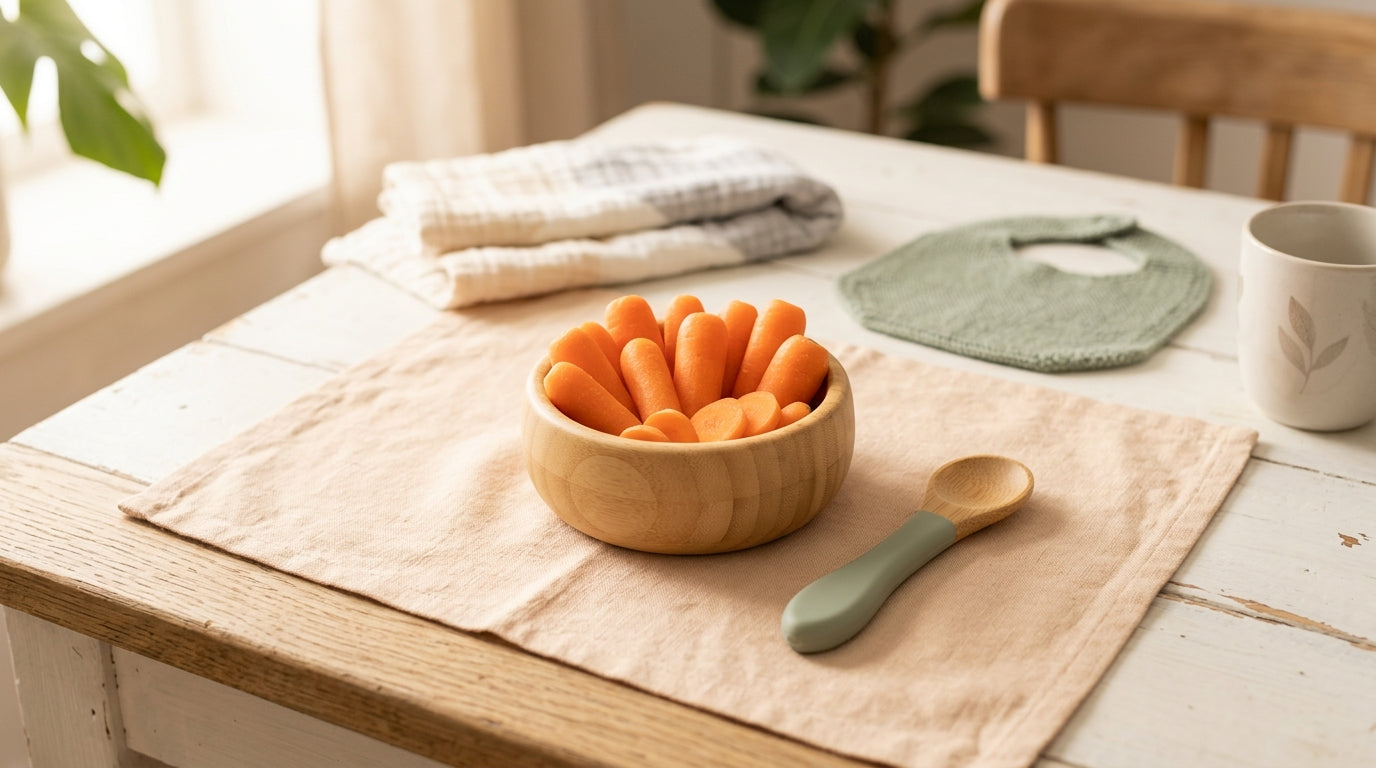
I was standing at the kitchen counter hacking these little orange bullets lengthwise with a dull paring knife while my oldest, bless his heart, screamed at my shins because he wanted a snack right that very second. It was four years ago, but I remember it perfectly because just ten minutes later, he managed to grab a raw piece I had dropped on the floor, and that silent, terrifying gasp he made when it lodged in his throat shaved at least five years off my life. He coughed it up, thank God, but I threw the entire bag straight into the trash and sat on the kitchen floor crying while he went back to happily zooming a little plastic baby car across the linoleum like he hadn't just nearly taken me out with a root vegetable.
If you're anything like I was with my first baby, you probably think those convenient little bags at the grocery store are the ultimate healthy parenting hack. You just toss them on a high chair tray and boom, you're raising a kid who loves vegetables. I'm just gonna be real with you, though—almost everything I believed about feeding my kids this particular vegetable was completely wrong, and the unvarnished truth is a whole lot messier than the Instagram moms make it look.
I was living an absolute lie about the grocery store bags
For the longest time, I honestly thought there was some magical farm out there harvesting miniature vegetables just for our toddlers, but if you've ever wondered how are baby carrots made, prepare to feel deeply betrayed by modern marketing. They aren't young, they aren't small breeds, and they definitely don't grow looking perfectly smooth and rounded at the edges.
They take the massive, ugly, deformed carrots that nobody wants to buy, throw them into an industrial machine that whittles them down, and then wash them in a light chlorine bath to keep them from turning white and slimy on the shelf. That's it. We're paying double the price for the rejects of the vegetable world that have been shaved down into the exact size and shape of a human toddler's windpipe.
My grandma used to pull real, gnarly, dirt-covered carrots out of her garden in East Texas, and she always told me I was wasting money buying the "lazy mom bags" at H-E-B. I used to roll my eyes at her because who has time to peel a full-sized vegetable when you've three kids under five, but honestly, she was completely right about the scam.
As for the heavy metals and nitrates everyone is panicking about on TikTok right now because apparently everything grown in dirt is out to get us, I just rotate our veggies and don't keep homemade purees in the fridge for more than a day, and we've all survived fine so far.
The day my doctor scared me straight
After my oldest had his near-miss on the kitchen floor, I brought it up at his twelve-month checkup, and my doctor didn't mince words. She told me that raw chunks of carrot are one of the top choking hazards she sees in the ER because they're hard, slippery, and basically the identical diameter of a baby's airway. If they swallow a piece whole, it acts like a perfect little cork.

She told me about the "squish test," which basically means if you can't easily smush the food between your own thumb and forefinger with almost zero effort, your baby has no business putting it in their mouth without teeth. And if you take anything away from my rambling today, just promise me you'll stop cutting them into those little round death-trap coins and start quartering them lengthwise while sitting close enough to catch a rogue piece if they start struggling.
She also gave me a whole speech about beta-carotene and fat-soluble vitamins, which roughly translates to the fact that if you don't serve the vegetable with some butter, olive oil, or avocado, your kid's body just passes all the good eye-building nutrients straight into their diaper without absorbing much of it at all. I don't totally understand the science behind how the fat unlocks the vitamins, but I do know that everything tastes better drowned in butter, so I was happy to oblige.
If you're looking for pieces that can actually survive the inevitable orange smears of mealtime, take a peek at our organic clothing collection that we've rigorously tested against every puree imaginable.
How we actually survive mealtime now
With my third baby, who's currently tearing through the kitchen like a feral raccoon most days, my strategy has completely changed. I don't even mess with the bags of tiny ones anymore, I just buy the massive cheap ones and prepare them based on how likely he's to chew properly that week.

When we were in the six-month phase and he was just starting out, I relied entirely on roasted baby carrots. I'd take thick, adult-finger-sized sticks, toss them in olive oil and a little thyme, wrap the whole pan tightly in foil, and bake them until they were basically falling apart. The foil keeps the steam locked in so they don't dry out and get leathery, and he could just palm the massive piece and gnaw on it with his gums while I drank cold coffee and watched him like a hawk.
Once they hit the nine-to-twelve-month phase and start using those tiny fingers to pick up specks of dirt off the floor, you can transition to dicing the cooked ones into little bitty soft pieces. Sometimes to keep him busy while I'm chopping, I'll toss the Gentle Baby Building Block Set onto his tray. I'm going to be honest, as a toy they're just okay because he mostly just chucks them onto the floor for the dog to sniff, but the soft rubber is safe for him to mouth on while he's impatiently waiting for his food, and they wash off pretty easily in the sink.
Toddlerhood is when things get really murky. They have molars, they think they're invincible, and they want the crunchy stuff. I finally started letting my middle child have extremely thin, raw matchsticks dipped in hummus around age two, but I had to constantly coach him to use his strong back teeth to crunch them up.
A quick word on the orange stains and the chewing practice
Listen, no matter how you serve them, your baby is going to end up looking like an Oompa Loompa. Pureed or roasted, that orange pigment gets everywhere, and I've ruined more cute outfits than I care to admit.
My absolute lifesaver lately has been the Organic Cotton Baby Bodysuit Sleeveless Infant Onesie. This is hands-down my favorite piece of clothing we own right now because the fabric is genuinely incredible. A lot of organic stuff pills up or shrinks weirdly, but this one has just enough stretch that I can yank it down over his shoulders when the inevitable orange diaper blowout happens. You still need to hit it with some Dawn dish soap before you wash it if you want the orange food stains out, but the fabric holds up to my aggressive scrubbing, and at $18, I don't feel like crying if it gets a little messy.
Also, if your baby is struggling with chewing those softer pieces, it's usually because they haven't figured out where their jaw is yet. I noticed a huge difference in my youngest's eating when we introduced the Panda Teether Silicone Baby Bamboo Chew Toy. Letting them gnaw on something safe like this before meals actually helps map out their mouth, so when you do hand over a soft piece of food, they know exactly how to move it to their gums to mash it.
Before you head back to the kitchen to chop a mountain of vegetables, browse the Kianao shop for clothes and gear that really hold up to real life with messy, unpredictable, wonderful toddlers.
Things you're probably still wondering (FAQ)
Can I just buy the regular full-sized carrots instead?
Yeah, please do. They're usually half the price, they taste sweeter, and they haven't been shaved down and chemically washed. You have to peel them yourself, which is annoying when your kid is screaming at your leg, but it takes two minutes and the texture when you roast them is a thousand times better anyway.
What if my baby's nose really turns orange?
My middle child's nose and palms turned literally fluorescent orange when he was eight months old because he was pounding sweet potatoes and purees like it was his job. I completely panicked and called the nurse line, and they just laughed at me and said it's called carotenemia. It's totally harmless, you just back off the orange foods for a week or two, and they fade back to their normal color. No medical intervention needed.
How do I do the squish test right?
It's not about whether you can break it in half, it's about whether it turns to mush without force. Put the piece of cooked vegetable between your thumb and index finger. If you've to press hard to flatten it, put it back in the oven. It needs to yield completely, just like an overripe banana.
Is serving them raw ever really okay?
My doctor said absolutely not under age two, and ideally not until age four for the thick, round pieces. If you've a stubborn three-year-old, shredding them on a cheese grater into a salad is fine, or cutting them into literal paper-thin matchsticks. But handing a toddler a whole, hard, raw root vegetable while they run around the living room is basically playing Russian roulette.




Share:
My worst newborn day and how a baby carrier wrap saved my sanity
System Failure: Searching for Baby Clothes Near Me in Portland