

Dear Sarah from last October. You're currently standing on the edge of the wetlands trail at 8:15 AM, wearing those maternity leggings you stubbornly refuse to throw away even though Leo is four years old now, and you're clutching an oat milk flat white that's already depressingly lukewarm. Your hair is in a claw clip that's aggressively digging into your scalp, and you're just, like, staring into the abyss of the swamp while Leo stomps ankle-deep in the most viscous, foul-smelling mud known to mankind.
My best friend Jess is standing next to you. She's wearing her infant son Finn in one of those complicated fabric wraps that looks like a medieval torture device, and Finn is just absolutely screaming into her left clavicle because he's teething and life is hard. We're all exhausted. We're all covered in some sort of sticky natural residue.
And then Leo points a dirt-encrusted finger toward the reeds and yells, "Mommy, a dark chicken!"
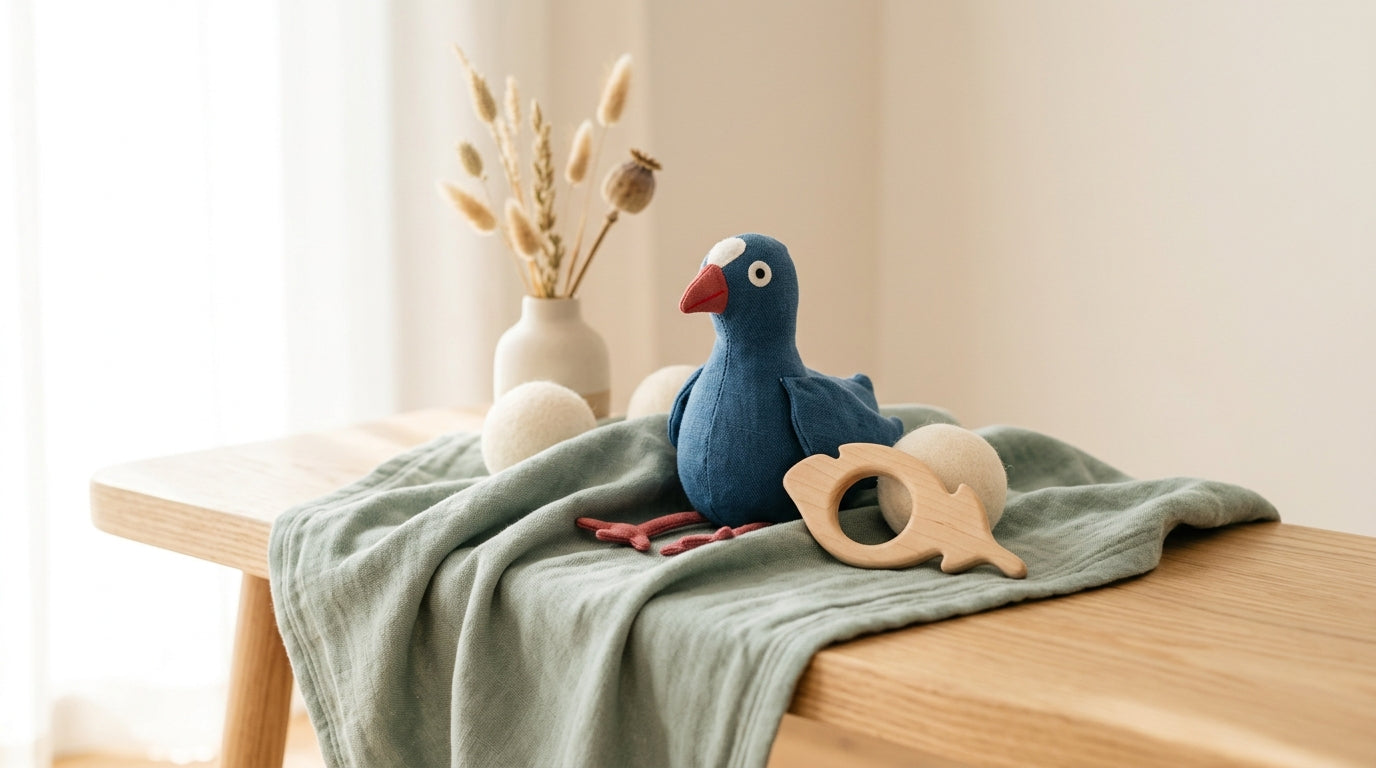
You're going to look down, and you're going to see it. A tiny, awkward, black fluffball perched on these absurdly long dinosaur legs. It's an infant pukeko. A genuine baby bird out in the wild, just blinking at you. And in the next ten seconds, your entire nervous system is going to short-circuit because you're caught between thinking it's the cutest thing you've ever seen and realizing your toddler is about to launch himself into the swamp to hug it.
The part where I get intensely jealous of a bird's social life
Here's what you need to know about these birds, because I ended up going down a massive Wikipedia rabbit hole at 2 AM while my husband Dave snored next to me. Pukekos have the kind of childcare setup that makes me want to scream with jealousy. They live in these massive, complex polyamorous bird communes where multiple females all lay their eggs in one giant shared nest, sometimes piling up like twenty-five eggs at a time, and they just share the mental load of motherhood.
They literally have a village. I haven't had a date night with Dave in six months because babysitters cost twenty-five dollars an hour and my mother-in-law "doesn't like driving in the dark," but this random swamp hen has, like, six aunties watching her kids for free while she goes foraging for grubs. It's infuriating.
And it gets better. Once the chicks hatch, the older siblings from previous broods actually act as helpers and feed the newborns. Do you hear me? The older siblings help. My seven-year-old daughter Maya literally watched me drop a basket of laundry down the stairs yesterday, stepped over it, and asked what was for dinner. Maya would never feed Leo a grub. She won't even hand me a baby wipe when I'm changing him. But these juvenile birds are out here actively protecting their little brothers and sisters.
Apparently they're born covered in down and can just run right out of the nest immediately after hatching, which is great for them I guess, but they still get fed by the whole flock for two months.
Please don't try to put the swamp chicken in your Subaru
So anyway, you're standing there watching this little fluffy guy, and you're going to have this overwhelming, hormonal urge to rescue it. You'll think, oh god, it's alone, it's lost, I should take it home and put it in a cardboard box with a desk lamp and raise it as my own. My husband thinks I'm unhinged for this, but I know you're thinking it too.

Don't do this. You have to actively fight the urge to intervene, and you've to physically restrain your toddler from doing it for you. The wildlife conservation people are very, very clear that these flocks are intensely territorial, so if you take an orphaned chick and try to hand-rear it and then release it later, the wild birds will literally attack it because it smells wrong or acts wrong or whatever bird politics are involved.
Plus, Jess had brought her Golden Retriever on the walk, and that idiot dog was currently straining against the leash trying to eat the bird. You basically just have to grab your kid by the hood of their muddy jacket while simultaneously dragging your friend's dog backward, hoping the mother bird isn't hiding in the bushes waiting to peck your eyes out.
And honestly, you don't want to touch it anyway, because of the diseases. My doctor Dr. Aris looked me dead in the eye last year after Leo licked a public park bench and told me about all the absolute horror-show bacteria wild birds carry. I'm pretty sure he said it was Campylobacter, which sounds like a horrible summer camp, or maybe Salmonella, but the point is that bird poop and bird feathers are covered in microscopic nightmares that will give your toddler a gastrointestinal experience you'll never, ever forget. If your kid does manage to touch a wild chick or its nest, you're going to be frantically scrubbing their hands with soap and warm water the second you find a sink, praying the whole way home.
If you're already feeling the panic setting in about keeping your kids clean and safe outdoors, you might want to take a breath and browse Kianao's organic clothing must-haves, because having the right gear is the only reason I survived this day.
The mud situation and the teething situation
Let's talk about the mud for a second, because Leo was wearing my absolute favorite thing he owns. It's the Organic Cotton Baby Bodysuit Sleeveless from Kianao in this gorgeous forest green color. I love it so much because it has just enough stretch that I can yank it over his giant toddler head without him throwing a massive tantrum, and the fabric is so soft it doesn't give him those weird red eczema patches he gets from synthetic stuff.

He had layered it under a sweater, but somehow he managed to get swamp mud completely saturated into the neckline. I was ready to throw it in the trash, but later that afternoon I literally just tossed it in the washing machine on a warm cycle and the mud slid right out of the organic fibers. It didn't shrink. It didn't pill. It just survived, which is more than I can say for my sanity.
Meanwhile, Jess's baby Finn was still having a complete meltdown in his carrier. She finally unzipped her bag and pulled out the Panda Teether that I had bought her for her baby shower. I remember buying it mostly because the little bamboo design looked cute on the website, but I'm telling you, this thing is a lifesaver. Finn grabbed it with both of his chubby little fists and just went to town on the panda's ears. It's made of food-grade silicone, so I didn't have to worry about him ingesting whatever toxic plastics are in cheap toys, and it's perfectly flat so he could actually hold it himself without dropping it into the swamp mud.
He gnawed on that panda for the entire walk back to the car. It was the only reason we could even hear each other talk over the wind.
Honestly, it's so much better than some of the other aesthetic baby stuff I've bought. Like, last month I got my sister the Rainbow Play Gym Wooden for her new baby. Don't get me wrong, it's gorgeous. It looks like it belongs in an architectural digest magazine, and it's infinitely better than those plastic light-up monstrosities that play the same off-key electronic song until you want to smash them with a hammer. But honestly? Her kid just kinda stares at the wooden elephant for two minutes and then rolls over to chew on a carpet string. It's totally fine if you want a beautiful, calm nursery, and the natural wood is definitely safe, but babies are just weird and sometimes they prefer a piece of fuzz over a beautifully crafted developmental toy.
What I actually learned that day
The baby pukeko was fine. We backed away slowly, dragging a screaming toddler and a hyperventilating dog, and let the little fluffball go back to its giant polyamorous bird family. I drank my cold coffee. Jess let Finn chew his panda teether until he fell asleep against her chest.
You're going to realize that parenting is just a series of mildly terrifying encounters where you're constantly trying to prevent your kids from contracting Salmonella while simultaneously trying to appreciate the beauty of nature. It's exhausting, but you're doing okay.
Before you drag your own kids out into the wetlands to look for swamp chickens, make sure you check out the full Kianao outdoor collection to stock up on clothes that can honestly survive a mud puddle.
FAQ: Because you're probably still panicking
Can I keep a rescued chick if it looks abandoned?
Oh god no. Please don't do this. I know it's fluffy and looks lonely, but its parents are almost certainly hiding in the reeds judging you. Plus, if you take it home, you'll ruin its life because wild flocks will attack it if you ever try to release it. Call your local wildlife rescue if it's visibly injured, and then walk away.
What if my kid genuinely touches the bird?
Panic lightly, then find soap immediately. Wild birds are basically flying Petri dishes of bacteria like Salmonella. Dr. Aris was very clear that bird poop and feathers are not things you want near a toddler's mouth. Scrub their hands with warm soapy water for like, a really long time, and maybe just throw their whole outfit in the wash when you get home.
Do these birds really have multiple moms?
Yeah, and I'm still furious about it. They live in communal groups where multiple females lay eggs in one giant nest, and then the older siblings help feed the babies. It's a level of cooperative childcare that modern human mothers can only dream about while we're hiding in the pantry eating stale crackers.
How do I get swamp mud out of organic cotton?
It's honestly a miracle, but you just wash it normally. I thought Leo's Kianao bodysuit was completely ruined because the mud was so thick it had its own ecosystem, but a standard 40-degree wash cycle got it all out. Don't use fabric softener though, it messes with the natural fibers and makes them weirdly crunchy.




Share:
Prune Juice for Babies: A Dad's Guide to the Constipation Matrix
Why adopting a rabbit baby is a truly terrible idea for your home