

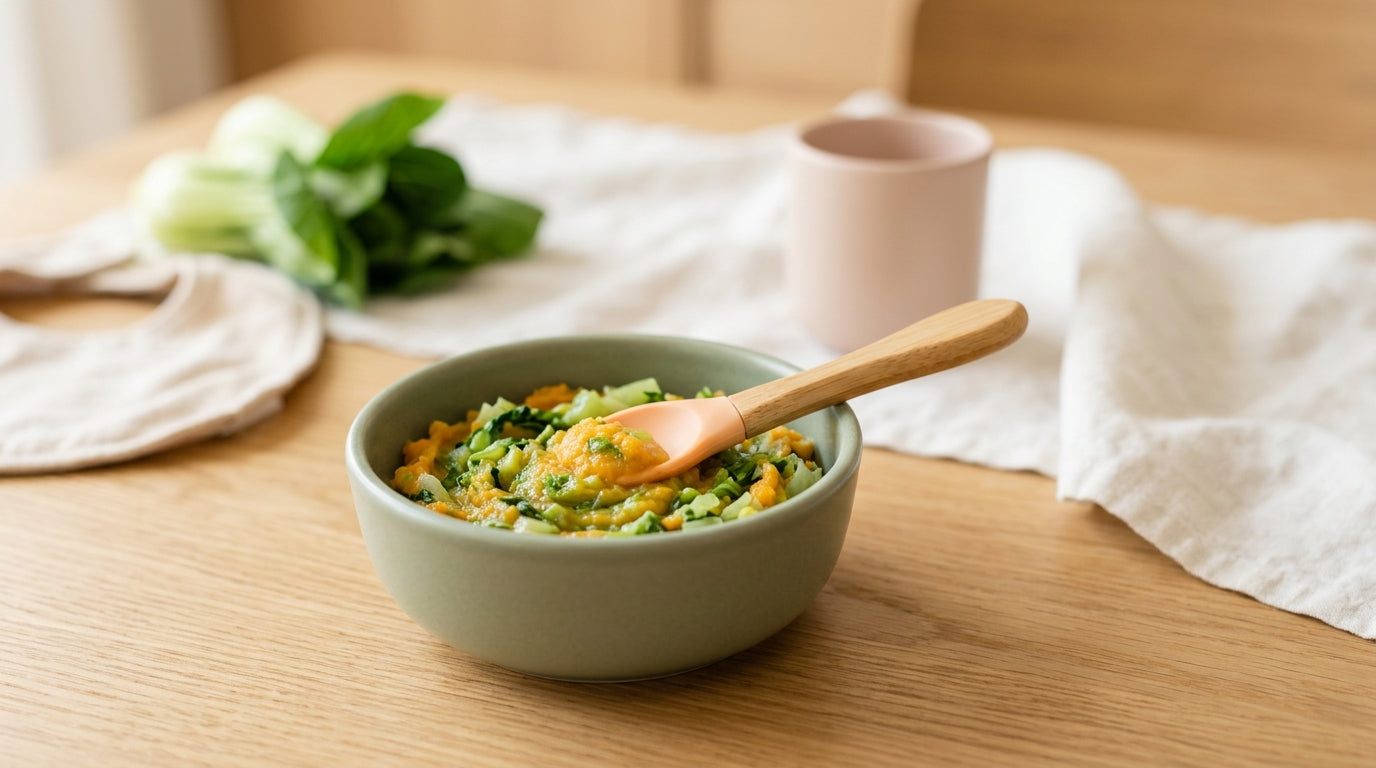
It's somehow already dinner time in Chicago. The radiator is hissing, the kitchen smells vaguely of sesame oil and parental desperation, and my toddler is methodically wiping a bright green leaf across her forehead like a damp washcloth. I'm staring at a pan of wilted greens, wondering why I ever thought tonight was the night we do culinary exploration instead of just opening another pouch of pureed apples.
Listen. If you search the internet for how to cook miniature Chinese cabbage, you'll find a hundred aesthetic food bloggers telling you to blister it in a carbon steel wok. They talk at length about achieving the perfect crunch and finishing it with a heavy pour of premium soy sauce and red pepper flakes. They insist you need to leave the root perfectly intact for a beautiful presentation, as if your audience isn't someone who regularly attempts to eat old cheerios off the floor.
It's utterly exhausting.
Presentation means exactly nothing to an eight-month-old. When I tried giving my daughter a beautifully blistered, crunchy green vegetable, she gagged dramatically, spat it into her lap, and looked at me like I had actively betrayed her trust. I spent the next twenty minutes cleaning sodium-heavy soy sauce off the high chair straps while she screamed. The truth is that adult recipes for baby bok choy are completely useless when you're cooking for someone who doesn't have molars yet.
Crispy vegetables are just a choking hazard waiting to happen anyway.
What the pediatrician actually said
As a pediatric nurse, I've seen a thousand panicked parents in the emergency room over minor food incidents. It makes you a little paranoid when you've your own kid. So when we started solid foods, I dragged my poor pediatrician into a very long, very anxious conversation about leafy greens.
She reminded me that things like spinach and bok choy have naturally occurring nitrates in them. If you cook them and let them sit around at room temperature for hours, those nitrates apparently convert into nitrites, which isn't great for tiny developing bodies. Or maybe the conversion happens differently. I honestly tuned out the deep chemistry. The main takeaway is that you cook the food, serve it, and whatever they don't throw on the floor goes straight into the fridge.
There's also the iron issue. It's supposedly packed with Vitamin C, which is highly relevant because if you feed your baby iron-rich foods like lentils or beef, the Vitamin C helps them actually absorb the iron. Beta, you desperately need that iron absorption around six to nine months when their natural reserves start depleting. But again, the science only matters if you can get them to actually open their mouths and swallow it.
The sodium limits are what really ruin the fun of cooking. The hospital guidelines suggest basically zero added salt for babies under a year old because their kidneys are too immature to handle it. So that means no soy sauce, no tamari, and definitely no kosher salt sprinkled on top. You have to rely on mild broths and maybe a tiny whisper of ginger to make it taste like anything other than wet grass.
A method that doesn't end in tears
I finally figured out a cooking method that works for us. It's less of a culinary masterpiece and more of a hostage negotiation. The secret is completely destroying the structural integrity of the stem so they don't choke on the fibrous bits.

Here's what you genuinely need to do this.
- Three or four heads of the smallest bok choy you can find at the market.
- A tiny drop of neutral oil, like avocado oil.
- A quarter cup of unsalted bone broth or just plain tap water.
- A microscopic amount of minced garlic or ginger if you're feeling brave.
The preparation is aggressive. Grit hides deep down in the base of these things, right where the leaves meet. You have to slice the whole thing in half lengthwise and wash it under the faucet like you're scrubbing up for surgery. If you miss even a little bit of dirt, your baby will find it, they'll hate the texture, and mealtime will be over.
While I'm violently washing the grit out of the leaves, I usually throw the Kianao Gentle Baby Building Blocks on the kitchen floor to buy me four minutes of peace. They're rubbery and fine, nothing groundbreaking, but she likes chewing on the textured edges while I cook and they're easy to kick out of the way when I need to reach the stove.
Once the greens are clean, heat the oil in a pan. Put the vegetables cut-side down for just a minute or two until they get slightly warm. Then pour in your broth or water, slam a heavy lid on top, and let it steam until it's essentially mush.
Adult cooking guides will tell you to steam it for three minutes. You need to ignore them entirely. Steam it for seven minutes, maybe ten. Poke the thickest part of the stem with a fork. If it holds its shape or fights back even a little bit, it's not done. You want it completely surrendered to the heat.
Dealing with the collateral damage
How you serve it depends entirely on how old your kid is and what kind of weaning you're doing. If you've a six-month-old doing baby-led weaning, you can sometimes offer them the giant mushy stem to gnaw on like a very sad, wet bone. They will suck the juice out and drop the rest. For older infants with a pincer grasp, you've to take a knife and chop the leaves and stems into microscopic pieces.

Don't dress them in anything nice for this meal.
The first time I served steamed greens, my daughter was wearing a Sleeveless Organic Cotton Baby Bodysuit. It's genuinely my favorite piece of clothing she owns because the envelope shoulders mean I can pull it down over her body instead of dragging it over her head when a diaper blowout happens. But leafy greens hold onto oil and water like a sponge.
When she squeezed the cooked vegetable in her tiny fist, neon green juice exploded absolutely everywhere. It dripped down her chin, soaked into the neckline, and pooled in her lap. The organic cotton washed out fine eventually after a long soak, but save yourself the blood pressure spike and just strip them down to a diaper before you even bring the plate to the table.
If you want clothes that can honestly survive the reality of mealtime and messy play without falling apart, browse our organic baby clothes collection for things that wash easily.
Also, if they happen to be teething while you're trying to introduce a new vegetable, just abandon the mission, yaar. Their gums are throbbing, the wet food feels weird against their inflamed mouth, and they'll likely just cry at you. I handed her the Kianao Panda Teether the other day right before dinner. It's pretty decent because it's flat enough for her to maneuver and I can throw it in the dishwasher with the dinner plates afterward. Chewing on it for ten minutes kept her mouth numb enough to really tolerate the texture of the food once I sat her down.
Feeding a baby is mostly just managing your own expectations while wiping the floor. Accept the mess, overcook the vegetables, and eventually, they might genuinely swallow something.
Explore our complete line of feeding essentials and silicone tableware to help contain the chaos of early solid foods.
The messy realities of feeding greens
Can they eat both the leaves and the thick stems?
Technically yes, but the texture is wildly different. The dark green leaves get slimy and stick to the roof of their mouth, which makes them gag. The white stems are incredibly fibrous. If you don't steam the stems into absolute mush, they can break off in hard chunks and become a choking risk. I usually just chop both parts into a fine dust for my sanity.
Is it okay to use low-sodium soy sauce?
My pediatrician would probably give me a very tired look for this. Even the low-sodium versions have way too much salt for an infant under twelve months. Their kidneys just aren't built for it. Use unsalted bone broth instead. It gives it a savory depth without the sodium spike. You can add the good soy sauce to your own plate later.
Why did my baby's diaper look like a lawnmower bag?
I've charted enough diapers in the hospital to tell you this is completely normal. Whatever goes in green is going to come out green. Leafy vegetables move through an infant's digestive tract pretty quickly. Unless it's accompanied by endless diarrhea or they seem sick, don't panic. It just means they really swallowed some of it.
Can I freeze the leftovers?
You can, but it thaws into a depressing, watery puddle. Because of the whole nitrate situation, you shouldn't let it sit in the fridge for more than a day or two anyway. I usually just make a tiny portion for her alongside whatever we're eating, and if she throws it all on the floor, I haven't wasted an entire batch.
What if they refuse to eat it entirely?
Then they refuse it. You try again in two weeks. Sometimes my kid eats an entire bowl of greens, and other days she acts like I'm trying to poison her. Keep offering it without forcing the issue. If you stress out about every rejected vegetable, you'll burn out before they even hit the toddler years.




Share:
What I Wish I Knew Before Buying The Baby Bogg Bag Last Summer
What The Baby Boom Years Actually Taught Me About Motherhood