

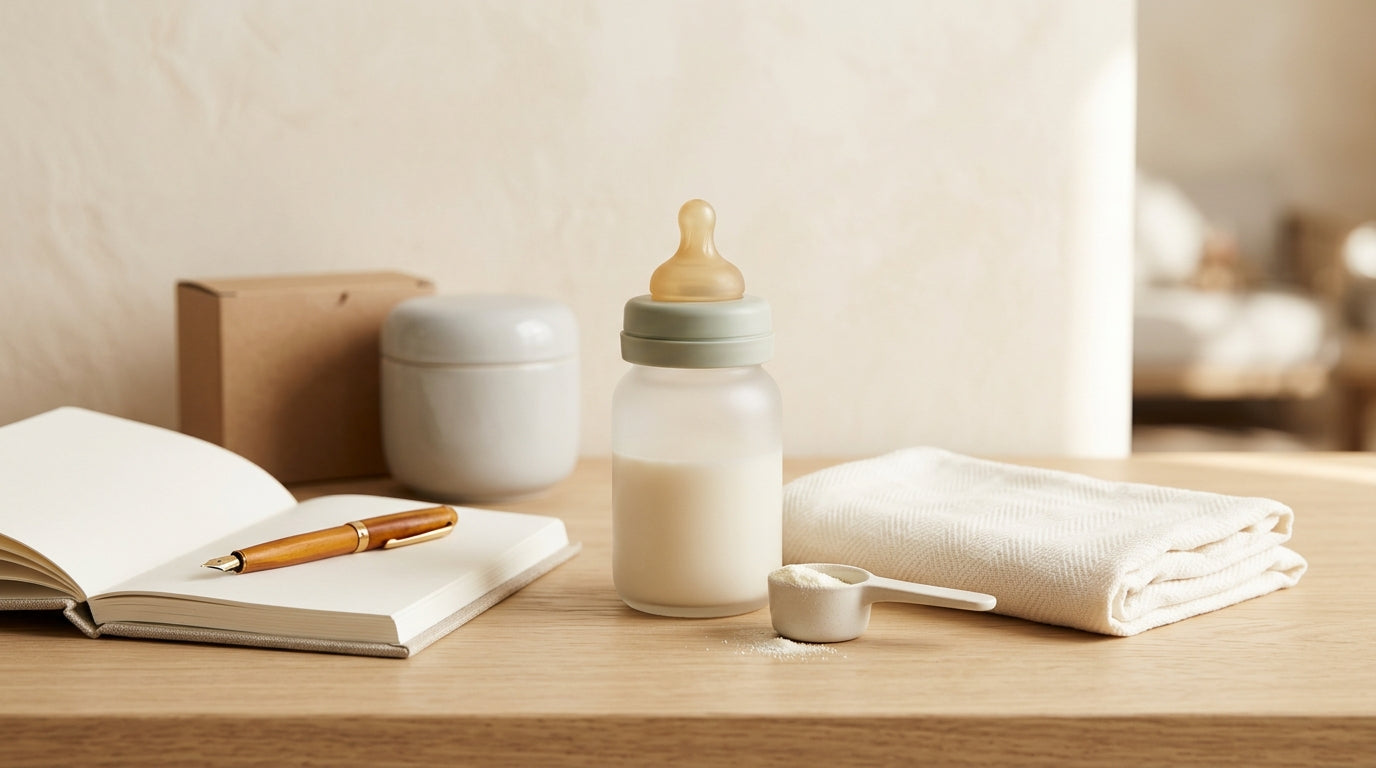
When Leo was about four months old, it was 3:14 AM and I was standing in my kitchen wearing a college t-shirt that smelled aggressively like sour milk and maternal desperation. My husband Greg was making his third pour-over coffee of the night—because God forbid we just use a Keurig when our lives are falling apart—while I stared blankly at a plastic tub of generic American infant milk. Leo was screaming in the bassinet. He hadn't pooped in three days, his stomach felt like a literal rock, and I was crying into the measuring scoop.
For the longest time, I believed the biggest lie they sell to new parents. The lie that says all commercial baby food is perfectly identical because the FDA controls it, so you should just grab whatever is cheapest at Target and go to sleep. Bullshit.
If you think you can just buy whatever is on sale and assume the government has your baby's delicate gut biome totally figured out, you're setting yourself up for a rude awakening at 3 AM. Because as it turns out, European formulas are playing an entirely different sport. And that's how I became a suburban mom who imports German milk powder like it's contraband.
The Science Stuff That Actually Made Sense
I finally broke down and dragged a screaming Leo to our doctor, Dr. Evans, who's essentially a saint who tolerates my frantic WebMD-induced panic attacks. I asked her why my kid was so miserable on the standard American stuff. She didn't give me a lecture on "breast is best" because she knows I had to stop breastfeeding at six weeks for my own sanity. Instead, she talked to me about cows.
Apparently, regular cow's milk has this protein ratio—it's like 80% casein to 20% whey. Casein is the heavy, clumpy protein that takes forever to digest. But human breast milk is closer to 40% casein and 60% whey. Dr. Evans explained that a lot of standard formulas don't bother adjusting this ratio enough, which is why babies get so backed up. She gently suggested looking into HiPP, which specifically alters their protein mix to mimic the human ratio so it's actually digestible. Mind blown.
She also told me about the sugar problem. In the US, a lot of brands use corn syrup or maltodextrin as the carbohydrate base. I mean, I love a high-fructose moment for myself when I'm eating cheap candy, but for a newborn? HiPP strictly uses 100% organic lactose, which is the actual naturally occurring sugar in breast milk. Anyway, the point is, I realized I was feeding my tiny four-month-old the nutritional equivalent of a protein shake mixed with pancake syrup, and the mom-guilt hit me like a freight train.
My Holy Grail Feeding Savior
Before I get into the whole nightmare of choosing *which* specific box of HiPP to buy, I've to take a detour because fixing Leo's digestion eventually led to the terror of starting solid foods. Once his stomach was finally happy, we had to start ruining it with pureed carrots.

If you're anywhere near the weaning stage, you need to know about the Baby Silicone Plate | Bear-Shaped & Suction Base from Kianao. I'm not exaggerating when I say this plate saved my marriage. Leo went through a phase where his favorite game was "launch the spaghetti." Greg actually tested the suction base on our quartz kitchen island and nearly pulled a shoulder muscle trying to rip it off. It's UNBELIEVABLY strong. The bear ears are the perfect size for putting little bits of fruit, and it doesn't get that weird soapy taste that plastic plates get in the dishwasher. It's brilliant. Buy three.
The Prebiotics and Folate Situation
So back to the milk. Beyond the whole cow protein thing, there's this ingredient in HiPP called Metafolin. I'm going to try to explain this without sounding like a science textbook, but basically, it's a bioavailable form of folate. Dr. Evans explained that regular synthetic folic acid just passes right through some babies because they literally lack the enzyme to process it. Which sounds terrifying. Metafolin is already broken down so their little bodies can honestly absorb it for brain development.
Then there are the prebiotics and probiotics. Apparently, they use a probiotic strain that was originally isolated from actual human breast milk. I know that sounds slightly sci-fi and weird, but it's the reason why breastfed babies supposedly get fewer stomach bugs. They just put it right in the powder. It's basically kombucha for infants, but without the annoying hipster packaging.
While we're talking about things going into baby mouths, I should mention teethers, because right around the time we fixed the formula issue, Maya (my oldest) started teething. We got her the Baby Teething Toy Cactus Silicone BPA-Free Infant Gum Soother. Honestly? It's fine. It's really cute, the silicone is soft, and it's totally safe, but Maya liked it for maybe three days and then went back to chewing on her own fists. I think the shape was just a little awkward for her to hold when she was super tiny.
Now, the Panda Teether Silicone Baby Bamboo Chew Toy? That one is a winner. The flat shape is way easier for them to grip, and you can throw it in the fridge. Leo carried his panda around like a tiny, drool-covered security blanket for months.
The Great Starch Panic of 2018
If you decide to take the plunge into European baby formulas, you'll quickly discover that HiPP makes different versions for different countries, and this is where my anxiety really peaked.

Let me tell you about the starch panic. So, the German version of HiPP has organic starch in Stages 1 and 2. Starch! Like potatoes! I spent literally three hours sitting on my bathroom floor one night, drinking cold coffee, reading translated German mummy forums trying to figure out why they put starch in milk. Apparently, it makes the milk creamier and helps keep babies fuller for longer so they sleep. But American moms on the internet act like feeding your baby starch is akin to giving them a loaded weapon.
I spiraled. I convinced myself Leo's delicate system couldn't handle German starch. So I obsessively tracked down the HiPP Dutch version instead, which comes in this beautiful little tin and has zero starch. It's just pure lactose, prebiotics, and probiotics. I paid an absurd amount of shipping to get this starch-free Dutch gold delivered to my house, only to realize later that millions of German babies drink the starch version every day and are perfectly fine. We're all clinically insane.
Oh, they also make a Goat milk version if you're into that sort of thing, but I didn't even want to open that can of worms.
The 70-Degree Preparation Rule
Here's the one thing nobody warns you about when you switch to this stuff. You can't just dump room-temperature tap water into a bottle, shake it, and call it a day.
Because these formulas don't use the harsh synthetic preservatives we use in the US, and because powdered milk isn't sterile, the European guidelines say you've to boil the water first. Then you've to let it cool down to exactly 70 degrees Celsius (which is 158 degrees Fahrenheit) before mixing the powder. If it's too hot, you kill the expensive probiotics. If it's too cold, you don't kill any potential bacteria in the powder.
Do you know how hard it's to calculate 158 degrees Fahrenheit while a baby is screaming at 4 AM? I bought a meat thermometer. I stood in my kitchen temping water like a lunatic. Eventually, I figured out that if I boiled the kettle and waited exactly 30 minutes, it hit the sweet spot. But man, the learning curve is steep.
If you're deep in the trenches of figuring out how to feed and soothe your kid without losing your mind, just do yourself a favor and browse Kianao's baby essentials. Having gear that honestly works is half the battle.
Was it a massive hassle to order formula from overseas, translate the boxes with my phone, and boil water like I was living in the 1800s? Yes. Absolutely. But within four days of switching, Leo stopped screaming. He pooped normally. He slept for a six-hour stretch. And I finally got to finish a cup of coffee while it was still hot.
Go grab a coffee, take a very deep breath, and shop Kianao for the stuff that really makes this whole parenting gig slightly less chaotic.
My Messy FAQ About European Formula
Why does everyone freak out about the Dutch vs. German versions?
Because we're all wildly anxious and have too much access to the internet. Basically, the German version has starch to make it creamier and keep babies full, and the Dutch version doesn't. The UK version doesn't have probiotics. I used the Dutch one because I'm paranoid, but they're all miles better than the corn-syrup stuff at the grocery store.
Can I really not just use regular filtered tap water?
My doctor told me that technically, the risk of bacteria in powder is very low, but it's not zero. The WHO explicitly says to use water at 158°F (70°C) to kill off anything nasty without frying the good probiotics. It's a massive pain in the ass, but I did the boiling thing for the first six months until his immune system was a bit stronger. Then I just used warm filtered water. Don't tell the internet police.
Where do you even buy it without getting scammed?
You have to find a reputable third-party importer. Don't just buy it off random eBay sellers unless you want counterfeit milk. Look for established European formula sites that guarantee temperature-controlled shipping, because if those boxes sit in a hot warehouse in Miami for a month, the probiotics are super dead.
Does it genuinely taste different?
Oh my god, yes. I genuinely tasted the American generic brand and it tasted like metallic, synthetic chalk. I tasted the HiPP formula (because I'm that mom) and it literally just tastes like sweet, creamy milk. No wonder Leo finally decided to eat without fighting me.
How long does a mixed bottle last?
The box says you've to throw it out immediately if they don't finish it, which physically hurts when you calculate how much each scoop costs. But generally, an untouched mixed bottle is good in the fridge for 24 hours. Just don't let it sit out on the counter for more than two hours, or it gets genuinely gross.




Share:
Dad-Tested Home Remedies for a Teething Baby Waking Up at Night
Why I Swallowed My Pride and Bought Himalaya Dolphin Baby Yarn