

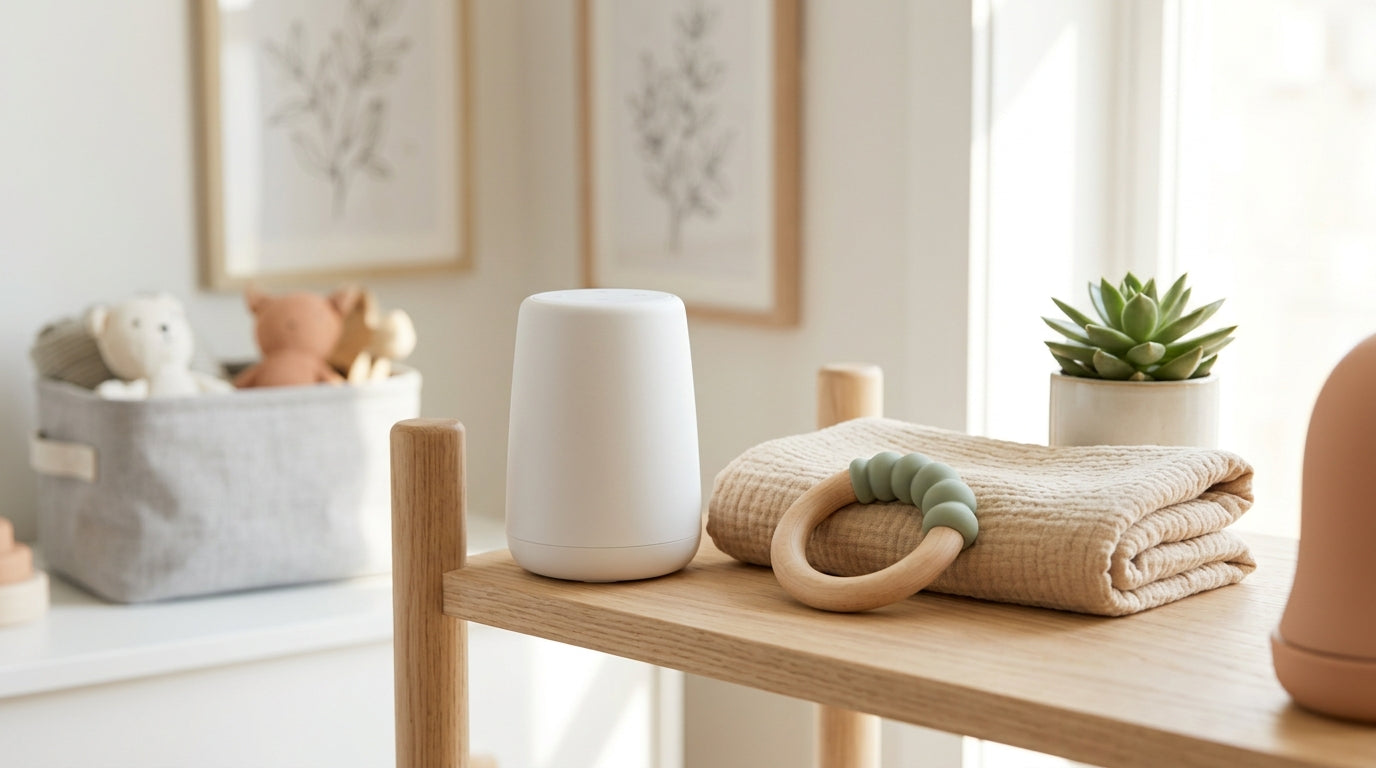
It's exactly 3:14 AM, and I'm standing motionless in the hallway outside my daughters' bedroom, holding my breath so tightly my vision is starting to blur. Page 47 of the best-selling parenting manual we panic-bought during the third trimester suggested that I simply remain calm during night wakings, a piece of advice I found deeply unhelpful while listening to what sounded like two miniature velociraptors testing the structural integrity of their cots. Before the twins arrived, I assumed infant sleep was a passive biological function—much like digesting a sandwich or blinking—where you only put a small human in a dark room and they automatically power down for the night. This, I've come to learn, is the greatest lie peddled by the entire maternity industrial complex.
Statistically speaking, new parents lose about 44 days of sleep during their child's first year, though with twins, I suspect that number is closer to a decade. The sheer desperation of this exhaustion leads you to buy anything that promises relief. You will throw money at sleep consultants, blackout blinds that look like bin bags taped to the windows, and, inevitably, the smart glowing cylinder sitting on your nursery dresser. We acquired our WiFi-enabled sleep device when the girls were about four months old, driven by a particularly dark week where I seriously contemplated sleeping in the boot of my car just to escape the crying.

Red light and the biology of exhaustion
The rules of modern safe sleep are terrifyingly strict, largely because the NHS health visitor—a formidable woman who smelled faintly of lavender and absolute judgment—informed us that a baby's cot must resemble a minimalist Scandinavian prison cell. Absolutely no blankets, no soft toys, no bumpers, no joy. Because you can't put anything comforting inside the cot with them, you've to weaponize the environment around the cot.
Our local GP, a man who honestly looked like he still gets ID'd when buying paracetamol, told me that lighting plays a massive role in how babies process the difference between day and night. Apparently, exposure to blue light or harsh overhead bulbs suppresses whatever fragile amount of melatonin a baby's brain is managing to produce, entirely throwing off their circadian rhythm. We were told to use only red or deep amber light in the nursery, which makes midnight nappy changes feel a bit like operating in a submarine during a nuclear drill. I barely understand the neuroscience behind it, but keeping the device's brightness turned down to a miserable three percent on a red hue seems to trick their little brains into staying drowsy, even when I accidentally kick the skirting board while backing out of the room.
The sweaty reality of nursery clothing
Before you even begin to think about acoustic engineering and ambient lighting, you've to dress them properly for this highly controlled environment. We learned the hard way that synthetic fabrics turn sleeping infants into miniature, furious radiators. After a miserable fortnight of waking up to two damp, overheating babies who smelled vaguely of warm milk and rage, we switched exclusively to the Organic Cotton Baby Bodysuit Sleeveless Infant Onesie.
Honestly, this specific piece of clothing saved whatever was left of my sanity. It’s just organic cotton with a tiny bit of stretch, but it breathes so efficiently that those 3 AM sweat-wakes completely vanished from our lives. Plus, it has those clever envelope shoulders, meaning when a catastrophic nappy blowout inevitably occurs just before dawn, you can slide the entire biological hazard down over their legs instead of dragging a soiled collar over their face while apologizing profusely.
If you're currently trying to optimize your own infant's sleep environment and want to prevent those midnight overheating sessions, you might want to explore our organic baby clothes collection to keep them comfortable all night.
Pink noise versus the vacuum cleaner
If you tell a sleep-deprived parent that a specific sound frequency will make their child stop crying, they'll guard that sound with their life. Enter pink noise. I used to think all static was created equal, but there's a massive cult following around pink noise in the parenting world, and for once, I completely understand the hysteria.

Pink noise supposedly has a deeper, richer acoustic profile than standard static, and sleep consultants claim it perfectly mimics the continuous, rushing sound of maternal blood vessels inside the womb. How anyone managed to accurately measure the decibel level and frequency of an active uterus is entirely beyond my comprehension, but I'll blindly accept the science because it is an absolute acoustic forcefield against the outside world. When the Amazon delivery driver aggressively rings the doorbell at nap time, or when the neighbor's terrier decides to bark at a plastic bag for twenty solid minutes, the deep hum of the machine only swallows the disruption whole. The twins don't even flinch.
White noise, by comparison, is essentially just the sound of a broken television from 1994, and frankly, our children deserve better production values.
The chaotic math of wake windows
Around five months old, the vague concept of "following your baby's sleepy cues" gets thrown out the window in favor of rigorous, mathematically complex wake windows. Our paediatrician—who has clearly never tried to reason with two overtired toddlers simultaneously—suggested we implement a rigid 15-minute bedtime routine while keeping a microscopic eye on the clock during the day.
The goal is to hit exactly two and a half hours of awake time before putting them down, which sounds simple until one baby sneezes herself awake twenty minutes early and throws the entire day's schedule into a chaotic tailspin. If you miss the window, they become overtired, which bizarrely means they produce adrenaline and fight sleep with the intensity of cornered badgers. To give yourself a fighting chance at a decent night, you've to completely exhaust them physically during the day without overstimulating their fragile nervous systems. We rely heavily on the Wooden Baby Gym | Rainbow Play Gym Set for this exact purpose, mostly because it’s aesthetically pleasing enough that it doesn’t look like a plastic theme park exploded in our living room, and it encourages enough reaching and grabbing to properly tire out those tiny arm muscles before the evening meltdown commences.
The subscription trap in the nursery
As much as I rely on our smart cylinder to maintain peace in the house, I'm deeply irritated by the modern trend of turning basic parenting tools into ongoing monthly expenses. You spend almost a hundred quid on a glorified nightlight, only to discover that the companion app operates on a cheeky freemium model.

Sure, you get the basic colors and sounds for free, but if you want the app to predict your child's sleep schedule or give you access to the "expert sleep consultants" via chat, you're suddenly shelling out a subscription fee every month. We used the premium trial for the first six months, desperately texting sleep consultants at 2 AM asking why baby A was sleeping like a log while baby B was practicing gymnastics in the dark. It was mildly comforting to have a digital shoulder to cry on, but once the trial expired, we realized the free version does exactly what we actually need it to do: glow red, play pink noise, and be controlled from my phone while I hide on the sofa downstairs.
The agony of the two-minute pause
One of the hardest habits to break as a new parent is the instinct to sprint into the nursery the second you hear a noise over the monitor. Babies are incredibly, aggressively noisy sleepers. They grunt, they snort, they cry out in their sleep, and then they drop right back off. We had to teach ourselves the agonizing "two-minute pause."
When one of the girls stirs and lets out a cry, you only stare at the glowing video monitor, silently counting to 120, gripping the edge of the mattress and willing them to settle down. Going in too early actually wakes them up fully, turning a brief sleep transition into a 45-minute rocking session. Try watching a tiny human squirm on a grainy night-vision camera while fighting every biological urge to intervene, hoping the ambient noise will lull them back under.
Of course, all your acoustic forcefields and careful pausing go completely out the window the second a tooth decides to rupture through their gums. You'll know they're teething because they suddenly transform into highly irritable, drool-producing machines who look at you with deep betrayal, though our GP mentioned something about slightly elevated temperatures too. During these phases, we use the Panda Teether Silicone Baby Bamboo Chew Toy. It’s fine, honestly. It’s a perfectly decent piece of food-grade silicone that you can chuck in the fridge to get cold, and it definitely provides some relief when they actually chew on it instead of violently hurling it at the cat. It does the job it was designed to do, assuming your child feels like cooperating that day.
Why physical buttons seriously matter
Eventually, the babies turn into toddlers, and infant sleep problems morph into toddler stalling tactics. Our bedtime routine now involves intense negotiations over water cups, the exact placement of blankets, and declarations that the shadow in the corner looks like a badger. This is where the color-changing aspect of our sleep device seriously earns its keep.
We use it as a "time-to-rise" clock. If the light is red, they've to stay in bed. If it turns green at 6:30 AM, they're allowed to emerge and terrorize the house. Limiting their choices this way prevents the endless early morning boundary testing. But the greatest feature isn't in the app at all—it's the massive physical button on the top of the device. When my phone battery dies, or when the WiFi mysteriously drops out at midnight, I can blindly stumble into their room in the pitch black and smack the top of the machine with a heavy hand to turn it on, preserving my dignity and their sleep in one exhausted motion.
Shop our full sustainable collection before the next sleep regression hits and takes your sanity with it.
Do I really need a smart sound machine?
Honestly, you could probably get by with a fan and a dim lamp if you really wanted to, but the sheer convenience of being able to turn up the volume from your phone when the dog starts barking is worth the ridiculous price tag. I view it less as a luxury and more as an acoustic insurance policy for my own mental health.
What exactly is pink noise anyway?
It's basically white noise that has gone to university. It has a lower, deeper frequency that supposedly mimics the rushing sounds inside the womb. In practical terms, it sounds a bit like heavy rainfall or a distant waterfall, and it completely masks the sound of me trying to quietly open a packet of crisps downstairs.
How long should the bedtime routine be?
Our GP and every book I've read insists it should be no longer than 15 to 30 minutes. If you stretch it out into an hour-long theatrical production involving five books and a massage, they just get overtired and furious. Keep it brief, boring, and utterly predictable.
Is the premium app subscription worth the money?
For the first few months when you're completely drowning in anxiety and sleep deprivation, having access to a real human sleep consultant via the app is quite comforting. But once you figure out your child's basic rhythms, the free version of the app does everything you honestly need it to do.
When do you start using the time-to-rise feature?
We started introducing the concept right around two years old, when they transitioned to toddler beds and suddenly realized they had the freedom to walk into our bedroom at 4 AM to ask questions about the moon. It takes a few weeks of consistent enforcement, but teaching them that red means stay and green means go is an absolute game changer.
How do you handle sleep disruptions when they're teething?
You basically abandon all the rigid rules you spent months establishing and just do whatever it takes to survive the night. We keep the room dark, crank up the ambient noise to drown out the fussing, and hand them a chilled silicone teether while praying for the tooth to finally cut through.




Share:
The Have a Baby With Me Daniel Caesar Lie You Actually Believe
Dear Me: What I Wish I Knew About That Happy Baby Organic Formula