

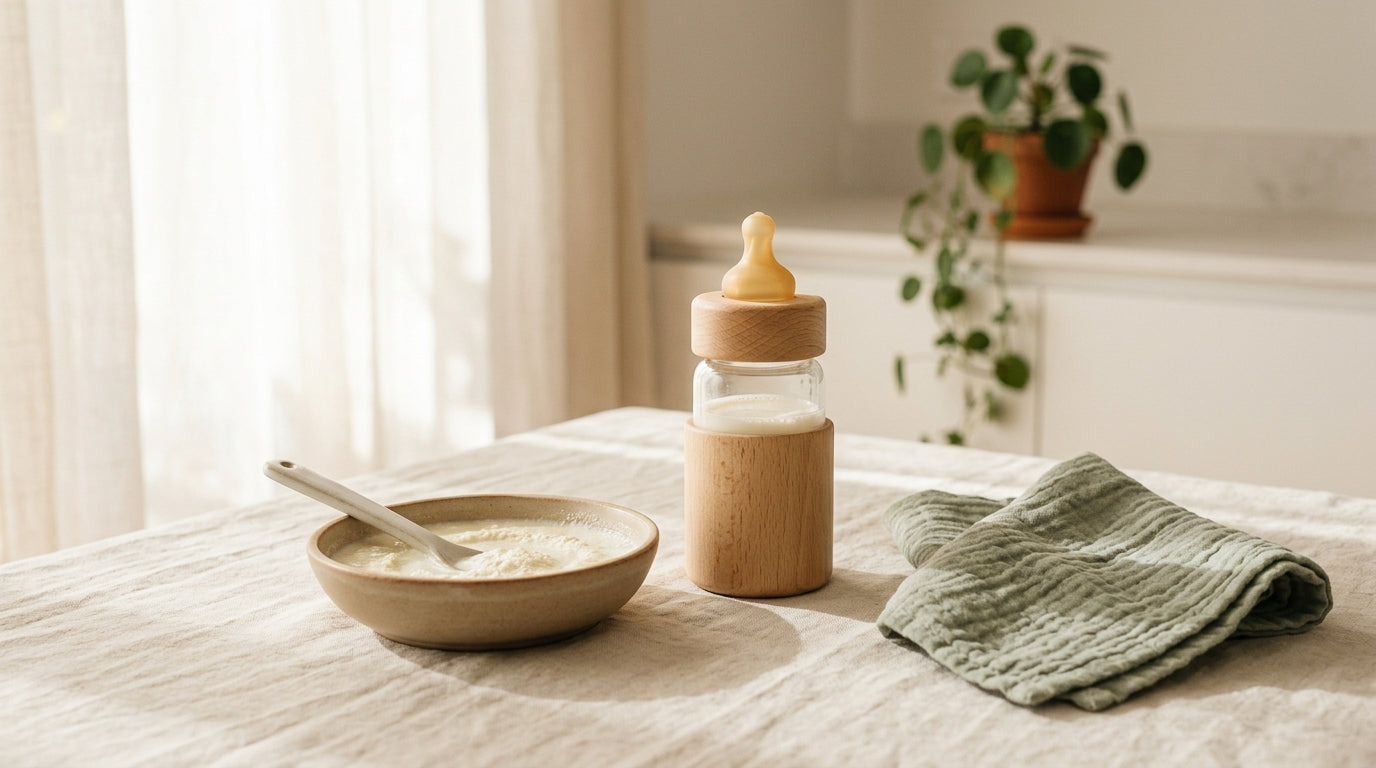
You're standing in your kitchen at 3 AM holding a plastic container of white liquid up to the harsh microwave light. The baby is screaming in the other room. You're trying to remember if the water was supposed to go in before the powder or after the powder, and whether the temperature is going to magically destroy every nutrient in this twelve-dollar bottle. The biggest lie the internet sells you is that the feeding method you choose will define your child's entire future. It's a brilliant piece of marketing that keeps us up at night, wondering if a few ounces of the wrong stuff will somehow ruin their chances of getting into a good college.
Listen. I spent five years on the pediatric ward before I had my own kid. I've seen a thousand of these feeding panics. We would get parents rushing into triage because their infant threw up two ounces of milk, convinced the baby's digestive tract was failing. I learned very quickly that feeding a baby is basically just hospital triage in your living room. You assess the screaming, you deliver the calories, and you try to keep the mess contained. The holy war between breast milk and formula is mostly just bored people on the internet looking for something to judge you about.
My doctor sat me down at our two-week checkup, looked at my bloodshot eyes, and told me that baby milk is just fuel. Whether it comes from your body or a sterile tin, the kid just needs to double their birth weight without you losing your mind in the process.
What my doctor mumbled about antibodies
There's this pervasive idea that breast milk is a magical elixir that cures everything from ear infections to bad credit scores. I think my doctor mentioned something about it being a living substance. Apparently, the composition changes daily based on what the baby needs. If it's hot outside, the milk gets more watery to keep them hydrated. If they hit a growth spurt, it supposedly gets fattier.
That all sounds like witchcraft to me, but I guess the science backs it up. The whole colostrum thing in the first few days is basically a starter pack of immunity. They call it a first vaccine, which is a bit dramatic, but it does coat the gut and provide some temporary antibodies. You just sort of hope it's doing its job while you sit there feeling like a dairy cow on a strict schedule.
But the reality of nursing is vastly different from the soft-focus photos you see online. It hurts, it leaks at terrible times, and you never actually know how many ounces they took. You're just operating on faith and the sheer volume of wet diapers.
The powdered formula trap
If you decide to step off the nursing train, or if you just need to supplement so you can sleep for more than forty consecutive minutes, you enter the overwhelming world of baby milk formula. This is where I've to put my nurse hat on for a second, because the marketing here's predatory.
All formula sold legally in this country is strictly regulated. It all has the same baseline of vitamins, minerals, and whatever proteins they mandate this year. You don't need the European brand that costs fifty dollars a can and ships in a wooden crate. Cow's milk-based is standard, and they tinker with the whey-to-casein ratio to try and make it resemble human milk. I'm pretty sure that just means they tweak it so the baby doesn't get horribly constipated.
But thing is I'll actually rant about. Baby milk powder is not sterile. Everyone treats it like it's powdered gold, but it can harbor bacteria. Cronobacter is rare, but I've seen it in the hospital, and it's ugly. For the first two months, if you can afford it, just buy the liquid ready-to-feed stuff. It costs more, but the peace of mind is worth the dent in your wallet. If you've to use powder, you boil the water, let it cool slightly so it doesn't cook the nutrients, mix it, and then cool the baby milk bottle down before feeding. It takes twenty minutes. At 3 AM, twenty minutes feels like a geological era.
My husband once texted me from the grocery store saying "buy baby m" and I stared at the screen for five minutes wondering if he meant baby milk or the baby monitor. Brain fog is a real medical condition, yaar.
The mechanics of the actual bottle
Nobody tells you that the hardest part of bottle feeding is the physics. You can't just tip the baby milk bottle back and let gravity do the work. We call it paced feeding. You sit the baby somewhat upright, hold the bottle parallel to the floor, and make them work for it. It mimics the flow of nursing and stops them from guzzling five ounces in three minutes and immediately throwing it all back up onto your favorite sweater.

You swirl the bottle to mix it, you test a drop on your wrist to make sure it won't burn their throat, and you pray they drink it before they fall asleep. If someone tells you to put rice cereal in the bottle to make them sleep through the night, politely walk away from them because that's a massive choking hazard.
As for sterilizers, just run the bottles through the hottest setting on your dishwasher and call it a day.
If you're looking for things that actually make your life easier instead of just adding to your mental load, you can browse some sustainable baby items here.
The collateral damage of feeding time
Let's talk about the mess. Babies are notoriously bad at keeping liquids in their stomachs. The sphincter at the top of their stomach is basically just a suggestion for the first six months. They will spit up.
When my kid was about four months old, we had this beautiful, expensive fabric play mat. I laid him down after a feed. He smiled, cooed, and then deposited about three ounces of partially digested baby milk right onto the organic cotton. We washed that mat five times and it still faintly smelled like old cheese. I threw it away.
Now I tell every new parent to just get the Round Baby Play Mat. It's made of vegan leather. I know vegan leather just means fancy plastic, but I honestly don't care because it's waterproof. When your baby inevitably projectile vomits their freshly mixed formula, you just take a wet wipe, clean it up in three seconds, and move on with your life. The quilted design is soft enough that they don't crack their skull when they roll over, and it doesn't harbor the ghost of dairy past. It's the one thing in my living room that I don't actively resent cleaning.
Clothing casualties
Because of the aforementioned spit-up issue, you'll go through an ungodly amount of clothing. People love to buy you those tiny, complicated outfits with buttons and stiff denim. Those people don't like you.

I've complicated feelings about the Organic Cotton Baby Bodysuit. On one hand, the flutter sleeves are undeniably cute. On the other hand, it's organic cotton, which means when the baby milk hits it, the fabric absorbs it instantly. It's soft, and my kid never got those weird red eczema patches when wearing it, which is a win. But I highly think buying it in the darkest color available. White baby clothes are a trap designed by people who clearly outsource their laundry.
When they refuse to eat
Around five or six months, right when you think you've this whole liquid diet thing figured out, they'll suddenly start swatting the bottle away. You will panic. You will call the doctor. You will assume their throat is closing up.
Listen, beta. Nine times out of ten, they're just teething. Their gums are inflamed, and the warm milk or the friction of the nipple hurts. They're starving but chewing is painful.
Instead of forcing the bottle, give them something firm to gnaw on for a few minutes to numb the gums. We used the Panda Teether. It's just a piece of food-grade silicone shaped like a panda, but it works. I'd throw it in the fridge for ten minutes. The cold silicone numbs the localized pain, they chew on it furiously until the swelling goes down, and then they'll usually accept the bottle. It's easy to wash, which is the only metric I genuinely care about anymore.
Just survive the first year
Feeding a baby is just a series of messy, imperfect compromises. Sometimes you'll perfectly mix the organic goat milk formula to the exact correct temperature. Sometimes you'll realize you gave them cold, day-old breast milk and you'll spiral into guilt. They will survive both scenarios.
Stop treating feeding time like a performance review. Get the calories in, wipe up the spit-up, and try to get some sleep. The rest of it's just noise.
Ready to upgrade the few things you can honestly control? Check out our full collection of baby gear.
The messy questions everyone asks
How long can a bottle really sit out?
The official rule is usually two hours for freshly mixed formula or fresh breast milk, and one hour once their mouth has touched the nipple. Bacteria grows fast. I know it physically hurts to pour expensive milk down the drain, but doing it's better than a midnight trip to the ER with a vomiting infant.
Should I switch formulas if my baby is gassy?
Maybe, but probably not. All babies are gassy. Their digestive systems are brand new and frankly terrible at their jobs. Unless there's blood in the stool, severe rash, or they're failing to gain weight, my doctor always advised giving a new formula at least two weeks before switching again. Constantly changing brands just confuses their gut more.
Is goat milk formula seriously better?
The proteins in goat milk form a slightly softer curd in the stomach compared to cow's milk. Some babies digest it a bit easier. It isn't magic, and it doesn't cure dairy allergies, but it's a decent option if the standard cow stuff seems to be making them miserable.
Do I really need a bottle warmer?
Absolutely not. A mug of hot water from the tap works just fine. Just set the bottle in the mug for five minutes. Bottle warmers are just one more piece of plastic taking up counter space that you'll inevitably forget to descale.
When do we stop with the bottles entirely?
Most dentists want you to start weaning off bottles around twelve months to protect their teeth and jaw development. You switch to a sippy cup or an open cup. It will be a messy transition, and they'll probably drop their milk intake for a few days in protest. Let them be mad. They'll drink when they're thirsty.




Share:
Surviving Baby’s First New Year's Eve Without Losing Your Mind
Baby Mel Queries: Decoding Late-Night Infant Sleep Searches