

Dear Jess from exactly six months ago,
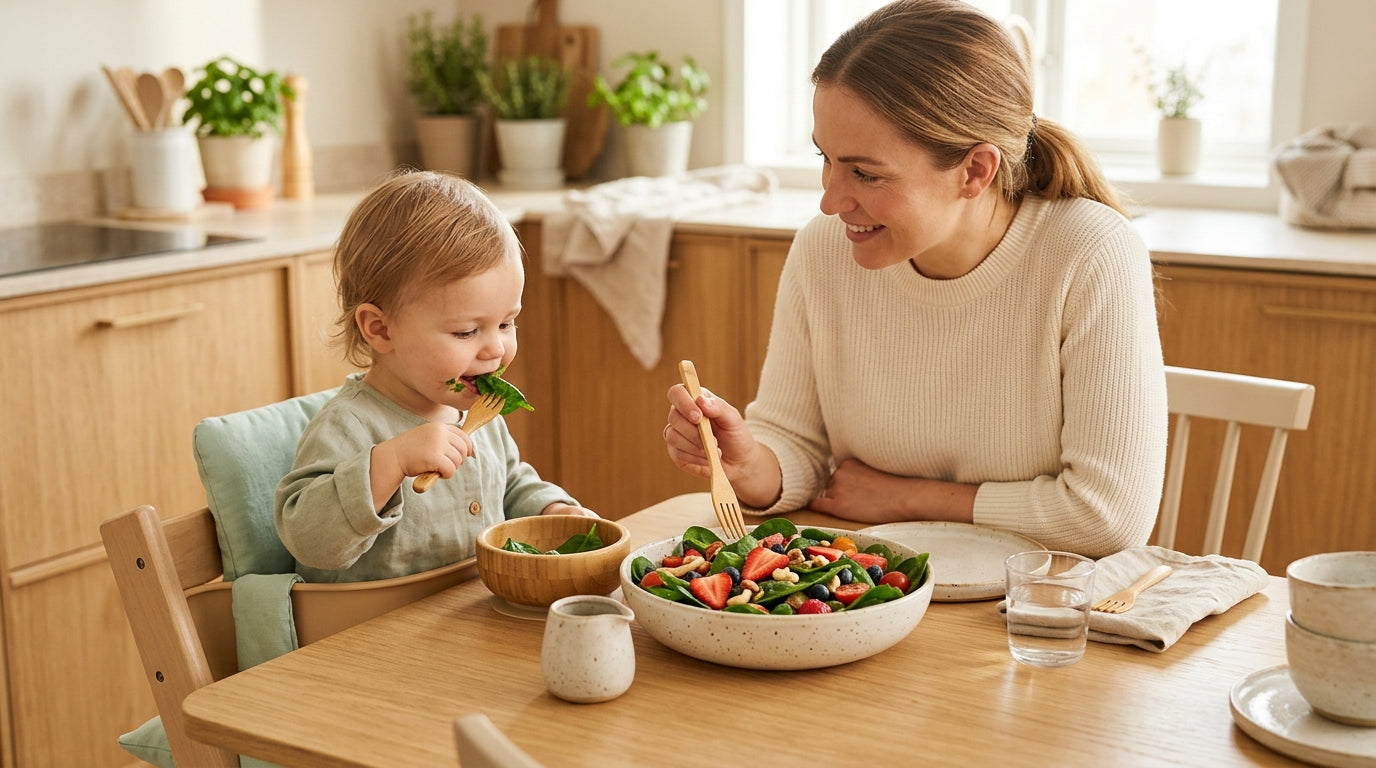
Put down the giant plastic clamshell of greens and step away from the food processor. I know you're standing in the middle of your kitchen right now with postpartum hair falling into your eyes, listening to Walker scream about his sandwich being cut into the wrong shape while Beau wails from the high chair, thinking you're failing because you haven't introduced leafy greens yet. I know you're stressed about money and wondering if spending extra on fancy produce is just another scam invented by the internet to make mothers feel inadequate.
I'm just gonna be real with you, the whole transition to solid foods is a chaotic circus, and you're going to make a ton of mistakes that will make you question your own sanity. But since I've survived the great green puree era of our third child, I need to tell you some hard truths about what actually happens when you try to feed an infant those innocent-looking little leaves.
The real truth about the dirt
Growing up, my grandma always told me that eating a little dirt builds character and strengthens the immune system, which is a lovely rural Texas sentiment until you realize she was talking about actual dirt and not modern chemical residue. For my oldest kid, Walker, I bought the cheapest conventional produce I could find because we were broke and I thought a vegetable was a vegetable, bless his heart. Now the kid will only eat things that are the color of manila envelopes, so he's my walking cautionary tale.
But with spinach, the organic label isn't just an excuse to charge you eight dollars for a box of leaves that will inevitably turn to green slime in your crisper drawer. My doctor, Dr. Miller, mentioned that spinach is practically a sponge for whatever they spray on the fields, sitting right at the top of all those scary pesticide lists that make you want to go live in a cave. You really do need to buy the organic baby spinach for the little ones whose tiny bodies are still figuring out how to process the world.
I actually found myself deep down a rabbit hole reading a brand website classic salads organic baby spinach description at two in the morning, trying to decipher if their triple-washed claim meant I could skip rinsing it myself while simultaneously bouncing a colicky baby on a yoga ball. The truth is, paying that premium hurts my budget-conscious soul every single time I scan it at the grocery store, but it's one of the few places where I'll actually tell you the extra money is non-negotiable for an infant.
That whole scary blue baby situation
You're going to think you're a literal homesteader genius when you decide to steam those expensive greens and save the leftover green water to thin out your purees. You'll stand there feeling so smug and resourceful, thinking about all the water-soluble vitamins you're preserving like some kind of pioneer woman who also has a WiFi connection.
Then you'll proudly mention this brilliant hack to Dr. Miller at the six-month checkup, and she will look at you with this terrifying mixture of pity and medical concern before explaining that spinach pulls heavy amounts of nitrates from the soil. She drew me this little diagram on the back of a vaccination schedule showing how those nitrates get concentrated in the cooking water and can cause something called blue baby syndrome in infants under six months, which has to do with their blood suddenly forgetting how to carry oxygen.
The sheer betrayal I felt learning that my precious, nutrient-dense green broth was basically a toxic hazard for my baby's unformed digestive tract was enough to make me want to give up and just feed him mashed bananas until he left for college. If you want to keep your child safe and your own anxiety at a manageable level, you absolutely must boil the living daylights out of those leaves and then immediately dump that cursed green water down the sink before you puree the wilted remains.
Just don't ever feed them raw leaves because they stick to the roof of their mouth like green duct tape and you'll end up in the emergency room.
The secret to unlocking the iron vault
Everybody talks about spinach like it's this magical iron pill that will instantly turn your baby into a tiny bodybuilder. Dr. Miller said something about it having non-heme iron, which I guess means it's plant-based iron that acts like it's locked in a biological vault and your baby's body doesn't have the combination to get it out.
You can feed them bowls and bowls of the stuff, but if you don't pair it with vitamin C, it just passes right through them and creates some truly horrifying diapers that you'll have to deal with later. Squeezing a little lemon juice into the puree or mixing it with some mashed sweet potatoes completely changes the game and seriously lets their body absorb the nutrients you just spent half your morning preparing.
If you're looking for an easier way to figure out all this feeding chaos, you should check out the feeding essentials collection because having the right gear makes a huge difference.
Sneaky ways to serve green stuff
My mom told me just to chew up my own dinner and spit it into the baby's mouth like a mama bird, which is honestly horrifying and I politely declined her vintage wisdom. Instead, I've had to get creative with how I hide these greens, especially when Beau hits that stage where he decides to inspect every spoonful like a suspicious health inspector.

Blending a handful of the cooked, drained leaves into a smoothie with a violently purple berry is the only way I survive the toddler years without a fight. The dark berries completely mask the green color, and since the baby leaves don't have those thick, bitter stems, it just tastes like fruit.
I also love making these tiny little egg frittatas in a mini muffin tin. Eggs have all sorts of fats and brain-building stuff that I barely understand but know is important, and if you chop up the cooked organic baby spinach super fine, it just looks like fun little green sprinkles to them.
The gear that honestly survives the mess
Cooking with babies underfoot is an exercise in extreme patience. When I'm trying to boil and drain greens without scalding myself, I need Beau to be completely occupied and not screaming at my ankles.
I've bought so much useless plastic junk over the years, but I finally found one thing I really love. The Zebra Rattle Tooth Ring has been my kitchen savior. I'm just gonna be real with you, most teethers are ugly and end up covered in dog hair, but this one has a smooth wooden ring that I can chill in the fridge for a minute, and the black and white crochet pattern somehow mesmerizes him. I'll hand it to him in his high chair, and he'll sit there quietly gnawing on the wood and shaking the little rattle, giving me exactly five minutes of peace to deal with the hot water and the blender.
Now, on the flip side of the wardrobe situation, I made a major tactical error recently. I got him the Retro Organic Cotton Shirt because the vintage ringer style is precious and the material is insanely soft on his skin. But getting a white-collared shirt over a sweaty, thrashing toddler's massive head while holding a spoon of green mush is an Olympic sport I'm not qualified for. It's a gorgeous shirt, but that white collar attracts spinach puree like a magnet, and I spend more time treating stains than I do enjoying how cute he looks in it.
After we finally get through the meal and I've wiped green sludge off every surface in a three-foot radius, we usually move to the floor so his tummy can settle. We throw down our Organic Cotton Baby Blanket in the Zebra Design right on the living room rug. It's thick enough to give him some cushion, and again, that high-contrast monochrome pattern keeps him engaged while he rolls around and does his little baby yoga stretches. Plus, unlike the white-collared shirt, if a little bit of rogue green spit-up lands on the busy zebra pattern, it's way less noticeable until laundry day.
So, past Jess, take a deep breath. Buy the organic baby version, boil it, ditch the water, add some citrus, and expect everything you own to be stained green for the next few months. You're doing just fine.
Ready to make mealtime a little less stressful? Explore more of our honest parenting survival guides before you tackle your next grocery run.
The real questions you're probably asking
Can I just microwave the spinach instead of boiling it?
I tried this exactly once and created a terrifying green lightning storm in my microwave because apparently spinach has natural minerals that can arc and spark. Beyond almost burning my house down, Dr. Miller said boiling in plenty of water is the only reliable way to pull those nitrates out of the leaves, so you really have to use the stove for infants.
How long does this pureed stuff seriously last in the fridge?
If you put it in an airtight container, it'll survive about two days before it starts looking and smelling like something that climbed out of a swamp. I highly suggest freezing it in silicone ice cube trays immediately so you aren't forced to sniff-test questionable green sludge at six in the morning.
Does it matter if I use frozen spinach instead of fresh?
Frozen organic baby spinach is totally fine and honestly way cheaper, but it holds a ridiculous amount of water. You still need to cook it to deal with the nitrates for the under-six-month crowd, and then you've to wring it out like a wet towel unless you want your baby's eggs to be sitting in a puddle of green water.
What if my baby gags every time I offer the puree?
Walker gagged so hard on his first taste of spinach that he literally threw up on my shoes. The texture is weird and slightly chalky even when pureed, so try mixing just a tiny spoonful of it into a massive bowl of sweet potato or apple puree first. You have to play the long game and slowly increase the green ratio over a few weeks.
Do I really have to buy organic if I wash it with soap?
Please don't wash your vegetables with soap, bless your heart, your baby will end up blowing bubbles out of their backside. Pesticides are often absorbed right into the tissue of the plant while it grows, so no amount of scrubbing at the sink is going to remove it, which is why biting the bullet and paying for organic baby greens is unfortunately the only real solution here.




Share:
Botanical Interests Organic Lettuce Mesclun Gourmet Baby Seed
The Vintage Buggie Beanie Baby Safety Problem No One Mentions