

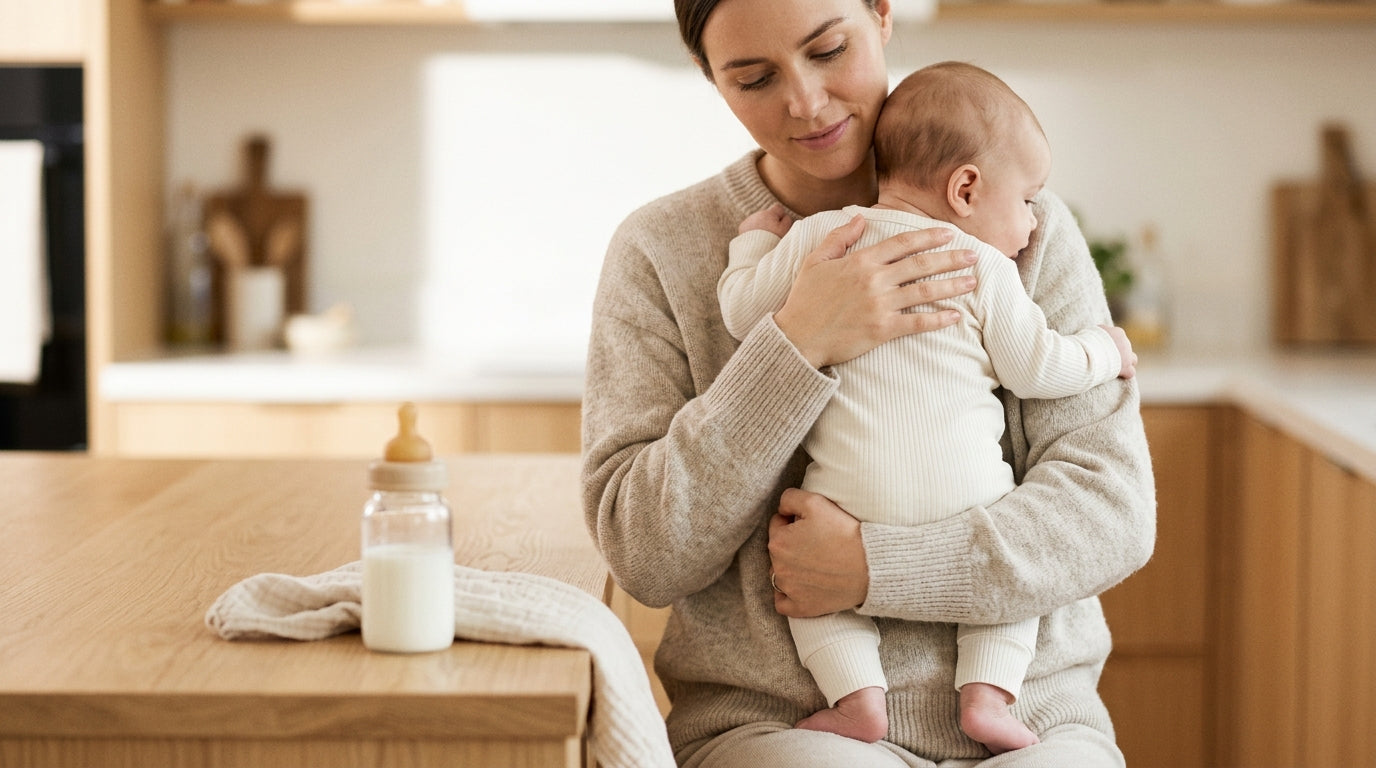
The breast pump was making that rhythmic, wheezing, dying-goose sound on my kitchen counter at three in the morning, and I was staring at exactly one-and-a-half ounces of milk in the little plastic bottle. My oldest son, Hunter—who is the cautionary tale for literally every parenting mistake I’ve ever made—was screaming in his bassinet. The Texas summer heat was creeping through the window, and my phone lit up with a text from my mama: Just have a baby guinness, Jess. It'll make your milk come in.
I'm just gonna be real with you y'all, when you're a first-time mom running on zero sleep and sheer panic, you'll believe anything. I vaguely remembered seeing college kids downing these tiny, cute little layered shots at bars, and I figured, sure, maybe a baby g is some magical, pint-sized stout beer designed to fix my lactating woes. It sounds innocent enough, right? It even has the word 'baby' in the title. What I didn't realize at that sleep-deprived moment was that my mother's generation, bless their heart, survived the 90s by just throwing random alcohol at every parenting problem they encountered.
What my mama and grandma got totally wrong
If you ask anyone from my grandma's era how to fix a fussy, hungry infant, you're going to get some wild answers. Teething? Rub whiskey on their gums. Won't sleep? Put cereal in their bottle at two weeks old. Milk supply dropping? Drink a heavy dark beer. They swore up and down that the darker the beer, the better your body would produce milk.
The problem is the massive game of telephone that happens between generations. My mom was telling me to drink a specific cocktail shot, completely misunderstanding what the actual old wives' tale even was. A true baby guinness shot doesn't have a single drop of stout beer in it. It's literally just coffee liqueur, like Kahlúa, layered heavily with Irish cream, like Baileys. It's meant to look like a tiny, adorable pint of Guinness with a frothy white head on top, but it's basically pure, highly concentrated liquor.
I took this brilliant advice to my doctor, Dr. Miller, at Hunter's next checkup. I honestly thought he was going to fall out of his little rolling stool. He mumbled something about how alcohol messes with your oxytocin levels and blocks the whole milk let-down reflex, basically saying that throwing back a couple of 20% ABV liqueur shots is going to hold your milk hostage rather than letting it flow. From what my tired brain could gather, the alcohol actually dehydrates you and stops the hormones from doing their job, which means your baby ends up getting way less milk, not more.
The absolute scam of pumping and dumping
Let's talk about the phrase "pump and dump" because it might be the biggest lie modern mothers have ever been sold. The amount of anxiety I had over my freezer stash was completely unhinged. I used to think that if I went to a wedding and had a couple of drinks, my breast milk was suddenly tainted forever until I hooked myself up to the machine and physically drained the alcohol out of my body. It sounds logical when you're exhausted, but it's complete garbage.
Here's the reality that broke my heart: I spent months pumping liquid gold, crying over the kitchen sink while pouring perfectly good milk down the drain, thinking I was protecting my baby. Pumping doesn't magically extract the alcohol from your system any faster than just sitting there and breathing. The alcohol leaves your milk at the exact same slow, agonizing rate that it leaves your bloodstream.
If you're waiting for your body to process a strong drink, you're looking at least two hours of just pacing around the house, hoping the baby doesn't wake up hungry. And if you've had a concentrated shot made of pure liqueurs? You're doing complex math in your head at midnight while your breasts feel like overfilled water balloons. It's miserable, it's sticky, and it's so incredibly isolating.
And frankly, swallowing a handful of those nasty fenugreek pills won't save your supply either unless your life goal is to sweat smelling exactly like a cheap pancake house.
What a nursing mom's wardrobe actually looks like
Once I accepted that the liquor cabinet wasn't going to solve my nursing issues, I had to focus on the things I could actually control: drinking my body weight in plain water, eating a concerning amount of oatmeal, and keeping both me and the baby as comfortable as possible during those marathon cluster-feeding sessions.

I remember sitting on my awful microfiber couch, sweating through my shirt, while Hunter thrashed around in some stiff, synthetic sleeper I'd bought on clearance. He had horrible eczema that flared up whenever he got warm, making him too fussy to latch properly. That's when I finally caved and started hunting for better clothes. We tried the Organic Cotton Baby Bodysuit Sleeveless Infant Onesie from Kianao, and I'm not exaggerating when I say it changed the vibe of our afternoons. It's made of 95% organic cotton with just enough stretch that I didn't feel like I was wrestling an angry alligator trying to get it over his head. At around $24, I had to justify the price to my husband, but when your kid stops breaking out in angry red heat rashes during every 45-minute feeding session, you gladly hand over the debit card. It breathes beautifully, and it held its shape even after I washed it a hundred times.
If you're tired of synthetic fabrics making your fussy baby even more miserable while you're trying to figure out breastfeeding, you might want to dig into Kianao's organic baby clothes collection and see what works for your climate.
Keeping them distracted when the supply dips
By the time I had my third baby, I finally understood that milk supply naturally dips in the late afternoon. It doesn't mean you're failing, and it doesn't mean you need to raid the fridge for alcohol. It just means your body is tired. The hardest part is keeping a frustrated baby occupied while you just sit there and aggressively hydrate.
I learned to set up little stations around the living room to buy myself ten minutes of peace. The Wooden Baby Gym | Rainbow Play Gym Set with Animal Toys was my absolute favorite tool for this. I despise plastic toys that blink and shout automated songs at me while I'm already overstimulated, so this wooden A-frame was a breath of fresh air. It has these quiet, neutral-colored hanging toys that don't overwhelm a baby's senses. I could lay my youngest under there, and she'd just happily bat at the little elephant while I chugged another 32 ounces of ice water.
Of course, not every product is a massive home run. I also bought the Panda Teether Silicone Baby Bamboo Chew Toy because she was gnawing on her hands constantly. Look, I'll be honest with you. It's an incredibly cute teething toy, and the silicone is super soft and safe. But because of the flat design, my daughter would drop it on my living room rug every three minutes, and it attracts dog hair like a magnet. I spent half my day rinsing that sweet little panda face off in the sink. She loved chewing on it, so I kept it in rotation, but it definitely required more maintenance than I bargained for.
Navigating the real science of oats and barley
If there's any kernel of truth to the whole stout beer myth, it's not the alcohol. It's the barley and the brewer's yeast. Dr. Miller explained that those specific ingredients contain something called polysaccharides, which apparently trigger your body to release more prolactin. Prolactin is the hormone that honestly makes the milk.

So, back in the day, when women were drinking a thick, dark pint, they were accidentally getting a dose of milk-boosting ingredients mixed in with a heavy sedative. Today, we know better. You can get all the benefits of brewer's yeast and barley without the buzz. I started making massive batches of lactation cookies loaded with oats, flaxseed, and brewer's yeast. They tasted incredible, filled my stomach when I was too tired to cook a real meal, and my supply leveled out beautifully without me having to worry about how much of my drink was transferring to my baby.
Here are the things that genuinely helped my supply when I was ready to quit:
- Drinking an ungodly amount of ice water out of a cup with a straw (if it doesn't have a straw, I won't drink it, I don't make the rules).
- Eating oatmeal for breakfast every single day, even in the dead of July.
- Letting the baby nurse on demand instead of staring at an app to track the minutes.
- Throwing out the pump for a few days to just rest on the couch and do skin-to-skin.
Walking away from the weird advice
Motherhood is loud, and everybody has an opinion about how you should be feeding your child. Your mother-in-law will tell you one thing, a random teenager on TikTok will tell you another, and your exhausted brain will try to convince you to try all of it at once.
Instead of panicking over your freezer stash while trying to calculate alcohol processing times and chugging herbal concoctions you hate, just grab a massive water bottle and lay on the couch with your baby for a few hours. Your body knows what it's doing, even when it feels like it doesn't. Leave the fancy layered liqueurs for a girls' night out when you're totally done with your nursing journey, and stick to the boring, practical stuff that seriously works.
Before you dive into the questions below, take a second to breathe, drink some water, and browse Kianao's full lineup of sustainable nursery items that honestly make this chaotic parenting gig a little smoother.
Questions you're probably asking right now
Can I've a non-alcoholic beer to boost my supply?
Honestly, this is the best loophole I found! Since it's the barley and brewer's yeast that really help with prolactin, grabbing a 0.0% non-alcoholic stout gives you all those potential milk-boosting benefits without the alcohol messing up your let-down reflex. Just make sure it really says 0.0% and not just "low alcohol."
How long do I really have to wait to nurse after a drink?
My doctor told me it's roughly two hours for every standard drink you consume. So if you've one glass of wine, you wait two hours. But since a baby g shot is made of two different concentrated liqueurs, the math gets super murky. It's just not worth the headache of guessing when you're dealing with an infant.
Does pumping right after a drink get the alcohol out faster?
Nope. I learned this the hard way after wasting so much milk. Alcohol isn't trapped in your breasts; it's flowing through your bloodstream. As your blood alcohol level goes down over time, the alcohol level in your milk goes down with it. Pumping and dumping does absolutely nothing to speed up that process.
What are the signs my baby is getting enough milk?
If you're spiraling about your supply like I always did, look at the diapers, not your pump bottles. If you're seeing plenty of heavy, wet diapers and regular mustard-colored poops, and your baby is gaining weight at their checkups, you're doing great. The amount you pump is never a true indicator of what your baby can honestly extract.
Are lactation cookies better than drinking a stout?
A hundred times yes. Lactation cookies usually contain oats, flaxseed, and brewer's yeast, which are all fantastic for supporting milk production. Plus, they don't dehydrate you or interfere with your oxytocin levels the way alcohol does. Also, they taste like dessert, which you entirely deserve right now.




Share:
Building A Survival Baby Hamper For The 3 AM Meltdowns
The Brutal Truth About Baby Guinea Pigs Nobody Tells Parents