

It was a Tuesday in 2019. I was standing in aisle four of our local Target, wearing a pair of violently pilled gray yoga pants with a mystery stain on the knee, clutching a lukewarm iced coffee like it was a life preserver. Leo was almost three at the time, strapped into the red plastic seat of the shopping cart, kicking his legs.
The woman standing in front of us in the checkout line had beautiful, dark skin and was wearing a bright yellow coat. Leo stopped kicking. He stared. He pointed a sticky, half-eaten graham cracker directly at her and yelled, at the top of his very impressive toddler lungs, "MOMMY! WHY IS HER SKIN SO BROWN?!"
Oh god. The panic. The immediate, suffocating, full-body white-liberal panic.
I froze. My brain short-circuited. And then, I did the absolute worst thing I could have possibly done in that moment. I aggressively shushed him. I whispered a frantic, "Leo, be quiet, we don't say things like that," while my face turned the color of a fire engine, and I offered an agonized, apologetic grimace to the woman (who, to her immense credit, just smiled warmly and went back to unloading her cart).
I spent the entire drive home spiraling. I'm a good, progressive millennial mother, right? We listen to NPR! We recycle! But my reaction was pure, unfiltered 1990s conditioning. I was raised in the era of the "colorblind" myth—the idea that if we just pretend we don't see race, racism will magically disappear. Anyway, the point is, I realized right then and there that by shushing him, I had just taught my son that noticing someone's race is a taboo, shameful secret.
The blank slate myth is total crap
I used to think that a baby was just a pure little blank slate floating down from the heavens, entirely free of any bias or preference. Like, they just see souls or whatever. I brought this up to my pediatrician, Dr. Miller—who always looks a little bit like he desperately needs a nap—when I dragged Maya in for her four-month well-visit. She had been staring intensely at one of the nurses who had dark skin, and I nervously joked about it.
He gently laughed and completely shattered my illusion. He told me that infants aren't colorblind at all. Apparently, by the time they're like, 3 to 6 months old, they already look longer at faces that match the race of their primary caregivers. It's not malicious, it's just how their tiny, rapidly developing brains sort information. They're basically little pattern-matching machines. If we just smile and ignore race completely while they try to figure out the world, they end up filling in the blanks themselves using whatever societal cues they pick up on—which, let's be honest, are often terrible.
So instead of quietly hiding your own discomfort and aggressively avoiding the topic and hoping they just figure out equity on their own, you've to actively talk about melanin and skin color and fairness out loud, even when it feels super awkward and you're sweating.
My existential crisis in the nursery
After the Target incident, I went home and aggressively audited Leo's bookshelf. I sat on the floor of his nursery, surrounded by a mountain of board books, and I honestly felt sick to my stomach.

Let me tell you what I found. I found a white boy driving a tractor. A white girl going to bed. A white family at the beach. And animals. SO MANY ANIMALS. Why is children's literature 90% talking woodland creatures? I had a badger that learned to share, a bear that lost his hat, a squirrel that was anxious about autumn. But do you know what I didn't have? A single book featuring a Black or Brown child just doing normal, everyday kid stuff.
I had exactly one book about Martin Luther King Jr. that we dusted off in February, and that was it. I realized my son's entire worldview was being shaped by talking badgers and white kids, which meant I was implicitly teaching him that white was the "default" human experience. It was a massive wake-up call. I stayed up until 2 AM that night, fueled by leftover anxiety and stale goldfish crackers, furiously ordering diverse board books online. My husband, Mark, came downstairs the next morning, took one look at my credit card receipt, and asked, "Are we bankrupting ourselves on board books?" Yes, Mark. Yes we're.
We started reading Ibram X. Kendi's book, which is where the whole concept of raising a baby to be actively antiracist really clicked for me. But you know what's funny? While I was reading these deep concepts to Maya when she was around 8 months old, she was literally just furiously gnawing on a rubber block.
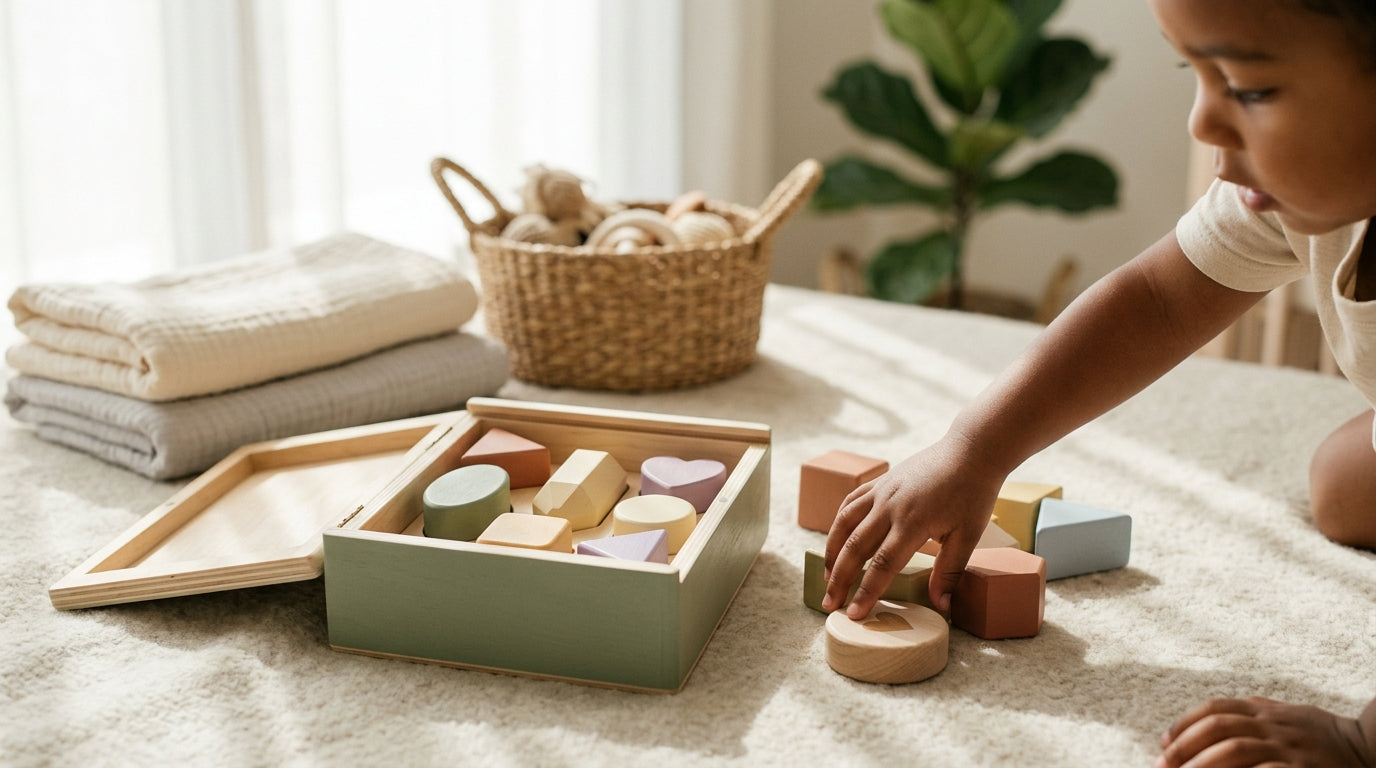
Actually, those blocks were a lifesaver. We have the Gentle Baby Building Block Set and they're easily one of my favorite things we own. They're this soft rubber material in these muted macaron colors—which means they aren't visually offensive sitting in my living room—and they've numbers and little animal symbols on them. She would sit there stacking them and knocking them over, and I'd point to the different colors and use them to babble to her about how people come in all different beautiful shades, too. She mostly just drooled on the number four block, but I swear the exposure counts! Plus, they're BPA-free and they don't feel like stepping on a Lego when you walk through the dark nursery at 3 AM, which is the real metric of a good toy in my house.
You should also totally buy dolls with different skin tones and hair textures and just throw them in the toy bin; it's literally the easiest and most basic fix in the world.
Looking to refresh your little one's playroom with items that actually support their development? Check out Kianao's full collection of educational toys that are as mindful as you're.
Messing up is part of the process
thing is that no one tells you about this stuff: you're going to sound like an idiot sometimes. You're going to use the wrong words. You're going to over-explain things to a toddler who's actively licking a sliding glass door.

When Maya was cutting her molars, she was an absolute gremlin. The fussing was endless. I remember pacing the living room, bouncing her on my hip, trying to explain the concept of racial equity to Leo who was asking why the kids on his TV show looked different. Maya was aggressively chewing on her Panda Teether Silicone Baby Bamboo Chew Toy—which, seriously, thank God for that thing. You can toss it in the fridge so it gets cold, and the little textured bamboo design was the only thing that kept her from screaming while her gums were swollen. So there I'm, holding a cold silicone panda in one hand, a crying infant in the other, trying to explain to my preschooler that melanin is like built-in, magical natural sunscreen.
Did I deliver a perfect, TED-talk level lecture? Hell no. I stumbled over my words. I said "um" a lot. But Kendi's whole philosophy is that being antiracist isn't a fixed identity; it's an action. It's about admitting when you don't know something, or when you mess up, and just trying to do better the next day. Model that vulnerability. If you say the wrong thing, say, "You know what? Mommy didn't explain that right. Let's try again."
Not every toy has to be a deep statement
Sometimes, we overthink it. Lord knows Mark tells me I overthink everything on a daily basis. He's the one who bought Maya the Wooden Baby Gym | Rainbow Play Gym Set with Animal Toys because he wanted her to have something "calming and natural" to play with while we tackled heavy topics.
Honestly? It's just okay. I mean, aesthetically, it's a 10/10. It's got this beautiful wooden A-frame and cute hanging animals, and it looks amazing in photos. But Maya basically just stared at the wooden elephant for two minutes and then spent the rest of her tummy time trying to aggressively rip the entire frame down onto her own head. It didn't hold her attention long enough for me to drink my coffee hot. But it's made from sustainable wood and non-toxic finishes, so at least when she was chewing on the legs, I wasn't worrying about chemicals. It just goes to show that not everything in your house has to carry the weight of the world—sometimes a toy is just a toy, and your baby is just going to prefer the cardboard box it came in anyway.
If you're ready to start having these conversations but feel completely overwhelmed by where to begin, just start small. Point out the beautiful differences in the people you see at the grocery store. Audit that bookshelf. And give yourself some grace when you inevitably stumble.
Ready to build a playroom that reflects your values? Explore our mindful baby gear and toys to find sustainably made products that support your child's growth.
The messy, honest FAQ
Is my 6-month-old really too young to learn about race?
I mean, they aren't going to understand systemic redlining, but no, they aren't too young to start hearing the words! My pediatrician blew my mind when he said babies notice skin color differences before they can even sit up. If you start normalizing talking about different skin tones, hair textures, and eye shapes while they're tiny, it just becomes a totally normal part of your vocabulary. Plus, it's great practice for you before they can actually talk back and ask you hard questions in the middle of Target.
What if I say the wrong thing?
Oh, you'll. I definitely have. Last week I tried to explain cultural appropriation to my 7-year-old and halfway through I realized I was making zero sense. You just have to swallow your pride and say, "Honestly, I think I got that wrong. Let's look it up together." Your kids don't need you to be a flawless sociology professor; they just need to see that you aren't afraid of the topic. Perfection is the enemy of seriously doing the work.
Why can't I just teach them that we're all exactly the same on the inside?
Because it's a lie! We aren't exactly the same, and that's the whole point. When we tell kids "we're all the same," what they seriously hear is "our differences are bad so we shouldn't talk about them." It completely erases the beautiful cultural and physical differences that make people who they're, and it totally invalidates the very real, very different experiences that people of color face in the world. Celebrate the differences instead of trying to paste over them.
Are diverse toys really that important if we live in a diverse neighborhood?
Yeah, totally. We live in a pretty mixed area, but Leo's imaginative play still defaulted to whatever he saw in his toy box and on TV. If every hero action figure they own is white, and every beautiful doll they own is white, they absorb that message, no matter who their neighbors are. Throwing some dolls with different skin tones into the mix is literally the lowest-effort parenting win ever. Just do it.
My mother-in-law says I'm making it a "thing" when it shouldn't be. Help?
Ugh, I feel this in my soul. Older generations were deeply brainwashed by the 90s colorblind trend. When my relatives make comments like this, I usually just blame science. I'm like, "Well, the pediatrician told us babies genuinely develop bias by age 3 if we don't talk about it, so we're just following medical advice!" It usually shuts them up. You don't have to win an argument with your mother-in-law to raise a good kid. Just smile, hand her the baby, and keep doing your thing.




Share:
The Hilarious and Messy Truth About Raising a Cute Anime Baby
Stop misusing aquaphor baby healing ointment on rashes