

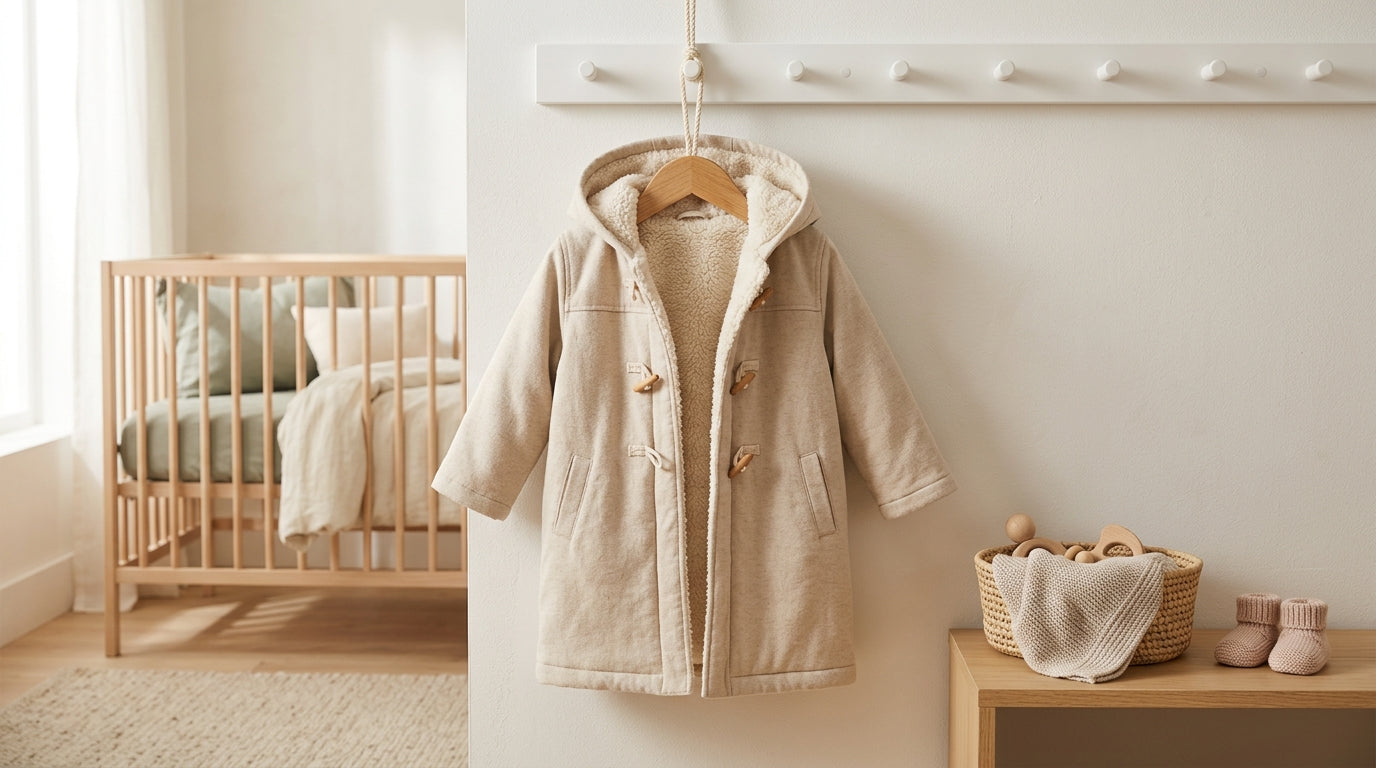
We're sitting in the Target parking lot on Elston Avenue, the wind is doing that specific Chicago thing where it tries to actively slice your face off, and the mom parked next to me is fighting for her life. She's trying to fold her infant into a rear-facing car seat. The baby is wearing what looks like a tiny, aggressive sheep. It's one of those baby sherpa-lined cotton long-sleeve coats that cost more than my first car, and the kid is entirely immobilized, arms sticking straight out like a starfish. The mom is red-faced, shoving the plastic chest clip down over an inch of synthetic fleece, entirely unaware that she's essentially strapping her kid into a trap.
There's this collective delusion we all buy into around November. We think if we just swaddle our desi babies in enough thick, fluffy material, we're winning at motherhood. My own mother still calls me in a panic if my toddler isn't wearing three sweaters indoors. But the truth about winter outerwear is a lot messier, and those cute long cotton baby coats with sherpa lining are at the center of the problem.
The physics of the marshmallow suit
Listen, I spent five years in pediatric triage, and if I had a dollar for every time I had to politely explain car seat slack to a crying parent, I'd retire to Boca. The issue with these thick sherpa jackets isn't just that they're hard to put on. It's that bulky winter clothing should never go under a car seat harness.
It all comes down to basic crash dynamics, which is a terrible thing to think about on a Tuesday morning, but here we're. When you put a baby in a thick sherpa-lined coat and pull the straps tight, you feel resistance. You think the baby is secure. But that resistance is just air trapped inside the fluffy polyester fibers of the sherpa lining. In the event of a collision, the force instantly compresses all that fluff flat. Suddenly, the harness you thought was tight is dangerously loose, and your kid could literally slide right out of the seat.
I've seen a thousand of these coats, and parents always think theirs is the exception because the outside is made of nice, flat cotton. But that inner lining is the culprit. My attending in the ER used to make us do the pinch test with parents right there in the room. You put the coat on them, buckle them in tight, and then take them out without loosening the straps at all. Once the coat is off, put the baby back in and buckle the clips. If you can pinch the fabric of the harness strap at the collarbone, your kid is basically wearing a greased water wing in a car crash. Almost every single baby sherpa-lined cotton long-sleeve jacket fails this test miserably.
Sweaty babies and the polyester trap
My doctor said a baby's internal thermostat is basically just a guy pulling levers randomly in a dark room. They don't sweat like we do, and they can't shed heat efficiently. This brings us to the second biggest lie of the winter baby gear industry.
You see a long cotton coat and think about natural fibers and breathability. But the sherpa inside those coats is almost never real sheep's wool. It's polyester. It's liquid plastic spun into fluffy yarn. It traps heat with a vengeance. When you take a baby from a freezing parking lot into a heated car, and then into a heated grocery store, all while wearing a plastic oven, things go bad quickly.
The medical consensus on this is kind of murky, but we know overheating is a massive risk factor for things you really don't want to think about at 3 AM. If you touch the nape of their neck or their chest and the skin feels like a damp, hot sponge, they're way too warm. You'd be shocked at how often babies are screaming in the stroller not because they're hungry or tired, but because they're marinating in their own sweat inside a polyester cocoon.
What actually works for base layers
If you want to keep them warm without turning them into a fire hazard, you've to ditch the bulk and focus on the base layer. You need something that breathes, hugs the skin tightly enough to be car seat safe, and doesn't make them break out in weird red bumps.

This is what I actually buy for my toddler. The Long Sleeve Organic Cotton Romper. It has this three-button henley thing going on at the neckline. When my kid is thrashing on the changing table like a caught fish, trying to escape a diaper change in a drafty bedroom, those three buttons are the only reason we get dressed at all. You just unbutton it, slide it over their giant head without scraping their nose, and button it back up.
The fabric is real organic cotton, not the synthetic stuff that traps sweat. It's thin enough that it doesn't interfere with the car seat harness at all, but because it's a tight knit, it actually keeps the cold air off their skin. I've washed ours probably forty times, and it hasn't turned into a stretched-out rag yet, which is basically a miracle in the baby clothing world.
Now, people will try to sell you on short sleeves for winter layering, saying you can just put a heavy coat over them. I've the Kianao Short Sleeve Organic Cotton Baby Bodysuit too, and honestly, it's fine for summer. The ribbed fabric is nice enough. But trying to shove a bare, slightly sticky baby arm down the sleeve of a long sherpa jacket is a special kind of torture I don't think to anyone. The friction alone will make your kid scream. Just stick to long sleeves for the base layer in winter.
If you're trying to figure out how to dress them without losing your mind, you might want to look through these organic baby clothes for actual breathable layers instead of buying another teddy bear suit.
The hood situation
Let's talk about hoods for exactly one sentence. If they fall asleep in a hooded sherpa coat, take it off them immediately because airway obstruction isn't a joke, yaar.
How we seriously leave the house
Getting out the door with a toddler in February requires the logistics of a minor military operation, but if you could just stop trying to buckle them in their coats, we'd all be better off. The routine is messy but it works.

You put them in the organic cotton henley bodysuit. You put some pants on them. You stuff them into the bulky baby sherpa-lined cotton long jacket while you're still inside the warm house. You carry them to the car like a football. Once you're in the backseat with the door closed, you wrestle the coat off them. Yes, the air is cold for exactly twelve seconds. You buckle them securely into the harness, pulling it tight over just their cotton bodysuit.
Then, you take that expensive, fluffy sherpa coat and you lay it backward over their lap like a weird, lumpy blanket. Their arms can go through the sleeves backward if they're old enough to want their hands free. They stay perfectly warm, the harness stays flush against their collarbone, and you don't have to worry about the physics of a crash.
While you're doing this wrestling match in the freezing cold, they'll absolutely scream. It's just a fact of life. I keep a Bunny Teething Rattle stuffed in the side pocket of the car door for this exact moment. It's just a piece of untreated beechwood and some crochet cotton shaped like a rabbit, but it works like magic. I just shove it into my kid's hands the second I start taking the coat off. They get so distracted trying to chew on the wooden ring that they forget to be mad about the cold air. It kept the peace on hundreds of mornings when my fingers were too numb to work the chest clip quickly.
Washing fake sheepskin is its own punishment
If you do succumb to the aesthetic and buy one of these thick winter jackets, you should know that maintaining them is awful. Sherpa is notorious for matting. The first time your kid spits up milk onto that fluffy collar, it's game over.
You throw it in the wash thinking it'll be fine, but the agitation of the machine twists the plastic fibers together. It comes out of the dryer looking like a wet dog that's been left out in the sun to crisp. If you want it to stay somewhat soft, you've to wash it inside out, on freezing cold water, and air dry it by laying it flat on a towel. Nobody with a nine-month-old has the time to curate a drying rack for a miniature coat, so just accept that it's going to look terrible by January.
Before you go down a rabbit hole of buying expensive winter outerwear that you can't even safely use in the car, grab a breathable baby blanket that honestly works over the car seat harness without compromising your child's safety.
The messy truth about winter gear
Q: Can my baby wear a sherpa-lined coat in the car seat if I just pull the straps really, really tight?
A: Listen, the short answer is no. You can pull with all your upper body strength, but you're just compressing the top layer of the fluff. In a crash, the G-force is going to compress it further than human hands ever could. Just take the coat off. It's annoying, it adds two minutes to your commute, but it's the only way the harness really works.
Q: Why does my baby sweat so much in their winter coat even when it's freezing outside?
A: Because that fluffy lining isn't breathable wool, it's polyester. It acts like a plastic bag, trapping all their body heat inside. Babies don't keep stable their temperature well to begin with, so when you put them in a synthetic oven and carry them through a heated grocery store, they panic-sweat. Stick to organic cotton base layers that really let the skin breathe.
Q: Are long cotton coats warm enough for babies on their own?
A: A single layer of cotton won't cut it in Chicago in January, no. Cotton is great for breathability, but it doesn't block the wind well. You need layers. A tight organic cotton long-sleeve bodysuit against the skin, maybe a light sweater, and then a wind-blocking layer on top for the walk to the car. Just remember the thick stuff comes off before they get buckled.
Q: What should my baby wear under a winter jacket so they don't get stuck?
A: Avoid short sleeves under thick coats. The friction of pushing a bare, slightly damp baby arm through a tight, fluffy sleeve is awful. Use a long-sleeve, smooth cotton bodysuit. It acts like a rash guard, letting the jacket slide on and off easily while keeping their skin protected from the scratchier outer layers.
Q: Is sherpa better than fleece for babies?
A: They're usually the exact same thing chemically—just polyester spun differently. Sherpa is made to look like sheep's wool with little bumps, while fleece is brushed flat. They both trap heat and they both cause car seat slack. Buy whatever you think is cuter for outdoor stroller walks, but treat them exactly the same with safety.




Share:
My Toddlers and the Baby Shark Coloring Pages Obsession
The Real Story Behind Those Unworn Infant Shoes on Resale Apps