

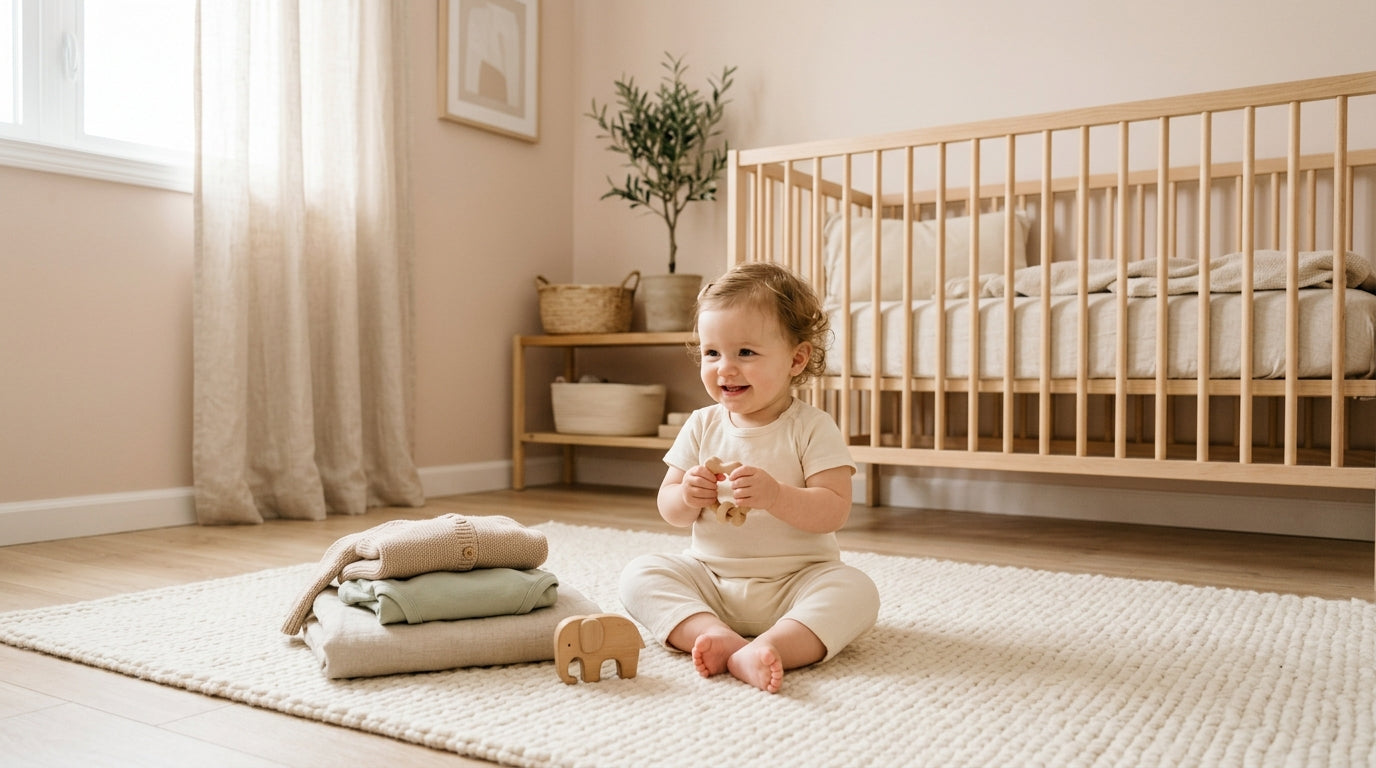
Dear Marcus from six months ago,
I'm currently sitting on the floor of the laundry room staring at a 75% surface-area coverage stain on a 100% cashmere infant romper. It's 3:14 AM. The dog is hiding under the sofa because I just yelled at the washing machine, and your son—who apparently operates on a digestion schedule entirely unaligned with luxury fabrics—is babbling happily in his crib upstairs. He has no remorse. He doesn't care about the heritage check pattern. He only cares about testing the limits of fluid dynamics.
I'm writing this to save you a lot of time, a lot of stress, and a significant amount of your sanity when the gift boxes start rolling in. Because right now, you're politely accepting tiny, incredibly expensive garments at baby showers, and you've no idea what you're actually holding. You think you're holding a cute outfit. You're actually holding a highly volatile maintenance protocol.
The physics of putting cashmere on a fluid generator
Here's a data point no one tells you before the baby arrives: an infant is basically an uncalibrated output device. Everything they consume comes back out, either from the top or the bottom, with zero warning and surprising velocity.
So when your wife’s very generous aunt gifts you a massive box of Burberry baby clothes, your first instinct will be to put him in them immediately because they look like tiny, sophisticated adult clothes. He will have a little collar. He will look like he’s about to close a real estate deal or order an expensive macchiato. My doctor, Dr. Miller, looked at my beautifully formatted Excel chart of his weight percentiles and casually mentioned that babies basically double their mass in five months, which didn't really click in my brain until I tried to button a $400 vintage check shirt over a belly that had literally expanded overnight.
I spent twenty minutes trying to safely clasp the snaps on a designer romper while he thrashed like a netted salmon. And then, exactly four minutes after he was dressed and looking pristine, the blowout happened. It wasn't just a leak. It was a structural failure of the diaper's core containment system.
Do you know how to clean a cashmere and fine cotton blend at three in the morning when you haven't slept more than four consecutive hours since Tuesday? I'll give you a hint: you can't just throw it in the wash on heavy duty. My wife had to gently intervene and explain to me that throwing a luxury garment into a hot cycle with industrial stain remover would basically melt it into a doll-sized felt square. I spent forty-five minutes hand-washing a garment smaller than my laptop keyboard in the bathroom sink with special soap while my son chewed on my slipper. Dry cleaning infant wear is a scam invented by people who hate weekends.
Hunting for logic at the designer checkout
You will inevitably face a moment of pure, sleep-deprived weakness around month five. You will have lost the left shoe to a matching designer gift set, and your brain will try to convince you that the outfit is somehow ruined without it. You will find yourself sitting in the dark, scrolling on your phone, actively searching for a Burberry baby sale to buy a replacement piece before your aunt comes to visit.

Let me stop you right there. Shut the laptop. Go to sleep.
The secondary market for this stuff is wild, but buying it new to fix a matching issue is like buying a new car because you got a flat tire. The lifecycle of a baby outfit is measured in weeks, sometimes days. You will spend hours trying to figure out why a baby needs a tiny trench coat with a storm flap. Who's he investigating? What weather condition requires a six-month-old to have water-resistant gabardine but no functional way to quickly change a diaper?
If you genuinely want to look at things that actually survive a hot wash cycle without requiring a user manual, do yourself a favor and browse some organic baby clothes that are designed for actual human babies.
A firmware update for his daily uniform
We eventually had to roll back his wardrobe to basic, functional hardware. The turning point was when I realized I was actively restricting his floor time because I was terrified he would drag his expensive beige knees across a rogue blueberry I missed while sweeping.
I swapped out the high-maintenance gear for the Organic Cotton Baby Bodysuit, and it's honestly my favorite piece of cloth in this entire house. It’s sleeveless, which is brilliant because his arms are constantly covered in whatever puree he just sneezed into. I approach his wardrobe like a server migration now—minimizing downtime and maximizing efficiency. This onesie has zero scratchy tags, it stretches right over his giant head without getting stuck, and most importantly, when he inevitably destroys it with sweet potato, I can throw it into the washing machine on a brutal cycle and it comes out perfectly fine. It seriously gets softer. It’s a beautifully simple, highly functional piece of engineering.
Now, for full transparency, my wife’s sister bought him the Flutter Sleeve Organic Cotton Baby Bodysuit from the same brand. It’s exactly the same great fabric, but I've to be honest—the ruffles seem like completely unnecessary UI elements. I don't really get the flutter sleeve aesthetic on an 11-month-old who mostly uses his shoulders as battering rams against the coffee table. The ruffles just seem to collect lint from under the radiator. But my wife thinks it's adorable, and the fabric didn't shrink when I accidentally washed it on hot, so I consider it a partial victory.
Data points on the secondary market
If you really step back and look at the life cycle of luxury infant apparel, you start to see the patterns. There's a massive shadow economy of lightly soiled designer baby gear on resale apps, and the data tells a very specific story about how these clothes are really used in the wild.

- The Photo Op: They wear the outfit for exactly one family photo session.
- The Duration: The photo takes 45 minutes of intense sweating and bribery.
- The Quarantine: You spend the rest of the day terrified he will touch anything containing a pigment, essentially ruining his afternoon.
- The Retirement: The outfit is carefully folded, placed in a drawer, and when you take it out three weeks later, it only fits his left arm.
I finally realized we were dressing him as a status update for our extended family rather than outfitting a tiny human who's actively trying to learn how gravity works by throwing himself onto the carpet.
The beige aesthetic versus a developing brain
This whole experience spilled over into his toys, too. The luxury baby aesthetic is overwhelmingly beige, tan, and muted cream. It looks incredible on Instagram. It looks like a high-end coffee shop exploded in a nursery.
But apparently, babies can't even process pastel beige in the beginning. Dr. Miller vaguely explained that their retinas or optic nerves or whatever are wired to respond to high contrast and primary colors. We had him staring at a perfectly matched, $400 tan plaid ceiling for weeks, wondering why he was fussing. He wasn't stimulated; he was bored out of his mind.
We eventually got him the Wooden Baby Gym with the rainbow toys, and it was like we finally turned his monitor on. The natural wood frame is sturdy enough that I don't panic when he aggressively yanks on it, but the hanging toys genuinely have discernible, contrasting colors. The little elephant toy has different textures that he spends hours trying to figure out. It feels like a tool built for his actual developmental milestones rather than an accessory meant to match our living room rug.
So, past Marcus, here's your implementation plan. Take the beautifully packaged baby clothes with the iconic checks, put him in them exactly once when the gift-giver comes to visit, take a burst of 40 photos, and then immediately change him back into organic cotton. Pack the designer stuff away in a vacuum-sealed bag, save it for the memories or the resale market, and stock up on basics that let you really enjoy your kid without calculating the depreciation of a stained collar.
You have enough bugs to fix right now. Your kid's pants shouldn't be one of them.
FAQ
Are high-end baby clothes worth the price tag?
Honestly, only if someone else is buying them for a very specific photo op. The materials are undeniably soft and the stitching is perfect, but babies grow at a terrifying, non-linear rate. A $300 sweater will fit perfectly on a Tuesday and then physically not stretch over his head by the following Sunday. Stick to high-quality basics for everyday wear.
How do you wash a designer baby outfit after a blowout?
With tears and immense patience. You usually have to hand-wash them with a very gentle, specialized detergent in cold water, constantly checking the tag while praying the stain lifts. You can't use standard baby stain removers on delicate cashmere or silk blends without basically burning a hole in the fabric. It's a terrible way to spend an evening.
Do babies genuinely care about soft luxury fabrics like cashmere?
My son seems equally thrilled chewing on a cashmere cuff as he does chewing on a cardboard Amazon box. They definitely care about comfort and breathability—which is why organic cotton is great—but they don't understand the prestige of heritage wool. If it scratches them, they'll scream. If it traps heat, they'll scream. Keep it simple.
What should I tell relatives who want to buy my kid luxury clothes?
Tell them you're so grateful, but your baby is currently growing faster than a bamboo shoot and you'd love a larger size (think 12-18 months) so they can at least wear it for a whole season. Or, gently pivot them toward luxury accessories like a really nice blanket. A blanket doesn't have sleeves that they'll outgrow in six days.




Share:
Why I Quit Natural Bug Spray for Babies (And What Actually Works)
The Truth About Burt’s Bees Infant Gear: A Dad's Guide