

I was sitting on the very edge of our squeaky nursery glider at 3:14 AM with my firstborn, glaring at a four-dollar tracking app on my phone that was flashing a red warning to tell me my three-week-old was "off schedule." He was screaming. I was crying into a burp cloth. The dog was pacing the hallway. And somewhere in my sleep-deprived brain, I actually believed that if I just logged his naps perfectly, he would magically transform into one of those robotic infants you see on Instagram who close their eyes at 7:00 PM sharp.
I'm just gonna be real with you right now, because I'm currently folding my third mountain of laundry for the day and I don't have the energy to sugarcoat it: trying to put a fresh newborn on a strict timetable is the biggest scam in modern parenting.
With my oldest, I drove myself absolutely clinically insane trying to force a schedule. I wouldn't leave the house. I was tracking minutes like a forensic accountant. And you know what happened? He still slept like garbage, and I missed out on the joy of simply holding my kid because I was too busy watching the clock.
My doctor's reality check on the newborn brain
When I finally dragged myself into the doctor's office looking like a raccoon who had been electrocuted, Dr. Miller basically laughed in my face—kindly, but still. He told me that new babies literally don't have the physical hardware to understand what time it's.
From what I vaguely remember of that conversation, he explained that they're born without a functioning circadian rhythm, so I guess it takes like eight or nine weeks for their little brains to even start making the melatonin and cortisol needed to tell day from night. Before that point, they've tiny stomachs that process milk at warp speed, so waking up constantly isn't them being difficult, it's just basic biology.

You can't train a biological process that hasn't booted up yet. You just have to turn down the lights and completely surrender to the chaos while ignoring the clock on your nightstand.
Eating crow on the whole "drowsy but awake" thing
Okay, I've a confession to make that hurts my pride. For years, I swore up and down that the "drowsy but awake" advice was a cruel psychological experiment invented by people who hate mothers. Whenever someone told me to put my baby down before they were fully asleep, I wanted to throw a dirty diaper at them.

But then my second kid came along, and I was trying to run my Etsy shop with a toddler destroying the living room and an infant permanently attached to my chest. Out of pure, unadulterated desperation around the three-month mark, I started laying her in her crib when she was just sort of blinking slowly and staring off into space like a drunk uncle after Thanksgiving dinner.
I was fully prepared for her to scream.
Instead, she wiggled a little, sucked on her hand, and just... went to sleep. It turns out the research is actually right about this one. When you put them down drowsy, they kind of figure out how the crib feels while they're still conscious, which apparently teaches them how to self-soothe so they don't absolutely panic when they wake up alone in the dark two hours later.
My grandma's terrible safe sleep advice
If I listened to my grandma, bless her heart, my kids would be sleeping on their stomachs under three heavy quilts with a drop of whiskey on their gums. I love that woman, but the survival of babies in the 1990s and earlier feels like a sheer miracle.
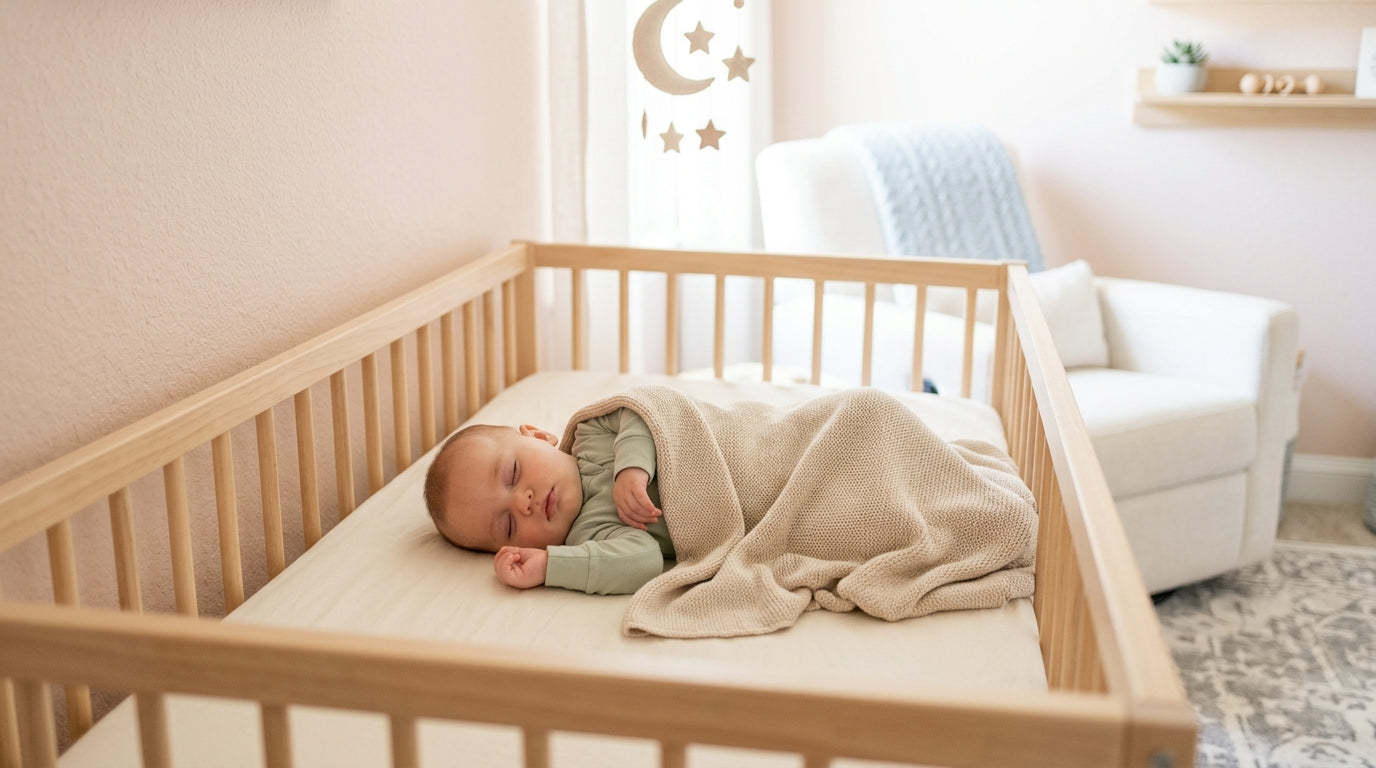
My doctor hammered the ABCs of safe sleep into my head, and my postpartum anxiety took it very seriously. Alone, Back, Crib. That's it.
- They sleep alone in their own space (we room-shared for six months, but no bed-sharing because I'm a wild sleeper who steals covers).
- Always on their backs.
- In a completely empty crib with a firm mattress.
My mom is always trying to sneak a stuffed animal into the bassinet because it looks "lonely," and I've to physically body-block her. No bumpers, no weighted sleep sacks (the AAP hates those now, by the way), and no loose blankets. We keep the room cool because overheating is apparently a huge risk factor, so we just dress them in a breathable layer and call it a night.
If you're looking to browse some things that actually support healthy rest without the toxic chemicals, check out Kianao's organic sleep collection when you've a free second.
The routine that saved my sanity (and the stuff that helped)
Instead of a rigid schedule, I eventually learned to rely on a flow. The Eat-Play-Sleep routine is the only thing keeping my household from descending into feral anarchy.

Here's how it works in my incredibly glamorous life: The baby wakes up crying. I immediately feed him so he doesn't associate eating with falling asleep. Then we "play," which for a two-month-old literally just means lying on a mat staring blankly at a ceiling fan while I try to drink cold coffee. Once he starts rubbing his eyes or getting cranky, I swaddle him up and put him down for a nap.
It sounds ridiculously simple, but separating the milk from the sleep was a massive game-changer for my middle child.
Now, I'm going to talk about baby products for a second, and I promise not to sound like a catalog. I've bought so much absolute garbage over the years, but there are a couple of things I seriously use daily.
First up is the Organic Cotton Baby Blanket with Polar Bear Print from Kianao. I'm obsessed with this thing. I bought the larger size (120x120cm) because it's thirty-four bucks and I refuse to buy something they outgrow in a month. It's 100% GOTS-certified organic cotton, which means it doesn't have that weird chemical smell when you take it out of the package. I use it for tummy time, draped over my legs while nursing in the cold middle of the night, and my oldest seriously stole it to use as his toddler bed blanket. It gets softer every time I accidentally wash it on the wrong cycle, which is frankly a miracle.
Then there's the Panda Teether Silicone Baby Bamboo Chew Toy. I'll be honest, it's just a piece of food-grade silicone shaped like a panda. It's fine. It's fifteen dollars. But when my youngest hit that horrible six-month sleep regression—which is usually just them waking up because their gums are throbbing—having this thing in the fridge to hand to him was the only way I got him to stop screaming long enough to settle back down. It's flat, so he can seriously hold it himself, and it goes in the dishwasher. Is it magic? No. Does it buy me twenty minutes of silence? Yes.
Oh, and for the times when my mother-in-law insists the baby needs a blanket in the stroller, I use the Colorful Leaves Bamboo Baby Blanket. It's made of bamboo, which is apparently great for temperature regulation, so I don't have to stress about the baby overheating while we're walking around the Texas heat.
Just remember to keep an eye on how long they've been awake, because an overtired baby produces a ton of cortisol and will fight sleep like a tiny, angry MMA fighter.
What the stages honestly look like in real life
If you're drowning right now, it helps to know what to expect so you don't feel like you're failing.
- The Potato Phase (0-2 Months): Total lawlessness. They might sleep 18 hours a day, but it's entirely in two-hour chunks. Don't attempt a schedule. Just survive. Drink water. Order takeout.
- The Awakening (3-5 Months): This is when that melatonin finally kicks in and you might get a five-hour stretch at night. But don't get too confident, because the four-month regression will hit you like a freight train and humble you real quick. This is the perfect time to start practicing the drowsy-but-awake thing.
- The Semi-Predictable Era (6-12 Months): You usually get two or three solid naps during the day, and most of their sleeping happens at night. My third kid is in this phase right now, and unless he's cutting a tooth or learning to crawl, we genuinely have a somewhat predictable evening.
Look, I know how desperate those early mornings feel. I know what it's like to Google "why won't my infant close their eyes" while sobbing at 4 AM. But I promise you, they'll eventually learn how to sleep.
You don't need a fancy app, and you don't need to track every single blink. You just need a solid routine, a dark room, and a whole lot of grace for yourself.
Ready to upgrade your nursery with things that honestly help? Shop Kianao's organic blanket collection right here before your little one wakes up from their nap.
Questions I get asked all the time (and my very honest answers)
When can I honestly put my baby on a clock-based routine?
Honestly? I wouldn't even look at a clock until they're around six months old. Before that, you're just going to make yourself miserable trying to force a square peg into a round hole. Watch your baby's sleepy cues—like yawning or staring at the wall—instead of your watch. Around six months, they usually settle into a natural rhythm of a morning nap and an afternoon nap that you can loosely set your day around.
Is it bad if my baby only falls asleep while nursing?
Listen, you do what you've to do to survive the first three months. If nursing them to sleep is the only way anyone in your house gets any rest, do it. But my doctor warned me that if you keep doing it past four months, they literally won't know how to fall back asleep when they wake up in the middle of the night without a breast in their mouth. That's why I eventually moved feeding to the beginning of their wake window.
How long should my newborn be awake between naps?
Not very long at all. For a fresh baby, it's usually just 45 minutes to an hour. By the time you change a diaper, feed them, and burp them, it's basically time to put them right back down. If you keep them up for two hours to "tire them out," it usually backfires spectacularly and they just scream because they're overtired.
What do I do during a sleep regression?
Cry a little bit, drink too much coffee, and hold the line. Regressions usually happen when their brains are making a massive developmental leap, like learning to roll over or realizing that object permanence exists. Stick to your established routines, don't start new bad habits if you can help it, and just know that it usually passes in a week or two.




Share:
Surviving the Absolute Chaos of Your First Real Baby's Out Day
What A Pediatric Nurse Wants You To Know About Your Baby's Soft Spot