

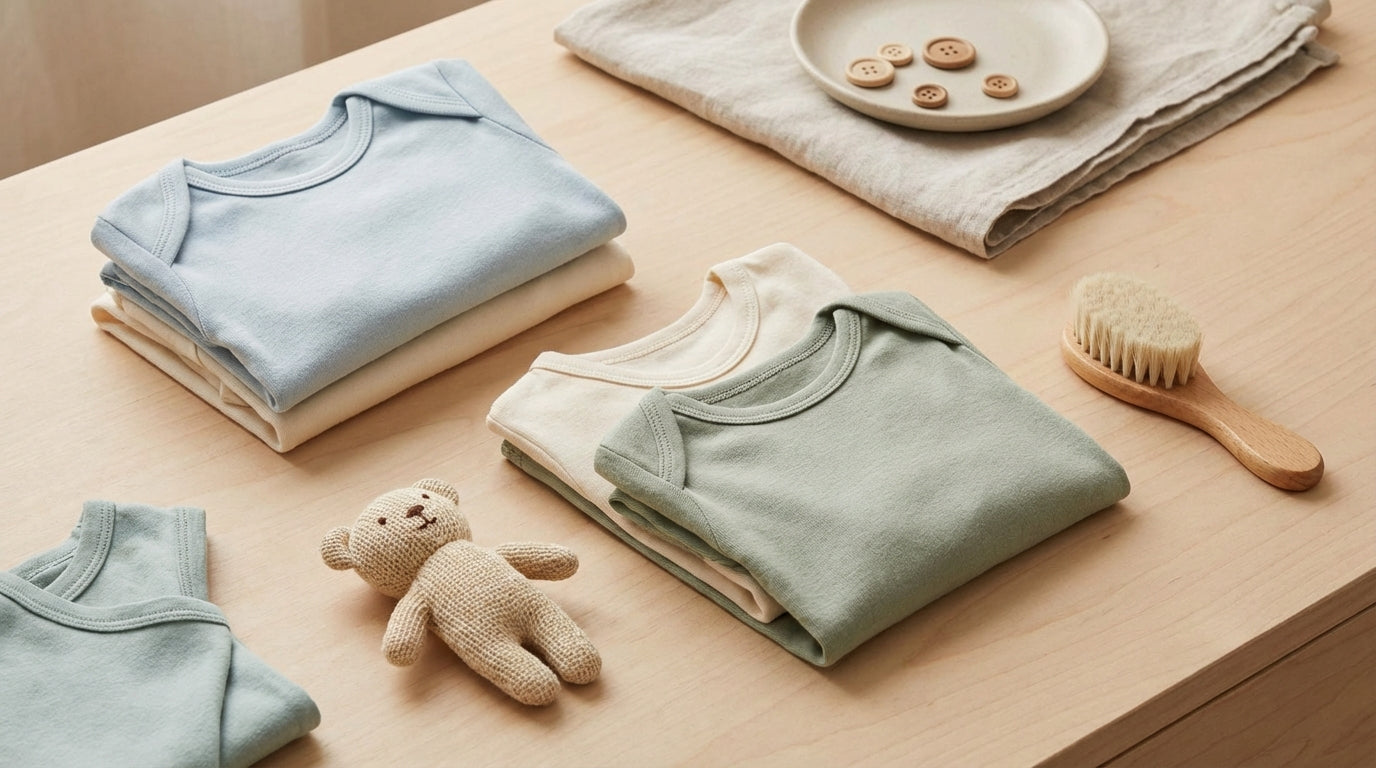
My oldest son, Wyatt, is the reason I've trust issues with zippers, snap crotches, and the entire children’s clothing industry. When he was about three months old, I got it in my head that we needed professional family photos out in a field of bluebonnets. I spent an ungodly portion of our grocery budget on this miniature tweed overall situation from a very famous luxury brand. It had tiny, hand-sewn wooden buttons down the back, a stiff linen collar, and zero stretch. None. It was basically a straightjacket for a twelve-pound human.
It was also mid-April in rural Texas, which means it was already pushing ninety degrees with eighty percent humidity. By the time the photographer told us to smile, Wyatt was the color of a fire engine, screaming his lungs out, and sweating through his fancy tweed. Then, as if his little body was protesting the sheer ridiculousness of the outfit, he delivered the most spectacular up-the-back blowout I've ever witnessed. I had to peel that heavy, expensive garment off him in the trunk of my SUV with a plastic grocery bag over my hand. We drove home in silence with a naked baby wrapped in a receiving blanket.
I'm just gonna be real with you: chasing the aesthetic of a designer baby is a trap. I thought dropping big money on an outfit made me look like I had my life together. Instead, it made my kid miserable and left me furiously scrubbing mustard-colored stains out of dry-clean-only fabric in my kitchen sink while cursing my own vanity.
Fancy labels versus actual fabric
There's a massive difference between clothing that's expensive because of the logo slapped across the chest, and clothing that's premium because of what it's actually made of. I had to learn this the hard way with my second kid.
I brought him into the pediatrician’s office wearing this thick, polyester-velvet tracksuit thing my aunt bought him. Bless her heart, she loves a brand name. My doctor took one look at his flushed little cheeks, unzipped the jacket, and gently told me I was basically slow-cooking my infant. She said something about how babies haven’t figured out how to keep stable their own body temperature yet, so putting them in heavy synthetic materials, especially for sleep or car rides, is a genuine hazard because they can overheat so fast. I think she even mentioned it’s tied to SIDS risks, which absolutely terrified me. Ever since then, if a fabric doesn't breathe like a screen door in a crossbreeze, it doesn't go near my kids.
That's the thing about actual luxury—it shouldn't be dangerous. A lot of those runway-style clothes are pumped full of harsh chemical dyes to get those rich, active colors. My grandma always used to say that a baby’s skin is thinner than a butterfly’s wing. I don't know about butterflies, but I know Wyatt’s skin was like a sponge. He broke out in horrible eczema from the cheap dyes in some of his fast-fashion onesies. When we finally switched to unbleached organic cotton and bamboo, his skin cleared up in a week. True premium wear is about the raw materials, not the prestige.
Things I absolutely refuse to buy now
Let's talk about the absolute hazard that's a decorative button. Or worse, sequins. Whoever is out here designing infant clothing with tiny, poorly attached plastic choking hazards right near a baby’s mouth clearly doesn't have children. I bought this little sweater once that had a cute embroidered bear with little bead eyes. Within five minutes of putting it on my middle child, she had chewed one of the eyes completely off. I spent the next forty-eight hours dissecting diapers looking for a black bead. Never again. If an outfit has heavy embroidery, scratchy tulle skirts that feel like sandpaper, or loose ribbons, it stays on the rack. I don't have the time or the sanity to police a garment while I'm trying to fold laundry and keep my Etsy shop running.

And if it doesn't have a two-way zipper, throw it straight in the trash.
If you're currently overwhelmed trying to find clothes that actually make sense for a baby’s daily life but still feel incredibly soft and high-quality, take a breath and look at Kianao's organic cotton baby wear. It's the kind of stuff you actually want your kid sleeping in.
The hunt for cheap high-end gear
I know a lot of y'all are out there Googling for a designer babywear sale at two in the morning while nursing. I get it. You want the good stuff but you don't want to pay retail because they're going to wear it for exactly six weeks before their torso mysteriously elongates overnight.
The resale market is your best friend here. But you've to be smart about what you're buying secondhand. Don't buy the stiff, uncomfortable logo-heavy stuff just because it's cheap designer babywear on Poshmark or Kidizen. Look for the sustainable, eco-chic brands. Clothes made from real organic cotton or bamboo hold up infinitely better in the wash than cheap synthetics. I'll happily buy a gently used organic bodysuit that originally cost forty bucks for ten dollars, because I know the fabric is still going to be buttery soft and the seams aren't going to be twisted sideways from the dryer.
When you buy the right kind of premium clothes—the ones focused on ethical manufacturing and natural fibers—you're genuinely making an investment. You can resell them when you're done, or put them in a bin in the attic for your next kid, knowing they won't disintegrate.
What I genuinely spend my money on
These days, my philosophy is all about hidden luxury. I want the clothes to look simple but feel expensive. I want tagless necklines, stretchy gussets, and fabrics that don't require me to read a complicated care tag.

For everyday wear, I love Kianao’s organic cotton onesies. They're just solid, well-made basics. They don't shrink up into a weird square shape after one trip through my aggressive washing machine, and the material is thick enough that you can’t see the print of the diaper through it, but breathable enough that my youngest doesn't wake up sweaty from her nap.
And speaking of spending stupid money on aesthetics, I used to do the same thing with toys. My mother-in-law bought us these incredibly expensive, hand-carved, Scandinavian wooden blocks that looked gorgeous on a shelf but gave my kid a splinter the first time he gnawed on one. So we ditched the heirloom wood and switched to the Gentle Baby Building Block Set. Look, I'll be honest, they've a little squeak to them when you squeeze them, which gets pretty annoying when my golden retriever thinks they belong to him. But they're made of soft rubber so my toddler can chew on them all day without chipping a tooth. They have different textures and numbers on them, and they float in the bathtub. They really get played with, which is more than I can say for the splinter-blocks.
Sizing up and making it last
If you're going to drop a little extra cash on something truly nice, like a heavy winter coat or a thick knit sweater, always buy a size up. Roll the sleeves. Roll the cuffs. Let them look a little swallowed by it for a few months. Babies grow in spurts that defy the laws of physics. If you buy a premium piece in their exact current size, they'll wear it twice.
I read somewhere that growing conventional cotton uses an insane amount of water, like thousands of gallons just for a couple of t-shirts. Buying organic uses way less, which makes me feel a tiny bit better about the mountain of laundry I do every week. So when I buy the good organic stuff, I want it to last across multiple seasons. I buy oversized, wash on cold, and pray we avoid the blueberry stains.
honestly, your baby doesn't care if their outfit has a French name on the label. They care if they can bend their knees, if the fabric is soft against their belly, and if they can safely nap without waking up in a puddle of their own sweat. Spend your money on comfort. The bluebonnet photos will be just as cute if they're wearing a plain, incredibly soft organic cotton romper—and there's a much lower chance of you having to hose them off in a gas station parking lot afterward.
If you're ready to ditch the stiff, scratchy nonsense and invest in basics that really survive parenthood, check out our collection of premium, skin-safe baby apparel.
A few messy questions I usually get about this
Is the expensive stuff genuinely worth it for a newborn?
Honestly, no. Newborns are essentially liquid. They leak milk, they spit up, and they've blowouts at a rate you won't believe until you live it. I wouldn't spend fifty dollars on a newborn outfit unless it's the specific one you're bringing them home from the hospital in. Put that money into incredibly soft, stretchy organic zip-up sleepers instead.
How do I wash these fancy organic fabrics without ruining them?
I'm not a laundry expert, I'm just a tired mom. But I wash all the organic cotton and bamboo stuff on cold with a gentle, unscented detergent. I dry them on low heat or just hang them over the back of my dining room chairs if I really have my act together that day. High heat is the enemy of soft fabric.
Where can I find decent deals on high-end baby stuff?
Facebook marketplace, local mom consignment pop-ups, and apps like Kidizen. But honestly, wait for the end-of-season sales from good sustainable brands. You can usually snag premium organic winter gear in February for a fraction of the price, just buy it in the size your kid will be next winter.
What if somebody gifts me a really scratchy, complicated expensive outfit?
Put it on the baby for exactly three minutes, take a picture, send the picture to the person who gifted it with a text saying "So cute, thank you!", and then immediately take it off and put the baby back in a soft onesie. Then sell the scratchy outfit online to buy diapers.




Share:
The 3AM Zipper Panic and Finding the Perfect Baby Schlafanzug
Surviving loud baby gifts for boys and what parents actually want